



How long does transcription take depends on your audio quality, the transcriber’s skill level, and whether you use manual or automated methods. Most professional transcribers follow a four-to-one ratio, meaning every one hour of audio requires roughly four hours of work. This benchmark shifts based on several variables. Poor audio quality, heavy accents, multiple speakers, and technical jargon can double or triple that time. Experienced transcribers work faster than beginners, and automated tools can produce drafts in minutes but still need human review.
This guide breaks down the industry standard ratio and shows you how to calculate your project’s turnaround time. You’ll learn which factors slow down or speed up the process, from audio clarity to speaker count. We’ll compare human transcription speeds against automated options so you can choose the right method for your deadline and budget. Whether you need legal depositions transcribed, medical records converted to text, or conference recordings documented, understanding these timelines helps you plan better and set realistic expectations.
Why the industry uses a four-to-one standard ratio
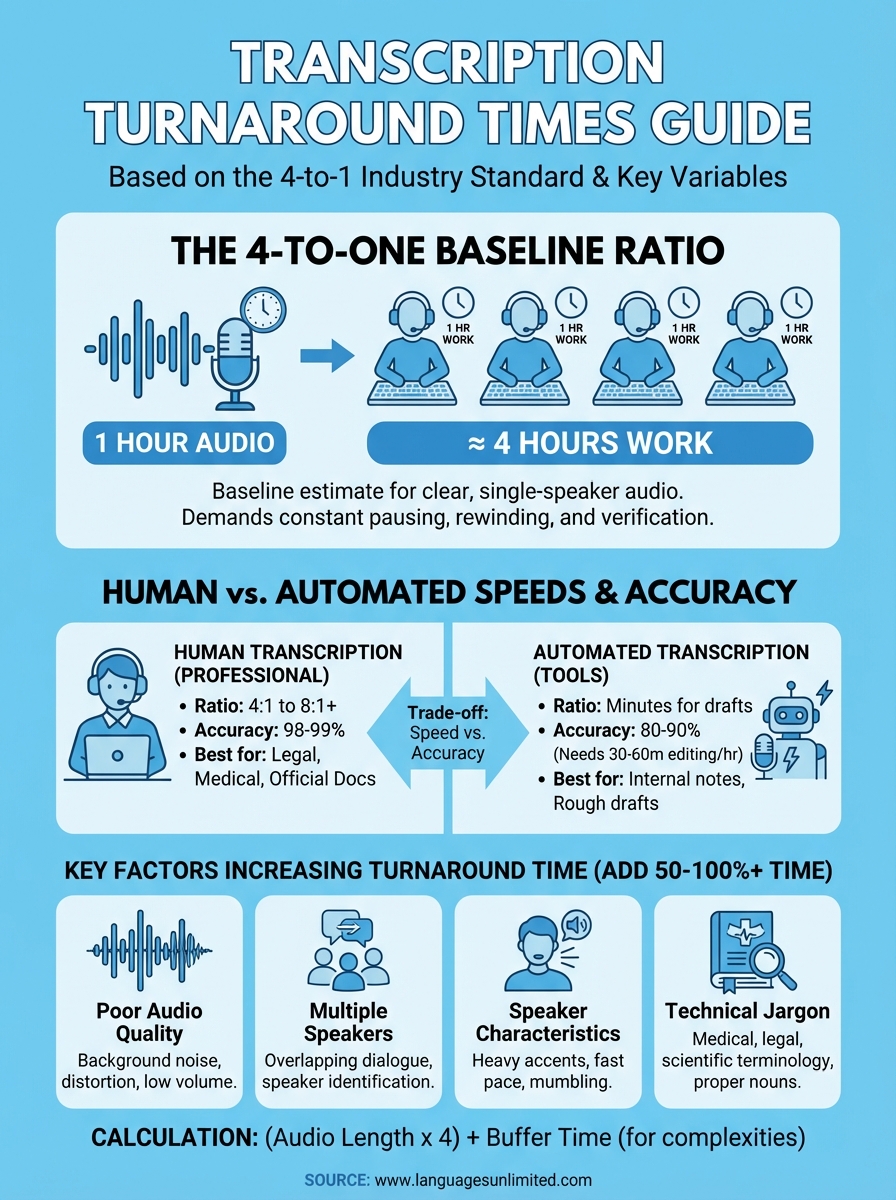
The four-to-one ratio reflects the reality that transcription demands constant pausing, rewinding, and careful verification. Professional transcribers spend four hours converting one hour of clear audio into accurate text because listening happens faster than typing, and accuracy requires multiple passes. This standard emerged from decades of industry experience across legal, medical, and corporate settings where precision matters more than speed. You cannot simply type while listening at normal playback speed and expect professional results.

The science behind listening and typing speed
Your brain processes spoken language at 125 to 175 words per minute, but most transcribers type between 60 and 90 words per minute. This gap forces you to pause the audio repeatedly to catch up. Professional transcribers develop faster typing speeds, but even skilled typists stop frequently to verify spelling, punctuation, and speaker identification. The ratio accounts for this constant start-stop pattern that every transcriber faces regardless of experience level.
Recording speakers who talk at 150 words per minute or faster creates an even wider gap between listening and typing speeds. Technical terminology requires you to slow down further because you need to research correct spellings for industry-specific terms, proper nouns, and acronyms. Medical transcribers working with pharmaceutical names or legal transcribers handling case citations spend extra time validating these details against reference materials.
Why rewinding adds hidden time
Rewinding consumes roughly 40 percent of your total transcription time because you rarely catch every word on first listen. Background noise, speaker overlap, unclear pronunciation, and audio distortion force you to replay segments multiple times. You might rewind a single unclear phrase three to six times before confirming what the speaker actually said. This repetitive listening explains why how long does transcription take extends well beyond the original audio length.
The four-to-one ratio assumes clear audio with minimal background interference and speakers with neutral accents.
Transcribers working with courtroom recordings or conference calls face additional challenges. Multiple speakers talking simultaneously require you to identify who said what and when. You rewind to separate overlapping dialogue and mark timestamps for speaker changes. Poor audio equipment, speakerphone distortion, or recordings from mobile devices can push your ratio to six-to-one or even eight-to-one. The industry standard assumes ideal conditions that rarely exist in real-world projects, making it a baseline rather than a guarantee.
How to calculate the turnaround time for your audio
You calculate transcription turnaround time by multiplying your audio length by the four-to-one standard ratio, then adjusting for specific conditions that affect speed. Start with the baseline assumption that one hour of audio requires four hours of work under ideal circumstances. This calculation gives you a realistic estimate for budgeting and scheduling purposes. You should always add buffer time for unexpected complications like technical difficulties or unclear segments that demand extra verification.
The basic calculation formula
Multiply your total audio duration by four to get your baseline estimate. A 30-minute recording requires roughly two hours of transcription time, while a two-hour interview needs approximately eight hours. This formula assumes clear audio quality, a single speaker with a neutral accent, and minimal background noise. You can use this calculation to compare quotes from different transcription services and verify their turnaround promises match realistic timelines.
Professional services working on how long does transcription take often quote delivery times based on this ratio. A 10-minute audio file should return within 40 minutes if a transcriber starts immediately, though most services batch projects and account for quality checks that extend delivery to 24 to 48 hours for standard requests.
Adjusting for your specific situation
Add 50 to 100 percent extra time if your audio contains multiple speakers, heavy accents, technical terminology, or poor recording quality. A one-hour conference call with six participants might require six to eight hours instead of the standard four. Court proceedings with legal jargon, medical dictations with pharmaceutical terms, or academic lectures with specialized vocabulary all push your timeline beyond the baseline ratio.
Rushed projects often require expedited fees because transcribers must prioritize your file over other scheduled work.
Budget constraints determine whether you accept longer turnaround times for lower rates or pay premium prices for same-day delivery.
Key factors that affect transcription speed
Several variables determine whether your project finishes faster or slower than the standard four-to-one ratio. Audio quality tops the list because poor recordings force transcribers to replay segments repeatedly. Speaker characteristics like accents, speaking pace, and clarity directly impact how often you pause and rewind. The number of people talking, background noise levels, and subject complexity all add time to your project. Understanding these factors helps you estimate how long does transcription take for your specific recording.
Audio quality and speaker clarity
Clean audio recordings with minimal background interference can reduce transcription time by 30 to 40 percent compared to noisy files. Professional studio recordings or high-quality digital recorders produce clear waveforms that let you hear every word on first listen. Background sounds like traffic noise, HVAC systems, or multiple conversations force you to increase playback volume and replay unclear segments. Speaker clarity matters equally because mumbling, talking while eating, or turning away from the microphone creates gaps you must decode through context.
Recordings captured on speakerphones or mobile devices typically require 50 percent more time than dedicated microphone setups.
Number of speakers and conversation complexity
Single-speaker recordings process faster than multi-person conversations because you skip the step of identifying who said what. Group discussions with overlapping dialogue require you to parse simultaneous speech and mark speaker changes accurately. You spend extra time rewinding when multiple people interrupt each other or talk over one another during heated debates or casual conversations.
Technical terminology and subject matter
Industry-specific vocabulary slows transcription because you must verify spellings for medical terms, legal citations, or scientific concepts. Transcribers working outside their expertise pause frequently to research proper nouns, acronyms, and specialized phrases. General conversation about everyday topics moves faster than technical lectures requiring reference checks.
How human speed compares to automated transcription
Automated transcription tools deliver drafts in minutes rather than hours, converting a one-hour recording into text within five to ten minutes depending on file size and processing speed. This represents a 90 percent time reduction compared to the four-to-one human standard. However, these tools sacrifice accuracy for speed, requiring human editors to review and correct errors that automated systems cannot catch. Your choice between methods depends on whether you prioritize fast turnaround times or final accuracy without extensive editing.
Speed differences between methods
Automated services from major providers process audio at 50 to 100 times faster than human transcribers. You upload your file, wait for processing to complete, and download a draft transcript while a human transcriber would still be working through the first few minutes. This speed advantage makes automated tools attractive for preliminary drafts, quick reference documents, or situations where understanding how long does transcription take matters less than getting something usable immediately.
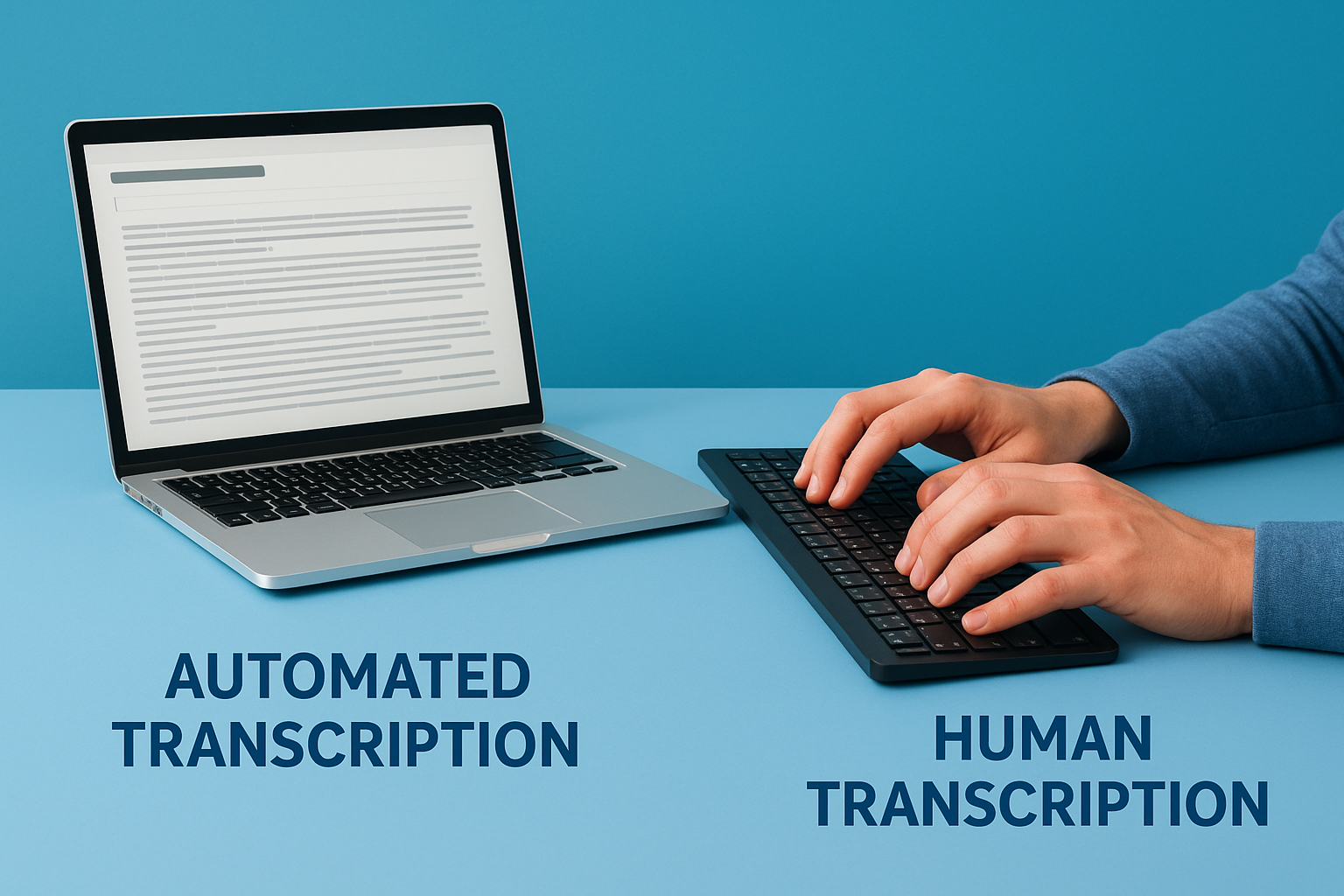
Human transcribers working at professional speeds maintain consistent accuracy throughout the entire document. They catch context clues, distinguish between homophones, and identify speakers without errors. Automated systems struggle with these tasks and produce drafts requiring 30 to 60 minutes of editing per hour of transcribed audio to reach professional standards.
Accuracy trade-offs you should know
Accuracy rates differ dramatically between methods. Professional human transcribers achieve 98 to 99 percent accuracy on clear audio with minimal corrections needed. Automated tools deliver 80 to 90 percent accuracy under ideal conditions, dropping to 60 to 70 percent with background noise, accents, or technical vocabulary. You spend the time you saved on automation fixing mistakes during the editing phase.
Automated transcription works best for internal notes and rough drafts, while legal, medical, and official documents require human accuracy from the start.
Final thoughts on transcription turnaround times
Understanding how long does transcription take helps you set realistic deadlines and budget appropriately for your projects. The four-to-one ratio serves as your baseline, but your actual timeline depends on audio quality, speaker count, technical vocabulary, and whether you choose human or automated methods. Clear recordings with single speakers process fastest, while multi-speaker discussions with background noise require significantly more time. You gain speed with automated tools but sacrifice accuracy that demands editing time anyway.
Planning ahead reduces stress and prevents rushed projects that cost more. Factor in buffer time for unexpected complications like unclear audio segments or last-minute changes. Professional transcription services account for these variables when quoting turnaround times, delivering accurate results without the trial-and-error learning curve you face handling projects yourself. If you need reliable transcription services with transparent timelines for legal documents, medical records, or business content, contact our team to discuss your project requirements and receive a realistic delivery estimate based on your specific audio characteristics.