



Video remote interpreting connects you with a professional interpreter through live video instead of bringing someone on site. You might see this service used in a hospital room where a doctor needs to communicate with a patient who speaks another language, or in a courtroom where someone needs sign language interpretation. The interpreter appears on a screen through a secure video connection, providing real time language support whether you need American Sign Language or spoken language interpretation.
This guide walks you through how VRI works, when it makes sense to use it, and what you need to make it successful. You’ll learn about the technology requirements that keep connections stable and clear, the situations where VRI excels versus when you should bring an interpreter on site, and how organizations from hospitals to courts are using this service. Whether you’re considering VRI for your organization or want to understand your options as someone who needs interpretation services, you’ll find practical information to help you decide if this approach fits your needs.
Why video remote interpreting matters
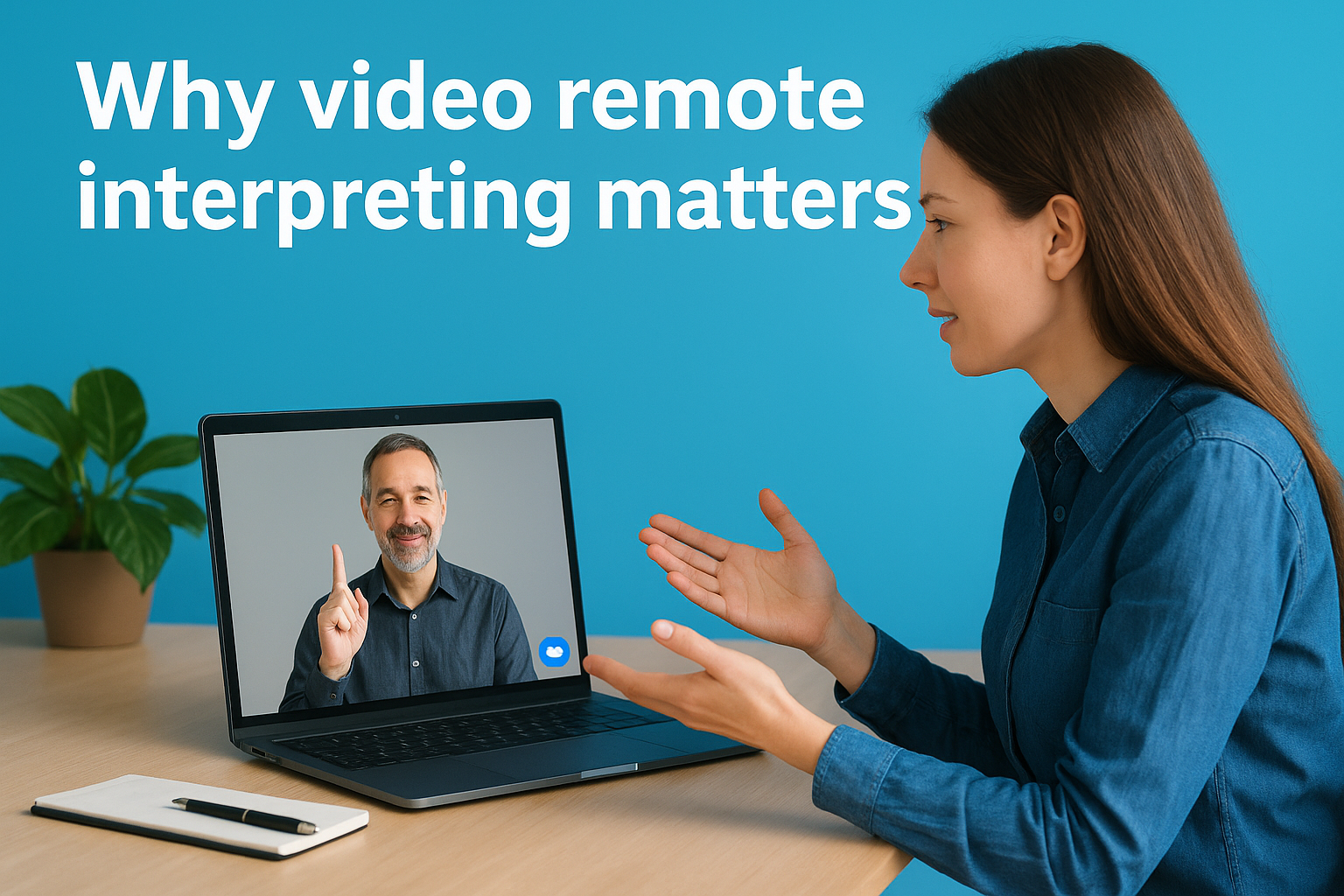
You need qualified interpreters when communication barriers arise, but finding someone available locally can take days or even weeks. Video remote interpreting solves this timing problem by connecting you with professionals who might be hundreds of miles away but can start working within minutes. This access becomes critical when you’re dealing with time-sensitive situations where delays create real consequences, whether that’s a patient waiting for medical treatment, a legal proceeding that can’t be postponed, or a business meeting scheduled with international partners.
Bridging communication gaps when time matters
Your organization faces moments when interpretation needs arise unexpectedly. A hospital emergency room admits a patient who speaks Vietnamese at 2 AM, or a police department needs to interview a witness who uses American Sign Language on a Sunday afternoon. VRI platforms maintain networks of interpreters across multiple time zones and languages, giving you 24/7 coverage that on-site services simply can’t match.
Organizations using VRI report faster response times and reduced appointment delays compared to waiting for on-site interpreter availability.
Expanding access beyond geography
Communities outside major metropolitan areas struggle to find qualified interpreters for less common languages. VRI eliminates geographic barriers by letting you tap into a national or even international pool of professionals. Your rural clinic can access the same certified interpreter expertise available to facilities in large cities, ensuring equal quality of communication regardless of your location.
How to implement video remote interpreting
Your organization needs a structured approach to bring VRI into daily operations. Start by identifying which departments or situations require interpretation services most frequently and what languages you encounter regularly. This assessment helps you determine bandwidth requirements, equipment needs, and whether you need 24/7 access or scheduled appointments. Understanding what is video remote interpreting and how it fits your workflow prevents costly mistakes when you’re ready to launch.
Assess your organization’s needs
Look at your past six months of interpretation requests to identify patterns in language demand, timing, and frequency. You’ll discover whether you need broad language coverage or specialized interpreters for specific fields like medical or legal settings. Document your current challenges with in-person interpreting, such as cancellations, travel time, or difficulty finding qualified professionals for certain languages.

Organizations that complete thorough needs assessments before implementation report 40% fewer service gaps compared to those using a trial-and-error approach.
Select a qualified VRI provider
Your provider should offer certified interpreters in your required languages and maintain clear quality standards. Check whether they provide interpreters with specialized training for your industry, whether healthcare, legal, or education. Verify their technology platform works with your existing systems and that they offer technical support during your business hours. Request references from organizations similar to yours and ask about response times for both scheduled and on-demand services.
Set up your infrastructure
Install dedicated devices in locations where you need interpretation most often, such as reception desks, examination rooms, or conference spaces. Test your internet connection speed in these areas, as VRI requires minimum bandwidth of 1.5 Mbps for quality video and audio. Train your staff on how to initiate sessions, position cameras properly, and troubleshoot common connection issues. Create quick-reference guides that employees can follow when they need interpretation services outside normal business hours.
Benefits and limitations of VRI
You gain specific advantages when you choose video remote interpreting, but you also face real constraints that affect when this service works best. Understanding what is video remote interpreting from both perspectives helps you make informed decisions about where to deploy this technology. Your success depends on matching VRI’s strengths to appropriate situations while recognizing when traditional in-person interpretation serves you better.
Key advantages for your organization
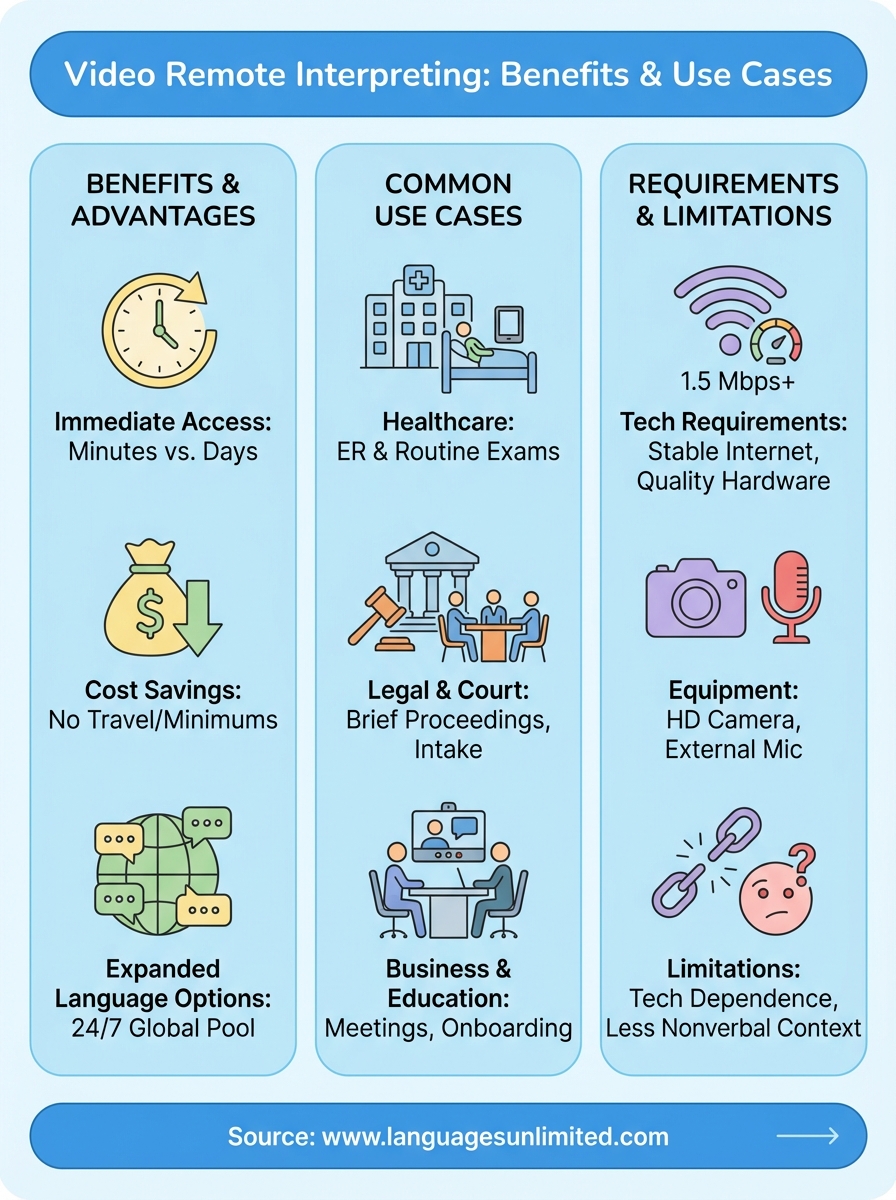
Immediate access stands as VRI’s strongest benefit, connecting you with qualified interpreters within minutes instead of days. You reduce appointment cancellations and delays because interpreters don’t need travel time to reach your location. Cost savings emerge from eliminating mileage reimbursements, parking fees, and minimum hour requirements that on-site services often demand. Your budget stretches further when you pay only for active interpretation time rather than covering two-hour minimums for fifteen-minute conversations.
Remote services expand your language options dramatically, particularly for rare languages where finding local interpreters proves difficult or impossible. You access specialists with technical expertise in fields like medicine or law without geographic limitations. Sessions can start and end quickly, making VRI practical for brief interactions that don’t justify bringing someone on site.
Organizations report 60% lower per-session costs with VRI compared to on-site interpretation for appointments under 30 minutes.
Understanding the constraints
Technology failures create communication breakdowns at critical moments when your internet connection drops or equipment malfunctions. You depend on reliable power, bandwidth, and functioning devices that aren’t always guaranteed. Interpreters miss nonverbal cues and subtle context that come naturally during in-person sessions, potentially affecting accuracy in complex or sensitive discussions. Screen sizes limit what interpreters can see, making it harder for them to capture gestures, body language, or environmental factors that inform meaning.
Lengthy or highly interactive sessions become exhausting through video, reducing interpreter effectiveness over time. Your participants may struggle with the technology, particularly older adults or people unfamiliar with video platforms.
Common VRI use cases
You’ll find VRI deployed across industries where immediate interpretation matters and where geographic constraints limit access to qualified professionals. These applications demonstrate how organizations solve real communication barriers without sacrificing quality or compliance. Understanding what is video remote interpreting in practice shows you where this technology delivers the most value and helps you identify similar opportunities in your own operations.
Healthcare settings
Hospitals and clinics use VRI most frequently for emergency department admissions where patients arrive outside normal business hours or speak languages that local interpreters don’t cover. You see this service deployed in patient rooms during routine examinations, medication consultations, and discharge instructions when bringing interpreters on site would delay care. Medical facilities rely on VRI for mental health counseling, physical therapy sessions, and telehealth appointments where both doctor and patient connect remotely. Providers maintain compliance with language access laws while keeping patients moving through care without extended waits.

Healthcare facilities report that VRI reduces patient wait times by an average of 45 minutes compared to scheduling on-site interpreters for unplanned visits.
Legal and court proceedings
Courts implement VRI for arraignments, bail hearings, and other brief proceedings where interpreter travel time exceeds the actual session length. Law enforcement agencies use this service during witness interviews, victim statements, and booking processes that occur during nights or weekends. Legal aid offices connect clients with interpreters for intake consultations and document reviews before deciding whether cases warrant full representation. Government agencies deploy VRI at public service counters where staff encounter multiple languages throughout the day but can’t justify full-time interpreters for each language.
Business and educational environments
Companies use VRI for employee onboarding, safety training, and HR meetings when hiring workers who speak different languages. Educational institutions provide VRI for parent-teacher conferences, disciplinary meetings, and academic advising sessions that require quick scheduling. Your organization benefits from VRI when you host international visitors, conduct virtual meetings with overseas partners, or need interpretation for events where attendance numbers don’t justify multiple on-site interpreters.
Technology and requirements for effective VRI
You need reliable technology infrastructure to make VRI sessions work without frustrating interruptions or poor quality connections. Understanding what is video remote interpreting from a technical standpoint helps you prepare your environment properly and avoid the common pitfalls that cause communication failures. Your investment in the right equipment and setup pays off through smoother sessions and better outcomes for everyone involved.
Internet connection and bandwidth
Your network must provide consistent speeds of at least 1.5 Mbps for both upload and download to maintain clear video and audio quality. Wired ethernet connections outperform WiFi by reducing lag, packet loss, and unexpected disconnections that wireless networks experience. Test your connection speed in the actual locations where you plan to use VRI, as bandwidth varies throughout buildings and during peak usage hours. Consider installing a dedicated internet line for interpretation services if your current network serves many users simultaneously.
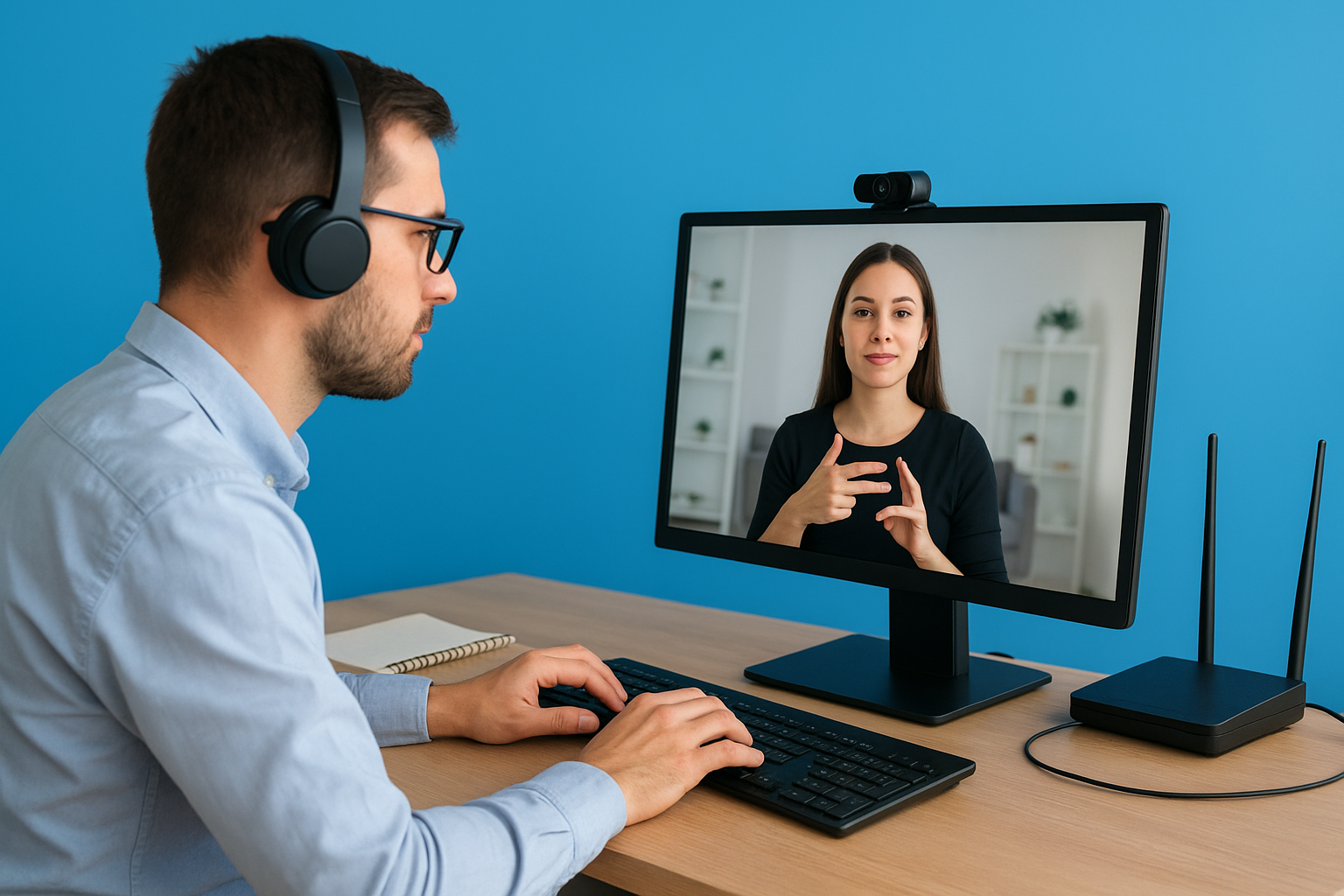
Organizations with dedicated VRI internet connections report 75% fewer technical disruptions compared to those sharing bandwidth with general office traffic.
Hardware and platform essentials
High-definition cameras with at least 720p resolution capture facial expressions and sign language movements that interpreters rely on for accuracy. Your microphone setup matters equally, as noise-canceling external microphones pick up speech more clearly than built-in laptop speakers. Position cameras at eye level and ensure adequate lighting without glare or shadows that obscure visibility. Choose platforms that offer simple one-click connections rather than complex login procedures that frustrate users during time-sensitive situations. Test all equipment weekly and keep backup devices available for immediate replacement when primary systems fail.
Key takeaways
Video remote interpreting connects you with qualified professionals through live video when geographic distance or timing constraints make on-site services impractical. You gain immediate access to interpreters across multiple languages and specializations, reducing wait times and expanding your options beyond local availability. Understanding what is video remote interpreting helps you recognize where this technology excels, particularly for brief interactions, emergency situations, and less common languages where finding local expertise proves difficult.
Your success with VRI depends on reliable technology infrastructure and matching the service to appropriate situations. Invest in stable internet connections, quality audio and video equipment, and platforms that your team can operate confidently. Remember that complex, lengthy, or highly sensitive interactions often benefit from in-person interpretation where nonverbal communication and environmental context matter most.
Professional language services require expertise beyond just video technology. Languages Unlimited offers comprehensive interpretation solutions, including VRI, on-site services, and the guidance you need to choose the right approach for your specific communication challenges.