



When a medical emergency strikes or a legal deadline looms, language barriers can turn stressful situations into crises. Whether you’re a healthcare provider communicating critical diagnoses, a legal professional conducting client interviews, or an individual navigating immigration paperwork, the ability to find a phone interpreter quickly can make all the difference. Over-the-phone interpretation (OPI) connects you with qualified linguists in seconds, enabling real-time communication without scheduling delays or travel costs.
At Languages Unlimited, we’ve provided telephonic interpretation services since 1994, connecting clients with interpreters in over 200 languages, often in under a minute. We understand what’s at stake when communication fails, especially in high-stakes medical and legal contexts. That’s why we’ve compiled this guide to help you identify the best ways to access phone interpretation services when you need them most.
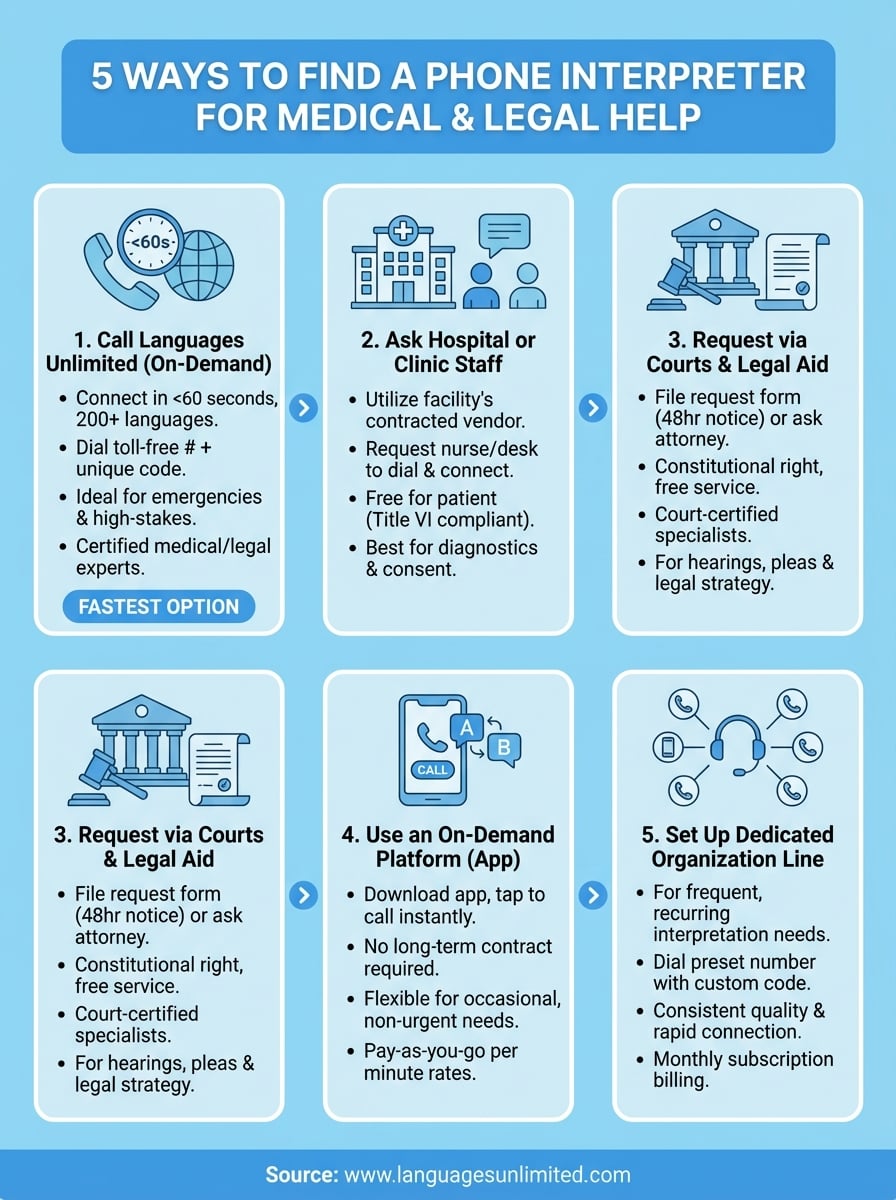
Below, you’ll find five practical methods to locate a phone interpreter, from specialized language service providers to on-demand apps and government resources.
1. Call Languages Unlimited for on-demand phone interpreting
Languages Unlimited operates one of the fastest telephonic interpreting systems in the industry, connecting you with qualified interpreters in under 60 seconds for over 200 languages. You dial a dedicated toll-free number, enter your account code, and select your target language through an automated menu or live operator. This method works when you need to find a phone interpreter immediately, without scheduling appointments or downloading apps.
How to get connected fast
Your account manager provides you with a unique access code that routes calls to interpreters based on your industry needs (medical, legal, or general). Once connected, you introduce the interpreter to all parties, explain the situation briefly, and let the interpreter facilitate the conversation. Languages Unlimited’s system prioritizes your calls based on urgency markers you set during account setup, ensuring emergency medical and legal situations receive immediate routing to specialized interpreters.
Best use cases for medical and legal calls
Telephonic interpretation through Languages Unlimited excels in hospital admissions, emergency room triage, and informed consent discussions where visual cues matter less than speed. Legal professionals use this service for client intake calls, court appearance preparation, and immigration status updates. The system works particularly well for three-way calls where documents are not central to the conversation.
"When seconds count in a medical emergency or legal deadline, having pre-established access to qualified interpreters removes the guesswork from language access."
What to verify for quality and confidentiality
Languages Unlimited’s interpreters hold industry-specific certifications (medical and legal specializations) and complete HIPAA and confidentiality training annually. You can request interpreter credentials before beginning sensitive conversations, and the platform logs all sessions for compliance auditing and quality assurance. Each interpreter signs confidentiality agreements covering protected health information and attorney-client privilege.
Typical pricing and billing terms
Languages Unlimited charges per-minute rates that vary by language rarity and industry specialization, with minimum session times typically ranging from five to fifteen minutes. Monthly subscription plans offer reduced per-minute rates for high-volume users, while pay-as-you-go options suit occasional needs. Billing occurs through monthly invoicing or prepaid account credits, with detailed usage reports for internal cost allocation.
Common pitfalls to avoid
Organizations often fail to brief all staff on access procedures, leading to delays when emergencies arise. Another mistake involves not specifying interpreter qualifications during account setup, which can result in generalist interpreters handling specialized medical or legal terminology. Always test your access number and account code before you need urgent interpretation, and maintain backup contact methods if technical issues disrupt the primary line.
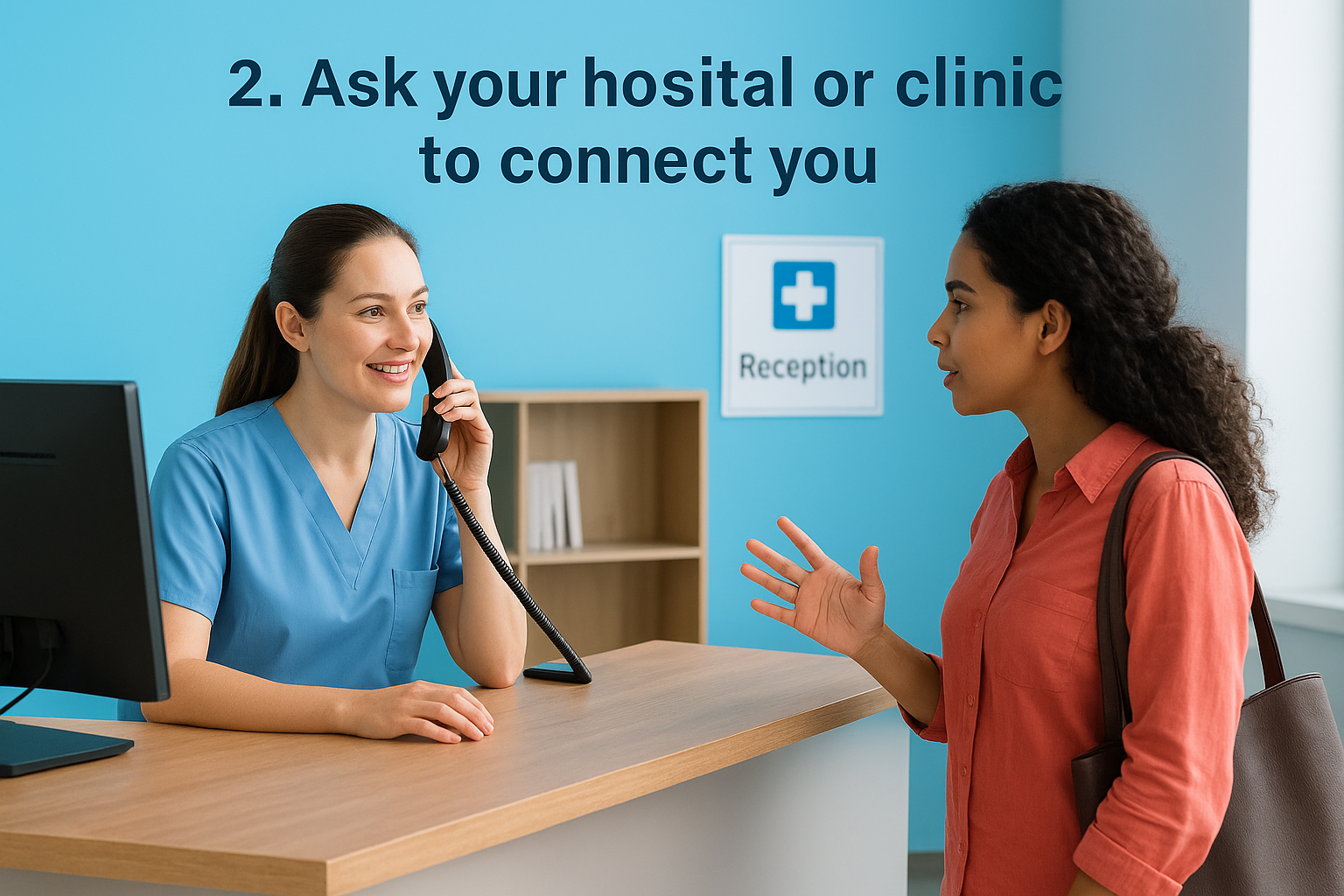
2. Ask your hospital or clinic to connect you
Most hospitals and clinics maintain contracts with interpretation vendors that you can access directly as a patient or through your healthcare provider. When you arrive for an appointment or call ahead, you request an interpreter from the front desk or nursing staff, who then dial into the facility’s contracted service. This approach works best when the healthcare facility handles all logistics, removing the burden of finding and paying for interpretation services yourself.
How to get connected fast
You inform the intake coordinator or nurse about your language needs before your appointment begins, or you ask during registration if no advance notice was given. The staff member dials the facility’s interpretation line, enters the department code and language selection, and hands you a phone or activates a speaker system. Response times typically range from 30 seconds to two minutes, depending on the language and time of day.
Best use cases for medical and legal calls
Hospital-based phone interpreters handle diagnostic consultations, treatment explanations, and discharge instructions where medical accuracy matters most. You also use these services for informed consent discussions before procedures or surgeries. Legal matters rarely apply here unless discussing medical power of attorney or advanced directives with hospital social workers.
What to verify for quality and confidentiality
You confirm the interpreter’s medical specialization credentials and ask whether the facility’s vendor complies with HIPAA regulations. Most reputable hospital systems vet their interpretation partners annually, but you can request documentation of confidentiality protocols if handling particularly sensitive health information.
Typical pricing and billing terms
Healthcare facilities typically absorb interpretation costs as part of Title VI compliance requirements, meaning you pay nothing directly for this service. The hospital bills its vendor monthly based on usage, incorporating those costs into overall operational budgets rather than patient bills.
"Federal law requires most hospitals receiving federal funding to provide free language access services, making hospital-based interpretation one of the most cost-effective ways to find a phone interpreter."
Common pitfants to avoid
Patients sometimes assume all staff members know how to activate interpretation services, leading to confusion and delays. You should verify the specific process during pre-admission calls rather than discovering gaps during emergencies. Another mistake involves accepting bilingual staff members as substitutes for certified interpreters, which can compromise accuracy and violate hospital policy.
3. Request language access through courts and legal aid
Courts and legal aid organizations provide free interpretation services as part of constitutional due process rights and federal funding requirements. When you face criminal charges, immigration proceedings, or civil litigation, you request an interpreter through the clerk’s office or your assigned legal aid attorney. This method ensures qualified legal interpreters handle specialized terminology without you bearing direct costs.

How to get connected fast
You file a language access request form with the court clerk at least 48 hours before your hearing date, specifying your language and dialect. For urgent matters, you call the court’s language access coordinator directly, who arranges phone interpretation if in-person interpreters are unavailable. Legal aid offices connect you to their contracted interpretation vendors during client consultations.
Best use cases for medical and legal calls
Court-based interpretation covers arraignments, bail hearings, plea negotiations, and trial proceedings. Legal aid phone interpreters assist with client intake calls, case strategy discussions, and document review explanations. You rely on these services when legal jargon and procedural language require specialized interpretation beyond general conversation.
What to verify for quality and confidentiality
You confirm the interpreter holds court certification or legal specialization credentials in your jurisdiction. Ask whether the interpreter signed attorney-client privilege agreements and court confidentiality orders before discussing case details.
Typical pricing and billing terms
Courts absorb interpretation costs through judicial budgets and federal grants, meaning you pay nothing for court-appointed services. Legal aid organizations include interpretation in their free or sliding-scale fee structures for qualifying clients.
Common pitfalls to avoid
You must request interpretation services well before hearing dates, as last-minute requests often result in continuances that delay case resolution. Never assume family members or friends can substitute for certified legal interpreters during official proceedings.
4. Use an on-demand interpreting platform with phone access
On-demand interpreting platforms offer mobile apps and web portals that connect you to phone interpreters without long-term contracts or account setup. These services function like ride-sharing apps for language access, where you download the application, create a profile, and request interpretation through phone call features built into the platform. This method suits individuals and small organizations that need occasional interpretation without committing to monthly subscriptions or minimum usage requirements.
How to get connected fast
You download the platform’s app, complete a basic registration form, and add payment information before requesting your first interpreter. Most platforms connect you within two minutes by selecting your language pair and tapping a call button that dials directly to available interpreters. The app displays estimated wait times and allows you to switch between phone, video, or text-based interpretation modes depending on your immediate needs.
Best use cases for medical and legal calls
On-demand platforms work well for follow-up medical appointments, prescription clarifications, and general health questions that don’t require specialized medical interpreters. Legal applications include initial consultations with attorneys, landlord-tenant disputes, and consumer protection inquiries where formal court certification isn’t mandatory.
What to verify for quality and confidentiality
You check interpreter qualification badges or certifications displayed in the platform’s profiles before connecting. Read the platform’s privacy policy and data security standards to confirm compliance with HIPAA or attorney-client privilege requirements if discussing sensitive information.
Typical pricing and billing terms
Platforms charge per-minute rates ranging from $1.50 to $4.00 depending on language rarity, with some adding connection fees of $2 to $5 per call. You pay through credit card or digital wallet immediately after each session, receiving itemized receipts for expense tracking or reimbursement purposes.
"On-demand platforms democratize access to phone interpretation by removing traditional barriers like contracts and minimum usage requirements, making it easier to find a phone interpreter for occasional needs."
Common pitfalls to avoid
You risk connecting with unspecialized interpreters who lack medical or legal training, which can compromise accuracy in technical conversations. Another mistake involves assuming all platforms operate 24/7, when many reduce language availability during overnight hours or weekends.
5. Set up a dedicated interpreter line for your organization
Organizations with frequent interpretation needs benefit from establishing a dedicated phone line that routes directly to qualified interpreters without per-call setup delays. You contact language service providers like Languages Unlimited to configure a custom account with preset language preferences, billing terms, and interpreter qualification requirements. This approach eliminates the need to find a phone interpreter repeatedly, as your staff simply dials a memorized number whenever interpretation becomes necessary.
How to get connected fast
You receive a dedicated toll-free number and unique access code during account setup, which your staff can dial from any phone without downloading apps or remembering complex procedures. The provider programs your language priority list into the system, automatically routing calls to interpreters who meet your specified qualifications.
Best use cases for medical and legal calls
Dedicated lines serve multi-location healthcare systems, legal practices with regular multilingual caseloads, and government agencies handling public services. You deploy this solution when interpretation frequency justifies fixed monthly costs and when consistent service quality matters more than occasional per-minute savings.
What to verify for quality and confidentiality
Your contract should specify minimum interpreter qualifications, response time guarantees, and compliance certifications relevant to your industry. Request quarterly performance reports that track connection speeds, call durations, and interpreter ratings.
Typical pricing and billing terms
Providers charge monthly subscription fees based on anticipated usage volumes, often including discounted per-minute rates after reaching minimum thresholds. You receive consolidated monthly invoices with detailed usage breakdowns by department or location.
Common pitfalls to avoid
Organizations sometimes fail to train all staff members on access procedures, leaving the dedicated line underutilized. You should also avoid auto-renewal clauses without regular service reviews to ensure competitive pricing.
Next steps
You now have five proven methods to find a phone interpreter when medical or legal situations demand immediate language access. Each approach serves different needs, from hospital-based services that cost you nothing to dedicated organizational lines that streamline recurring interpretation requirements. Your choice depends on frequency of use, budget constraints, and the sensitivity of information you handle.
Start by assessing your specific situation. Healthcare facilities and courts provide free interpretation services that cover most common scenarios, while on-demand platforms offer flexibility for occasional personal needs. Organizations with regular multilingual communication benefit most from establishing dedicated interpretation lines that guarantee consistent quality and rapid connection times.
Languages Unlimited connects you with qualified interpreters in over 200 languages in under 60 seconds, handling everything from emergency medical calls to complex legal consultations. Contact us today to set up your account and ensure you’re never without language access when critical situations arise.