



The difference between translation and interpretation comes down to one basic factor. Translation deals with written text, while interpretation handles spoken language. This simple distinction shapes everything about how these services work, from the skills professionals need to the tools they use and the way they deliver results to clients. Many people use these terms interchangeably, but they refer to completely different processes that require unique expertise, specialized training, and distinct working methods. Getting this right from the start saves time and money.
This article breaks down the practical differences between these two language services so you can make informed decisions for your project. You’ll learn how to identify which service your situation actually needs, what specific skills each profession demands, and the various delivery methods available for both translation and interpretation work. We’ll also explain why getting the terminology right matters for your budget, project timeline, and the quality of your final results. Understanding these differences helps you communicate clearly with service providers and ensures you get exactly what your project requires.
Why accurate terminology matters for your project
Using the wrong term for your language service creates immediate budget problems and project delays that could have been avoided from the start. When you request translation services but actually need interpretation, you’ll receive written documents instead of someone speaking live at your meeting. This mistake forces you to start the entire vendor selection process over, pushing back your project timeline by days or weeks. Your costs multiply because you’ve already paid for one service and now need to pay for another, completely different one.
Budget and resource allocation
Mixing up these terms leads to incorrect cost estimates that throw off your entire project budget. Translation services typically charge per word or per page for written work, while interpretation bills by the hour or half-day for speaking assignments. The pricing structures differ so dramatically that confusing them makes your initial budget essentially worthless. You might approve what you think is a reasonable quote, only to discover the actual service you need costs three times as much because you used the wrong terminology in your request.
Understanding the difference between translation and interpretation prevents costly miscommunication and ensures you allocate the right resources from day one.
Project planning and vendor communication
Getting the terminology right helps you communicate precisely with language service providers from your first contact. When you use accurate terms, vendors can immediately match you with professionals who have the specific skills your project requires. Translation experts focus on written accuracy and cultural nuances in documents, while interpreters train extensively in real-time listening, memory techniques, and instant verbal conversion. Clear terminology also helps you understand what deliverables to expect, whether that’s a formatted document you can review before publication or a live professional who will arrive at your conference room ready to facilitate spoken communication between parties.
How to distinguish translation from interpretation
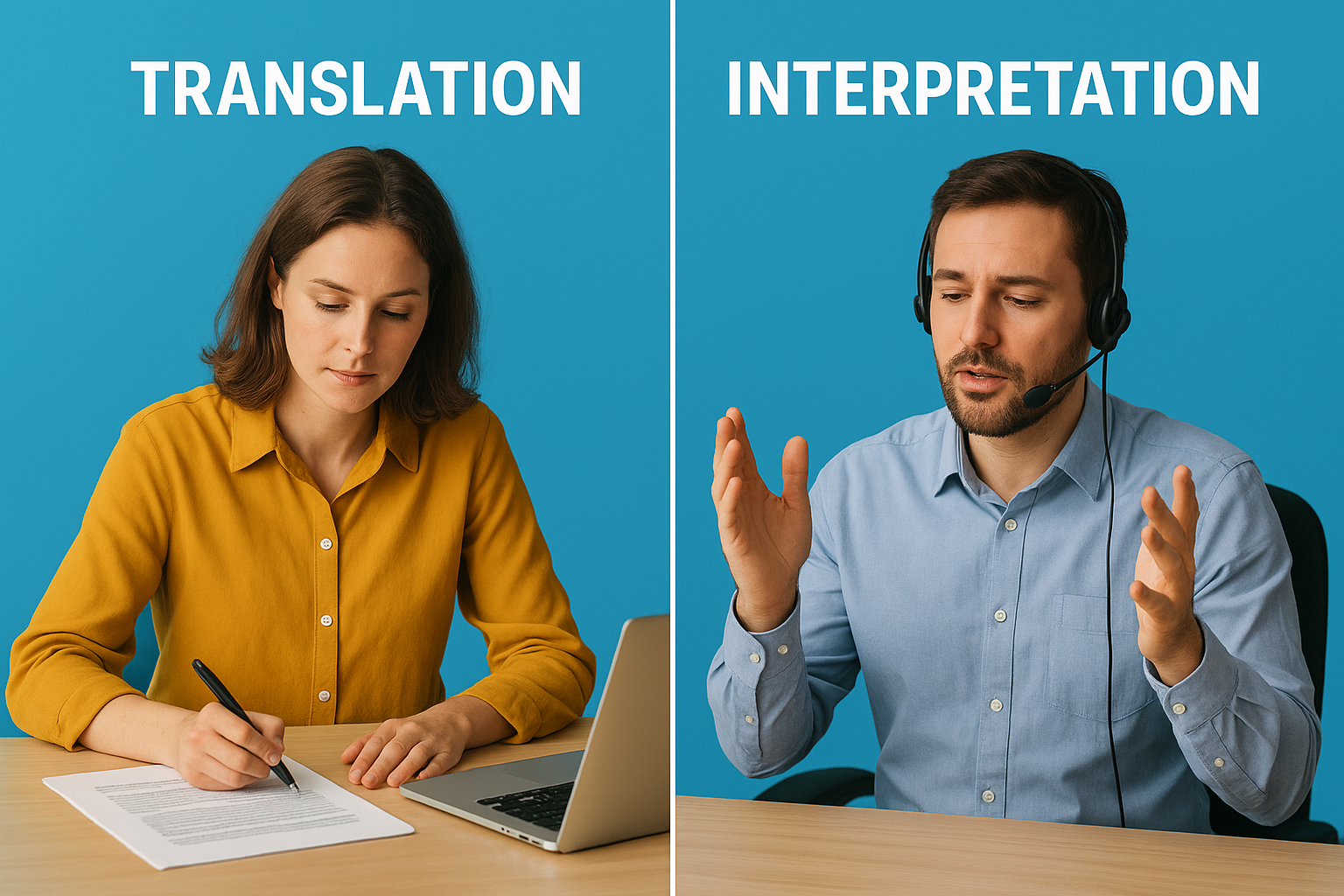
The fundamental marker that separates these two services is the medium they work in. Translation professionals convert written documents from one language to another, producing text you can read, edit, and distribute. Interpreters work exclusively with spoken language, converting speech in real time or shortly after it’s delivered. This core difference between translation and interpretation determines everything else about how these services function, including the tools professionals use, the environments they work in, and the way you’ll receive your final results.
The medium and format divide
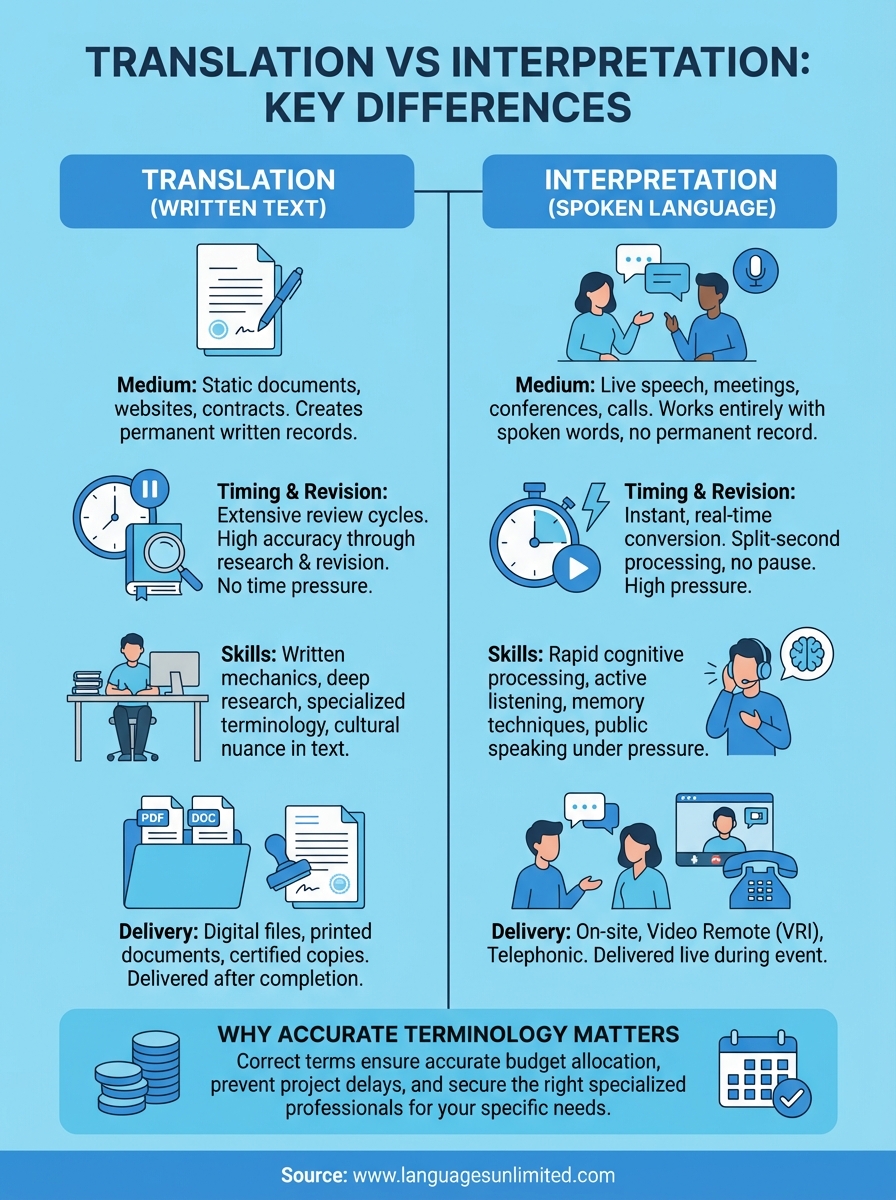
Translation creates permanent written records that you can review, revise, and reference indefinitely. You receive documents like contracts, websites, instruction manuals, or certificates that exist as tangible files on your computer or as printed materials. Interpreters produce no written deliverables because they work entirely with spoken words during live events, meetings, phone calls, or video conferences. The interpreter’s work disappears the moment the speaking ends, unless someone separately records the audio or takes notes.
Timing and revision opportunities
Translation allows for extensive review cycles because translators work with static documents that don’t change during the conversion process. Your translator can spend hours researching terminology, checking references, and revising their work before you ever see the final document. Interpretation requires instant conversion with no pause button, giving interpreters seconds or split seconds to process and deliver meaning while speakers continue talking.
Translation gives you time to perfect accuracy through multiple revisions, while interpretation demands real-time precision with no second chances.
Distinct skills required for each profession
The difference between translation and interpretation extends far beyond the medium they work in and includes dramatically different skill sets that professionals develop through years of specialized training. Translators master written language mechanics, including grammar rules, punctuation conventions, and formal writing styles across multiple languages. They build expertise in research methods, terminology databases, and cultural context that affects written communication. Interpreters develop rapid cognitive processing abilities that let them listen, comprehend, convert, and speak simultaneously or in quick succession. Their training focuses on memory techniques, public speaking, quick decision-making under pressure, and managing the stress of real-time performance with no room for errors.
Translation expertise and precision
Translators spend years developing deep knowledge of specialized fields like legal terminology, medical vocabulary, or technical documentation standards. You need a translator who can research obscure terms, verify accuracy through multiple sources, and maintain consistency across hundreds of pages of documentation. Their work requires meticulous attention to formatting, cultural adaptation of idioms, and the ability to sit for extended periods refining every sentence until it reads naturally in the target language.
Translators perfect their craft through patient research and revision, while interpreters train their minds to process and convert language at the speed of conversation.
Interpretation abilities and mental agility
Interpreters build extraordinary listening skills that let them process complex information while simultaneously formulating their response in another language. You’re hiring someone who can maintain intense concentration for hours, manage nervousness when speaking to large audiences or in high-stakes situations, and think on their feet when speakers use unexpected terminology or speak faster than anticipated. Their training emphasizes split-second decision-making and the mental stamina required for sustained real-time language conversion.
How to decide which service fits your needs
The format of your source material tells you immediately which service you need, making this decision straightforward once you understand the difference between translation and interpretation. If you have documents, websites, or any written content, you need translation services regardless of your deadline or project complexity. When you’re hosting meetings, conferences, phone calls, or any event where people will speak different languages in real time, interpretation is your only option.

Assess your material format
Start by identifying what you’re actually working with. Physical documents like contracts, certificates, medical records, or court filings always require translation because you need a written product you can submit, file, or distribute. Live events including depositions, client meetings, medical appointments, or business negotiations demand interpretation because communication happens through spoken words between people in the same space or connected remotely.
Match service to your timeline
Translation projects give you flexibility with deadlines because translators work independently on your documents and can deliver results days or weeks after you submit your files. Interpretation must happen during your scheduled event, requiring you to book professionals in advance and coordinate their availability with your meeting times, whether that’s a one-hour deposition or a three-day conference.
Choose translation when you need accurate written documents you can review before distribution, and interpretation when you need real-time spoken communication between languages.
Common delivery methods for language services
The difference between translation and interpretation becomes even clearer when you look at how each service gets delivered to clients. Translation arrives as digital files or printed documents that you can store, share, and reference whenever needed. Interpreters provide their services through various live formats, showing up in person at your location or connecting remotely through technology. Understanding these delivery methods helps you plan logistics, choose the right format for your budget, and coordinate with your team or event participants.
Translation delivery options
Translators send you completed documents through email, secure file transfer systems, or cloud storage platforms, depending on your confidentiality requirements. You receive files in the same format as your original documents, whether that’s Word, PDF, Excel, or specialized formats for software localization. Certified translations arrive with official stamps, signatures, and attestation letters when you need them for legal submissions or government agencies.
Interpretation delivery formats
On-site interpretation brings a professional directly to your location for meetings, depositions, conferences, or medical appointments where face-to-face communication matters most. Video remote interpreting (VRI) connects you with interpreters through secure video platforms, giving you access to specialized language professionals within minutes. Telephonic interpretation works through standard phone lines when visual communication isn’t necessary, offering the fastest and most economical option for routine conversations or brief consultations.
Remote interpretation options give you instant access to language professionals without travel costs or scheduling delays, while on-site services provide the personal presence some situations require.
Final thoughts on language services
Understanding the difference between translation and interpretation gives you the foundation to request exactly what your project needs and communicate effectively with language service providers. You now know that translation converts written documents while interpretation handles spoken language, each requiring distinct skills, delivery methods, and pricing structures. This knowledge helps you avoid costly mistakes that waste time and budget on the wrong service.
Your next step is matching your specific project requirements to the right professionals who can deliver results that meet your quality standards and timeline. Whether you need certified document translation for legal submissions, on-site interpretation for a business meeting, or remote interpreting services for client consultations, choosing the right service format ensures your communication succeeds. Contact our team to discuss your language service needs and get connected with qualified professionals who specialize in your required languages and industry. We’ll help you determine which service fits your project and provide accurate pricing based on your actual requirements.