



California’s courts handle millions of cases each year, and a significant number of those involve individuals with limited English proficiency who have a legal right to understand every word spoken in the courtroom. That’s where the California Court Interpreter Program comes in, a structured pathway that certifies interpreters to serve in state courts across dozens of languages. If you’re considering this career, you’re entering a field with real demand and meaningful impact.
Becoming a certified court interpreter in California isn’t something you can do overnight. The process involves meeting specific eligibility requirements, passing a rigorous examination administered by the Judicial Council of California, and in many cases, completing targeted training before you’re ready to sit for the exam. There are also newer initiatives, like the Court Interpreter Workforce Pilot Program, designed to address interpreter shortages in certain languages. Understanding each step, and what’s actually expected of you, can save you months of confusion.
At Languages Unlimited, we’ve worked with court interpreters and legal language professionals since 1994, placing qualified interpreters in courtrooms, law firms, and government agencies across all 50 states. We know firsthand what it takes to succeed in this field because we hire for it every day. This guide breaks down the full certification process, from prerequisites and exam details to training options and what comes after you pass, so you can move forward with a clear plan.
What to know before you start
Before you invest time and money preparing for any exam, you need to understand how the California Court Interpreter Program is structured and what category of interpreter you’re aiming to become. The program isn’t one-size-fits-all. Your target credential, the language you interpret, and the type of court you plan to work in all shape the path you’ll take.
Two types of court interpreter credentials
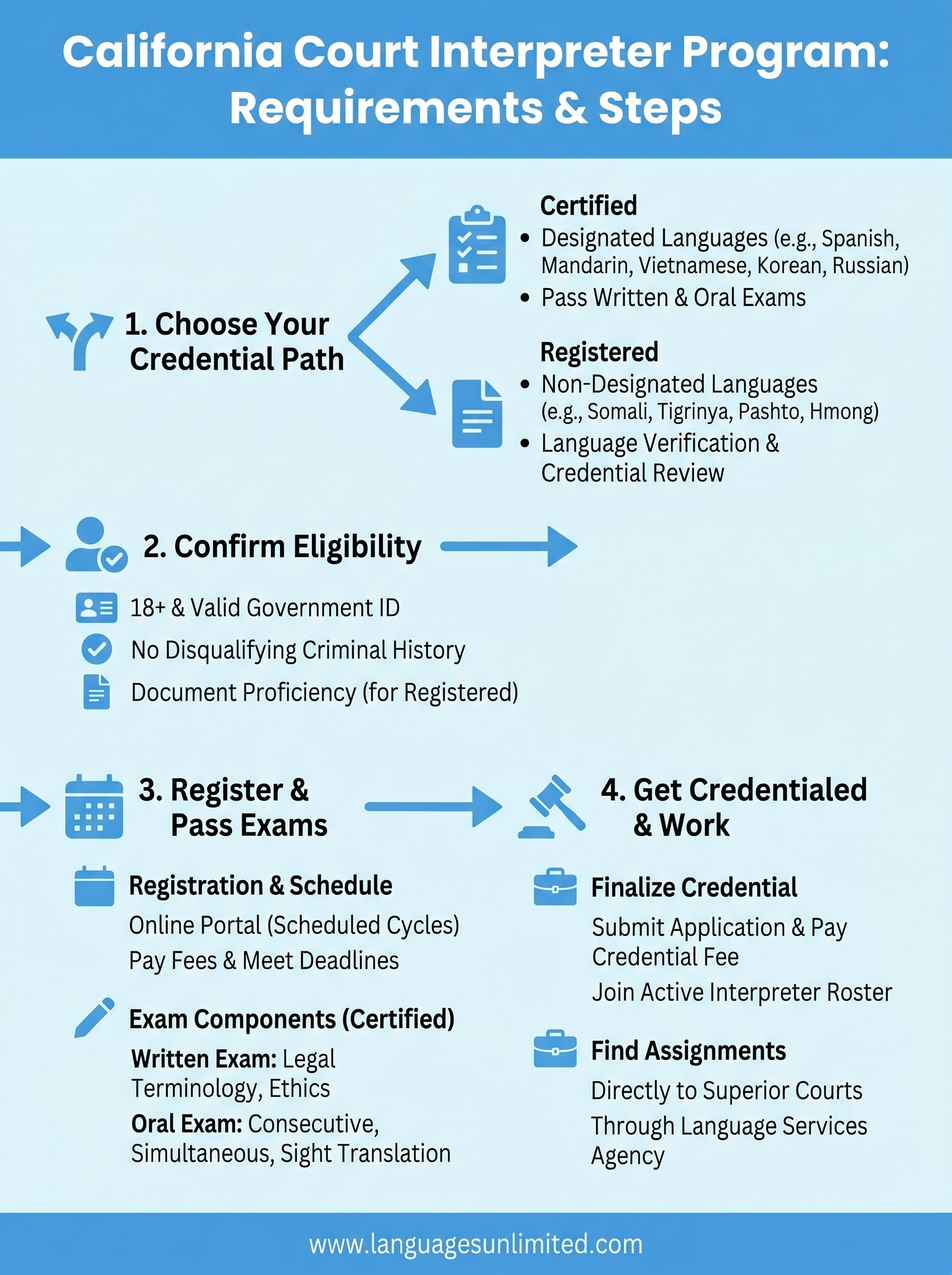
The Judicial Council of California recognizes two distinct credential levels for court interpreters: Certified and Registered. Certified interpreters have passed a rigorous written and oral exam for one of the designated languages listed by the Judicial Council. Registered interpreters work in non-designated languages, meaning languages for which no state certification exam currently exists, and they must meet a separate set of requirements to qualify.
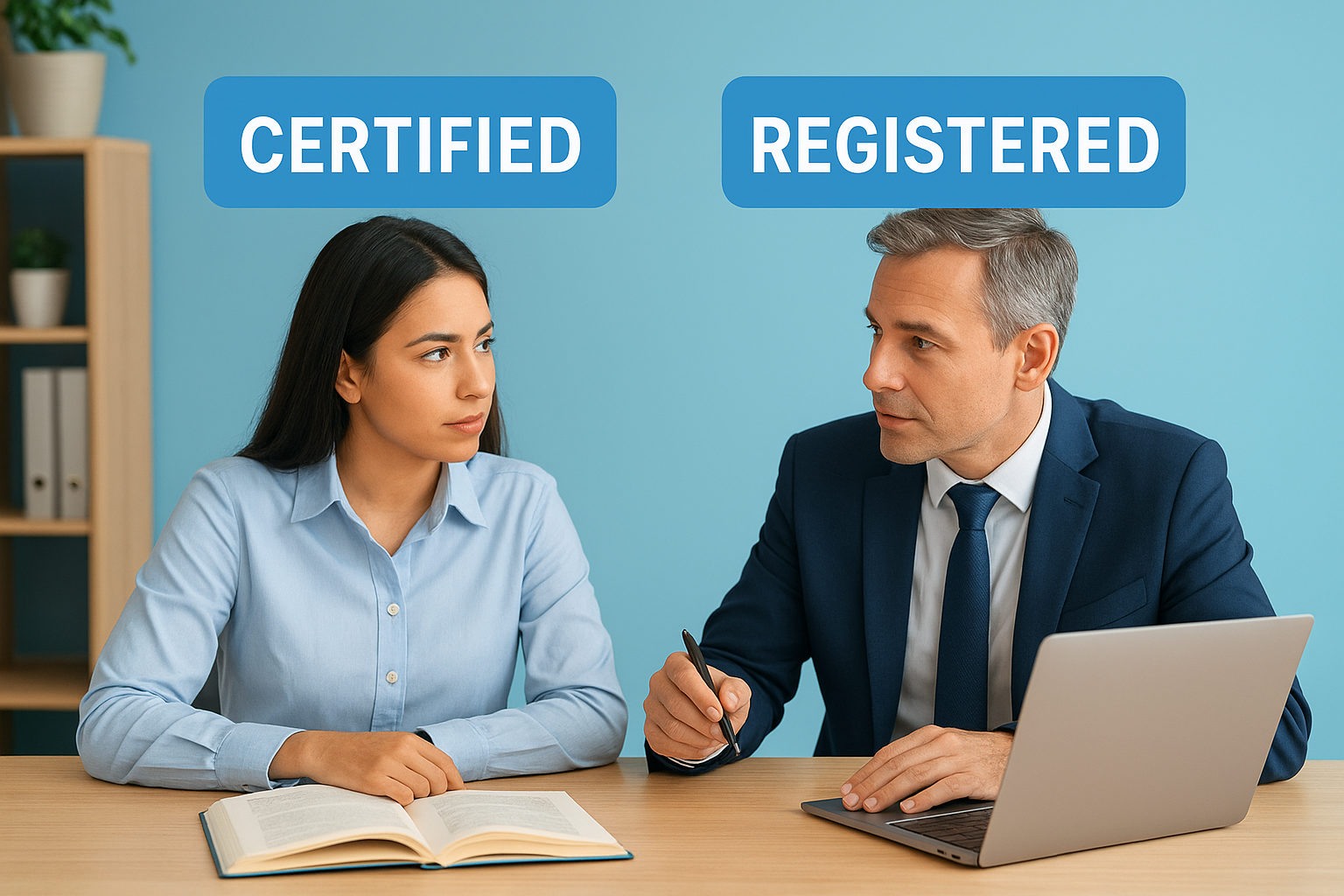
Here’s a quick breakdown of how the two compare:
| Credential | Language Type | Exam Required |
|---|---|---|
| Certified | Designated languages (e.g., Spanish, Mandarin, Vietnamese) | Written + Oral exams |
| Registered | Non-designated languages | Language verification + credential review |
What the Judicial Council oversees
California’s Judicial Council is the administrative body that manages the entire court interpreter certification process, including exam development, credentialing, and renewal requirements. All applications, fee payments, and renewals flow directly through the Judicial Council’s interpreter program office, not through individual courts or counties.
Knowing which body governs your credential matters because official requirements, exam announcements, and policy changes come exclusively from the Judicial Council.
Your credential also requires periodic renewal, which involves completing continuing education units (CEUs) and maintaining an active registration in the court interpreter database. Starting with a clear picture of the full credential lifecycle helps you plan not just for the exam itself, but for the ongoing professional requirements that follow.
Step 1. Choose the right credential path
Your first move in the California court interpreter program is figuring out which credential you’re actually pursuing. This decision comes down to one question: does the Judicial Council offer a certification exam for your target language? The answer determines everything about the path you take.
Designated vs. non-designated languages
The Judicial Council maintains an official list of designated languages, which are languages for which a full written and oral certification exam exists. If your language appears on that list, you work toward the Certified credential. If your language is not designated, you pursue the Registered credential instead, which involves a separate verification and credential review process rather than a standardized state exam.
Confirming your language’s designation status before you start any exam prep saves you from preparing for a process that doesn’t apply to your situation.
Here are examples of each category to help you identify where your language falls:
| Category | Language Examples |
|---|---|
| Designated | Spanish, Mandarin, Vietnamese, Korean, Russian |
| Non-designated | Somali, Tigrinya, Pashto, Hmong |
Check the Judicial Council’s official website directly to confirm the current status of your target language before you pay any fees or begin any formal preparation.
Step 2. Confirm eligibility and language category
Once you know which credential path applies to your language, you need to confirm that you actually meet the eligibility requirements before submitting any application to the California court interpreter program. Skipping this step costs you fees and delays your timeline unnecessarily.
Basic eligibility requirements
The Judicial Council sets clear minimum requirements for both certified and registered candidates. You must be at least 18 years old, hold a valid government-issued photo ID, and have no disqualifying criminal history under California court rules. Here’s what to confirm before applying:
- Minimum age: 18 years old
- Valid, current government-issued photo ID
- No felony convictions that disqualify you under California court standards
- Demonstrated ability to communicate in both English and your target language
Review the Judicial Council’s official eligibility requirements directly on their website before paying any application fee, since requirements can change between exam cycles.
Language proficiency documentation
Your language category also determines what supporting documentation you need to gather. For designated languages, the certification exam itself verifies your proficiency. For non-designated languages, you must submit independent proof of language ability, such as a recognized credential from a national language authority or formal academic documentation confirming your fluency.
Step 3. Register for and pass the required exams
With your eligibility confirmed, you can move into the most demanding phase of the California court interpreter program: the actual exam process. The Judicial Council opens exam registration windows on a scheduled cycle, so check the official Judicial Council website regularly to catch open registration periods before spots fill.
How to register
Submit your application through the Judicial Council’s online portal along with the required application fee. Keep a copy of your confirmation number, since you’ll need it to access your testing details. Registration closes well before the exam date, so plan ahead.
Missing a registration window can delay your timeline by an entire exam cycle, which may mean waiting six months or more.
What the exam covers
For designated language candidates, the exam has two components: a written test covering legal terminology and ethics, and an oral test with consecutive, simultaneous, and sight translation exercises. You’ll interpret realistic court scenarios, so practice with actual courtroom transcripts and legal vocabulary lists before your test date.

Here is a quick breakdown of what each component tests:
| Exam Component | Skills Tested |
|---|---|
| Written | Legal terms, ethics, court procedures |
| Oral | Consecutive, simultaneous, sight translation |
Step 4. Get credentialed and start working in courts
Passing the exam is a major milestone, but it doesn’t automatically activate your credential. You still need to complete the official credentialing process through the Judicial Council before you can work in a California courtroom as part of the California court interpreter program.
Submit your credential application
Once you receive your passing exam results, log into the Judicial Council’s online portal and submit your formal credential application. You’ll need to provide a copy of your government-issued ID, pay the credentialing fee, and confirm your contact details so the Judicial Council can add you to the active interpreter roster. Processing times vary, so submit everything promptly to avoid unnecessary delays.
Once your credential is active, you can verify your listing by searching the Judicial Council’s public interpreter database before accepting any court assignments.
Find your first court assignments
With your credential confirmed, you have two main ways to start working. You can contact individual superior courts directly to register as an available interpreter, or you can work through a certified language services agency that already holds active court contracts. Here’s a quick comparison:
| Option | Best For |
|---|---|
| Direct court contact | Building local court relationships |
| Agency placement | Faster access to consistent assignments |
Both paths are legitimate, and many experienced interpreters use both simultaneously to maximize their caseload.
Next steps
You now have a clear picture of the full certification process within the California court interpreter program, from choosing the right credential path to finding your first court assignments. Your immediate priorities are straightforward: confirm your language’s designation status on the Judicial Council’s website, verify your eligibility, and watch for the next open registration window so you don’t miss an entire exam cycle.
Once you’re credentialed, working with an established language services agency gives you faster access to consistent assignments and removes the administrative burden of sourcing new cases on your own. Languages Unlimited has placed qualified interpreters in courts, law firms, and government agencies across all 50 states since 1994. Whether you’re just starting out or looking to add court assignments to an existing workload, our team can help you find the right opportunities. Contact our staffing team to discuss how we place certified and registered court interpreters across the country.