



A single mistranslated word in a courtroom can change the outcome of a case. That’s why mastering legal terminology for interpreters is non-negotiable, whether you’re preparing for certification, building your professional vocabulary, or stepping into court interpreting for the first time. Legal language is precise, and judges, attorneys, and clients all depend on interpreters to get it right.
At Languages Unlimited, we’ve worked with thousands of legal interpreters since 1994, placing them in courtrooms, depositions, and immigration proceedings across all 50 states. We know firsthand which terms trip people up, and which resources actually help interpreters perform at the highest level.
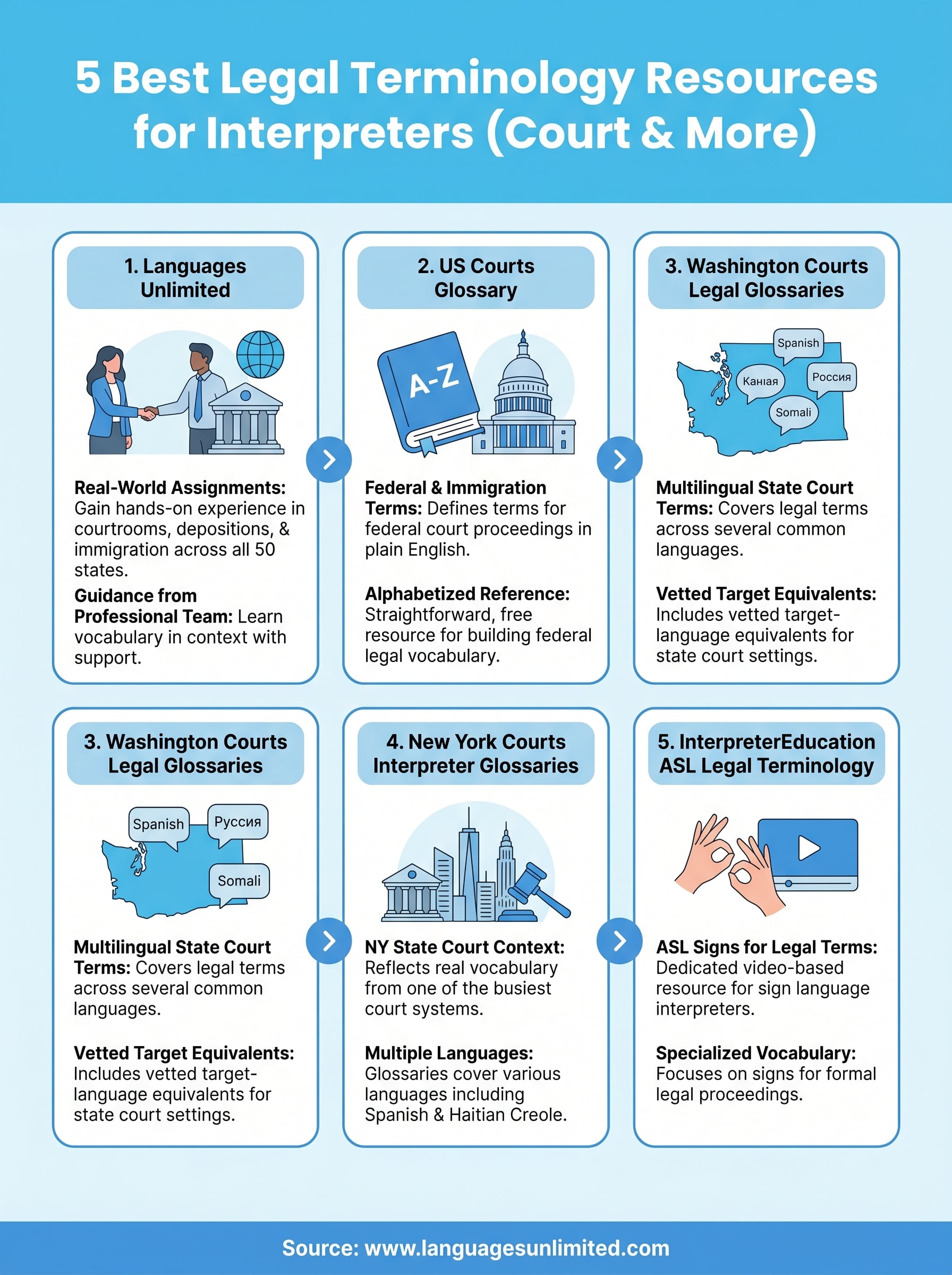
This article breaks down five of the best legal terminology resources available for interpreters today, covering court-specific glossaries, multilingual references, and study tools built for real-world interpreting scenarios. Whether you’re a working interpreter or just getting started, these resources will sharpen your command of the language that matters most in legal settings.
1. Languages Unlimited
Languages Unlimited has been placing legal interpreters in courtrooms, depositions, and immigration hearings since 1994. Beyond connecting interpreters with clients, the organization provides practical support that helps you build the vocabulary and contextual knowledge needed to perform accurately in high-stakes legal settings.
What you get
Working with Languages Unlimited gives you access to real legal interpreting assignments across a wide range of proceedings, from criminal trials to civil depositions. That hands-on experience, combined with guidance from a seasoned professional team, helps you absorb legal terminology for interpreters far more effectively than passive study alone.
Active, real-world assignments accelerate vocabulary retention faster than any glossary can on its own.
Best for
Languages Unlimited works best for working interpreters who want to build a consistent client base while sharpening their legal vocabulary in practice. It also suits bilingual professionals looking to transition into legal interpreting who need a trusted platform to get their first serious placements.
How to use it effectively
Reach out to the Languages Unlimited team directly and specify your language pairs and legal specializations. The more clearly you communicate your experience with specific legal contexts, such as immigration, criminal, or civil proceedings, the better matched your assignments and professional development opportunities will be.
Limits to keep in mind
Languages Unlimited is a professional services provider, not a standalone terminology database. If you need a static glossary to study independently, pair it with one of the other resources on this list to cover your self-study needs outside of active assignments.
Cost
There is no fee to join the network as an interpreter. Languages Unlimited operates on a contractor model, meaning you earn based on the assignments you complete. Visit www.languagesunlimited.com to start the onboarding process.
2. US Courts Glossary
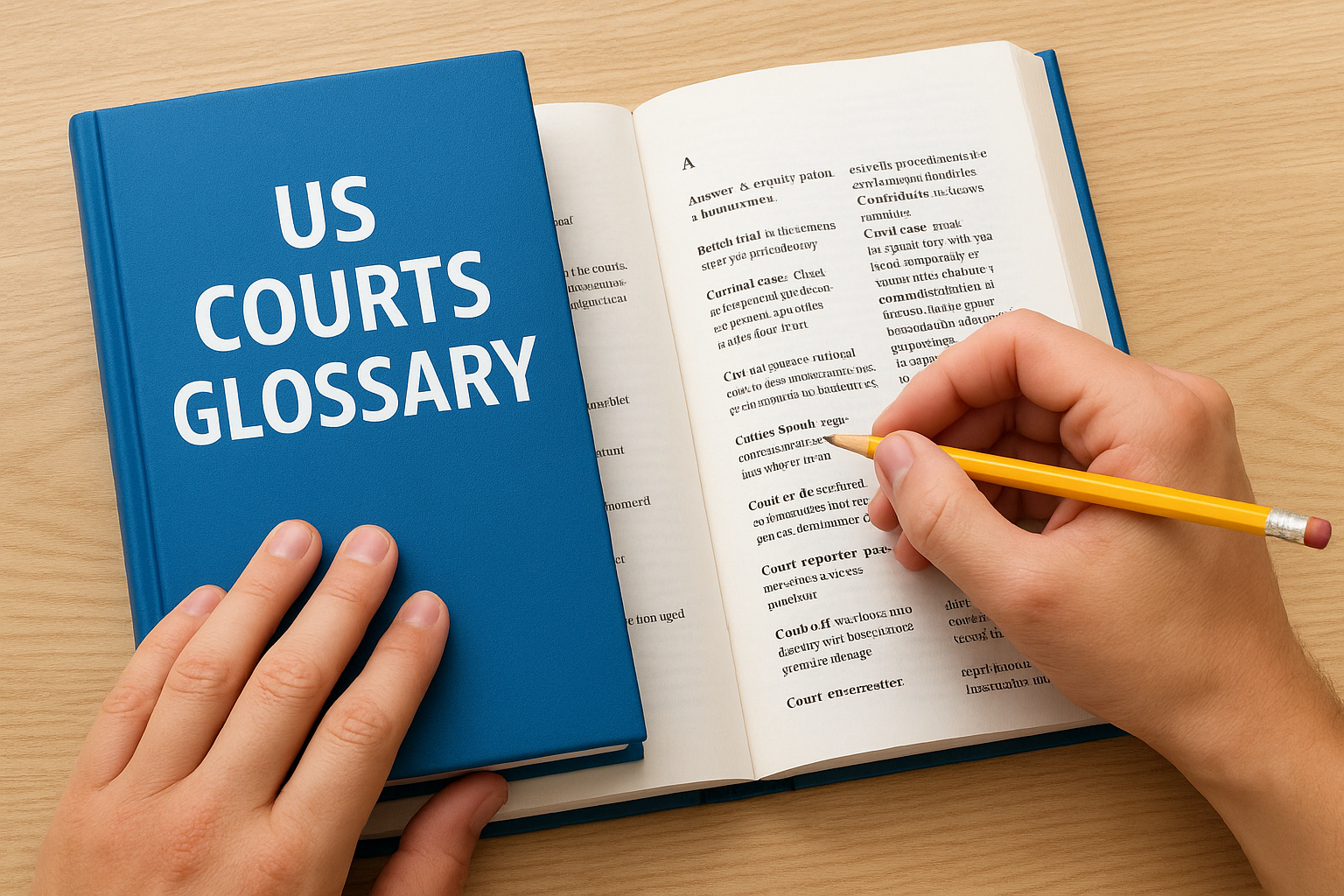
The US Courts glossary is a free reference published directly by the federal court system. It defines terms used in federal court proceedings, making it one of the most reliable starting points for legal terminology for interpreters working in federal or immigration settings.
What you get
You get a straightforward, alphabetized glossary of hundreds of legal terms defined in plain English. Coverage spans key categories including:
- Trial and pretrial procedures
- Criminal and civil court terminology
- Judicial roles and courtroom participants
Best for
This resource suits interpreters preparing for federal court or immigration assignments where precise federal vocabulary is expected from day one.
How to use it effectively
Work through the glossary alphabetically, writing your target-language equivalents next to each entry as you go. Building this bilingual personal reference turns passive reading into active, retention-focused study.
Pairing this glossary with live assignment experience locks in federal legal vocabulary far faster than study alone.
Limits to keep in mind
The glossary covers English only and focuses strictly on federal terms. It won’t address state-level procedures or specialized criminal terminology you may encounter in local court settings.
Cost
Free. Access it directly at uscourts.gov.
3. Washington Courts Legal Glossaries
Washington State Courts publishes interpreter-specific legal glossaries that go well beyond a basic term list. These resources were built with working court interpreters in mind, making them directly relevant to the day-to-day demands of legal terminology for interpreters in state court settings.

What you get
You get multilingual glossaries covering legal terms across several common languages, including Spanish, Russian, and Somali. Each glossary pairs English legal terms with vetted target-language equivalents, saving you significant research time when building your personal reference materials.
Best for
This resource suits interpreters who regularly work state court assignments or who need multilingual terminology support beyond English-only references. It’s especially useful if your language pair includes one of the covered languages.
If your language is included, this glossary should be one of the first resources you download and review.
How to use it effectively
Download the glossary for your specific language pair and cross-reference it against real proceedings you’ve worked. Marking terms you encounter in live assignments reinforces long-term retention more effectively than passive reading alone.
Limits to keep in mind
Coverage is limited to a select number of languages, so interpreters working with less common language pairs may not find direct support here.
Cost
Free. Find the glossaries through the Washington Courts official website.
4. New York Courts Interpreter Glossaries
New York Courts provides interpreter-specific glossaries developed directly for court interpreting use. These resources reflect the real vocabulary you’ll encounter in one of the busiest court systems in the country, making them a strong addition to your collection of legal terminology for interpreters.
What you get
You get glossaries covering multiple languages, including Spanish, Haitian Creole, and others, with English legal terms matched to target-language equivalents. Each glossary targets court interpreting contexts specifically, not general legal reference.
Best for
This resource works best for interpreters handling New York state court assignments or those who regularly interpret for communities where the covered languages are most common.
How to use it effectively
Review the glossaries before your assignments and build a personal bilingual reference by flagging the terms most relevant to your specific proceedings. Focusing on case types you encounter most often makes your study time far more productive.
Reviewing glossary terms the night before an assignment reinforces retention better than long bulk study sessions.
Limits to keep in mind
The language coverage is limited, so interpreters working outside the supported languages will need additional resources to fill the gaps.
Cost
Free. Access the materials through the New York Courts official website.
5. InterpreterEducation ASL Legal Terminology
InterpreterEducation.org offers a dedicated ASL legal terminology resource built specifically for sign language interpreters working in court and other formal legal settings. This makes it a unique addition to any interpreter’s study toolkit.
What you get
You get a structured collection of ASL signs mapped to common legal terms used in court and other legal proceedings, giving sign language interpreters a focused reference for one of the most demanding interpreting environments.
Best for
This resource works best for ASL interpreters preparing for court assignments or Deaf professionals who operate in legal contexts and need precise sign equivalents for formal legal vocabulary.
How to use it effectively
Study the signs systematically by pairing each term with its English definition, then practice producing the signs in context. Reviewing legal terminology for interpreters through video-based resources like this one accelerates fluency faster than text-only methods.
Video-based sign language resources build production accuracy in ways that written glossaries simply cannot replicate.
Limits to keep in mind
The resource covers ASL only, so interpreters working with spoken languages will need separate references. Coverage may not include every specialized term you encounter in complex criminal or civil proceedings.
Cost
Free to access through the InterpreterEducation.org website.
Next Steps
These five resources give you a solid foundation for building your command of legal terminology for interpreters, but the fastest way to sharpen those skills is through real assignments in real courtrooms.
Start by downloading the free glossaries that match your language pairs and legal specializations, then work through them consistently before each assignment. Cross-reference multiple sources to fill any gaps your primary reference leaves open.
When you’re ready to turn your preparation into professional interpreting work, Languages Unlimited connects you with legal assignments across all 50 states. Our team matches you with proceedings that fit your language background and experience level, so you build your legal vocabulary in context rather than in isolation. Contact the Languages Unlimited team today to start receiving legal interpreting assignments and put everything you’ve studied to practical use.