



When someone applies for Medicaid, visits a Social Security office, or accesses public assistance programs, clear communication can make the difference between receiving critical support and falling through the cracks. A social services interpreter bridges that gap, helping limited English proficient individuals and deaf or hard-of-hearing clients communicate effectively with caseworkers, counselors, and government representatives.
Whether you’re a social services agency looking to provide language access for your clients, or you’re considering a career as an interpreter in this field, understanding the role matters. At Languages Unlimited, we’ve provided professional interpretation services since 1994, placing qualified interpreters in government agencies, healthcare facilities, and social service organizations across all 50 states.
This article covers what social services interpreters do, the training and certifications required to enter the profession, and how both agencies and individuals can access these essential services. You’ll also find guidance on study materials, job opportunities, and the specific skills that set successful interpreters apart in public-sector settings.
What a social services interpreter does
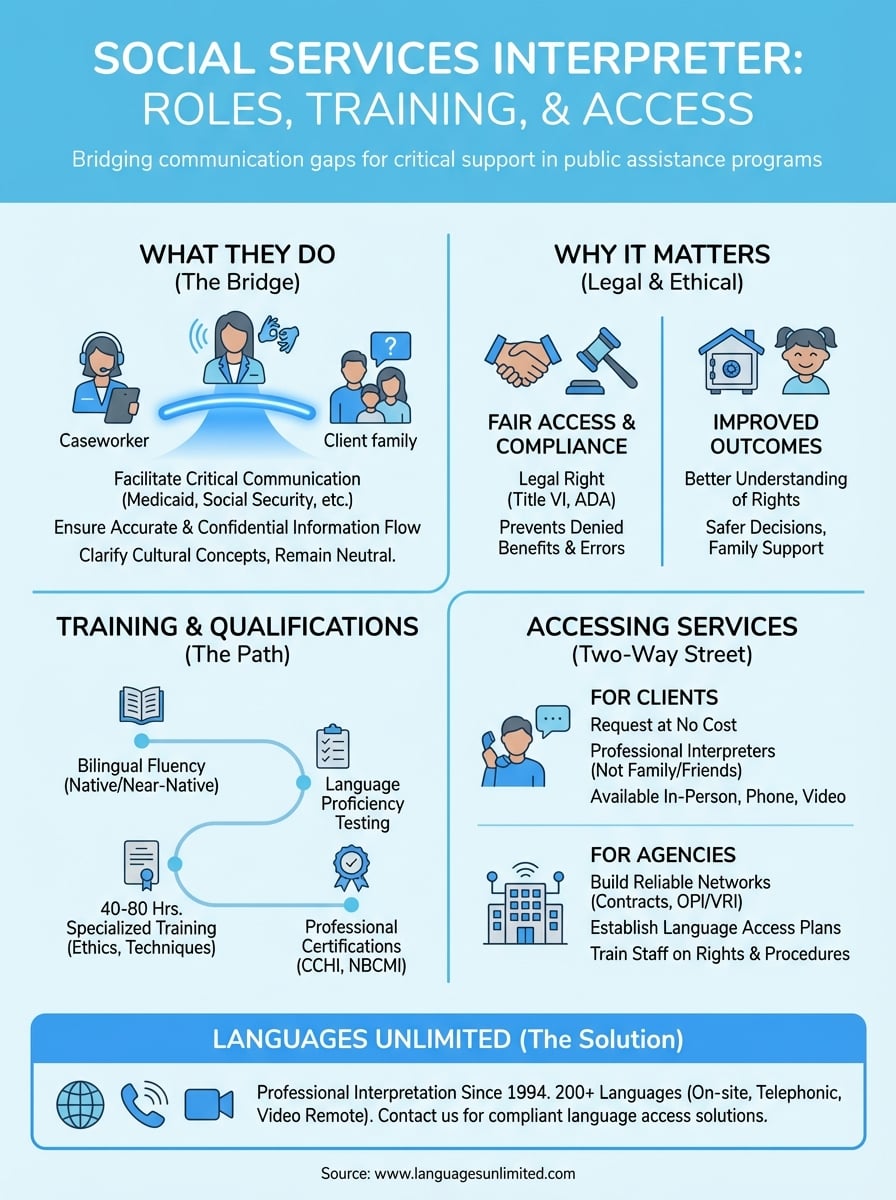
A social services interpreter converts spoken or signed communication between caseworkers and clients who don’t share a common language. You’ll find these professionals facilitating conversations during eligibility interviews, benefits applications, child welfare assessments, and crisis intervention sessions. Their work ensures that language barriers don’t prevent people from accessing food assistance, housing support, disability services, or family preservation programs.
Core responsibilities in client interactions
When you work as a social services interpreter, you render everything spoken in the conversation without adding, omitting, or altering the message. This includes explaining application procedures, translating case notes during reviews, and interpreting during home visits or court-mandated meetings. You maintain strict confidentiality standards since you’ll hear sensitive information about family situations, financial hardships, medical conditions, and legal issues.
Professional interpreters convey meaning accurately without taking sides or inserting personal opinions into the conversation.
Interpreters also clarify cultural concepts that don’t translate directly. For example, explaining how U.S. child welfare practices differ from those in a client’s home country, or helping a caseworker understand why a refugee family might distrust government services. These moments require cultural competence beyond vocabulary knowledge.
Settings and environments
Social services interpreters work in government offices where clients apply for SNAP benefits, Medicaid, or Temporary Assistance for Needy Families. You might interpret at community centers during health screenings, housing assistance workshops, or job training programs. Some assignments happen in clients’ homes during welfare checks, foster care evaluations, or elderly care assessments.

Many social services interpreters provide telephonic or video remote interpretation rather than appearing on-site. This allows agencies in rural areas or those handling sudden walk-ins to access qualified interpreters immediately. Languages Unlimited connects agencies with interpreters in over 200 languages through our state-of-the-art telephone interpreting system, typically connecting you with a qualified professional in under a minute.
Skills beyond language
Effective social services interpreters manage emotional intensity during difficult conversations about abuse, eviction, or benefit denials. You stay neutral when clients become upset or disagree with agency decisions. Specialized terminology knowledge matters too, since you’ll interpret terms like "in-kind benefits," "means testing," "kinship care," or "categorical eligibility" that don’t exist in everyday conversation.
Interpreters also navigate complex bureaucratic systems to help conversations flow smoothly. Understanding how different programs interconnect, which documents clients need, and how appeals processes work helps you provide accurate context without stepping outside your role as a language conduit.
Why social services interpreting matters
Language barriers in social services can result in denied benefits, misunderstood eligibility requirements, and families falling into crisis when they can’t access help. When you provide qualified interpretation, you enable fair access to programs that keep children safe, prevent homelessness, and support vulnerable populations. The consequences of miscommunication go beyond inconvenience; they affect whether families eat, whether elderly residents receive care, and whether abuse victims get protection.
Legal obligations and client rights
Federal law requires agencies receiving federal funding to provide meaningful language access under Title VI of the Civil Rights Act. You must offer interpretation services at no cost to clients with limited English proficiency. The Americans with Disabilities Act similarly mandates sign language interpretation and other accommodations for deaf or hard-of-hearing individuals accessing public services.
Failing to provide qualified interpreters doesn’t just create barriers; it violates civil rights protections that guarantee equal access to government programs.
State and local regulations often impose additional requirements beyond federal standards. California, for example, requires bilingual staff or contract interpreters in counties with substantial non-English speaking populations. These mandates exist because research shows that language barriers directly cause benefit enrollment errors, missed appointment notifications, and incomplete case documentation that harm clients and waste agency resources.
Real outcomes when language access exists
When you work with a qualified social services interpreter, clients complete applications correctly the first time, reducing administrative burden on caseworkers who otherwise spend hours fixing errors. Families understand their rights and responsibilities, leading to better program compliance and fewer sanctions for missed requirements they didn’t comprehend. Child welfare workers make safer decisions when they can communicate directly with parents during investigations, rather than relying on children or untrained family members to interpret sensitive conversations.
Training and qualifications to become one
Most social services interpreter positions require bilingual fluency plus specific training in interpretation techniques and ethics. You won’t need a college degree for many entry-level roles, but you must demonstrate language proficiency in both English and your target language through testing. Many agencies require 40 to 80 hours of interpreter training that covers consecutive interpretation, note-taking systems, professional boundaries, and confidentiality requirements.
Basic education and language proficiency
You need native or near-native fluency in both languages you’ll interpret between, including understanding regional dialects, idioms, and cultural references. Passing a language proficiency exam proves your competency, with tests available through organizations like the National Board of Certification for Medical Interpreters or state-specific social services testing programs. Some agencies accept high school diplomas combined with language assessment results, while others prefer candidates with associate or bachelor’s degrees in linguistics, social work, or related fields.
Beyond language skills, you should complete interpreter training programs that teach sight translation, memory retention techniques, and how to handle emotionally charged situations. Community colleges, nonprofits serving immigrant populations, and online platforms offer courses ranging from introductory workshops to comprehensive certificate programs lasting several months.
Professional certifications and specialized training
While no universal certification requirement exists for social services interpreters, many employers prefer candidates with credentials from recognized bodies. The Certification Commission for Healthcare Interpreters and the National Board of Certification for Medical Interpreters offer certifications that strengthen your qualifications, since healthcare and social services often overlap in government agencies. You gain credibility and higher pay by earning these credentials.
Professional certification demonstrates your commitment to ethical standards and quality interpretation beyond basic language skills.
How to request an interpreter for social programs
You have the legal right to an interpreter when accessing federally funded social services, and agencies must provide this service at no cost to you. Most government offices maintain contracts with interpretation providers or employ bilingual staff to handle common languages. Knowing how to request a social services interpreter ensures you receive clear information about benefits, understand your obligations, and avoid errors that could delay or deny assistance you need.
Requesting as an individual client
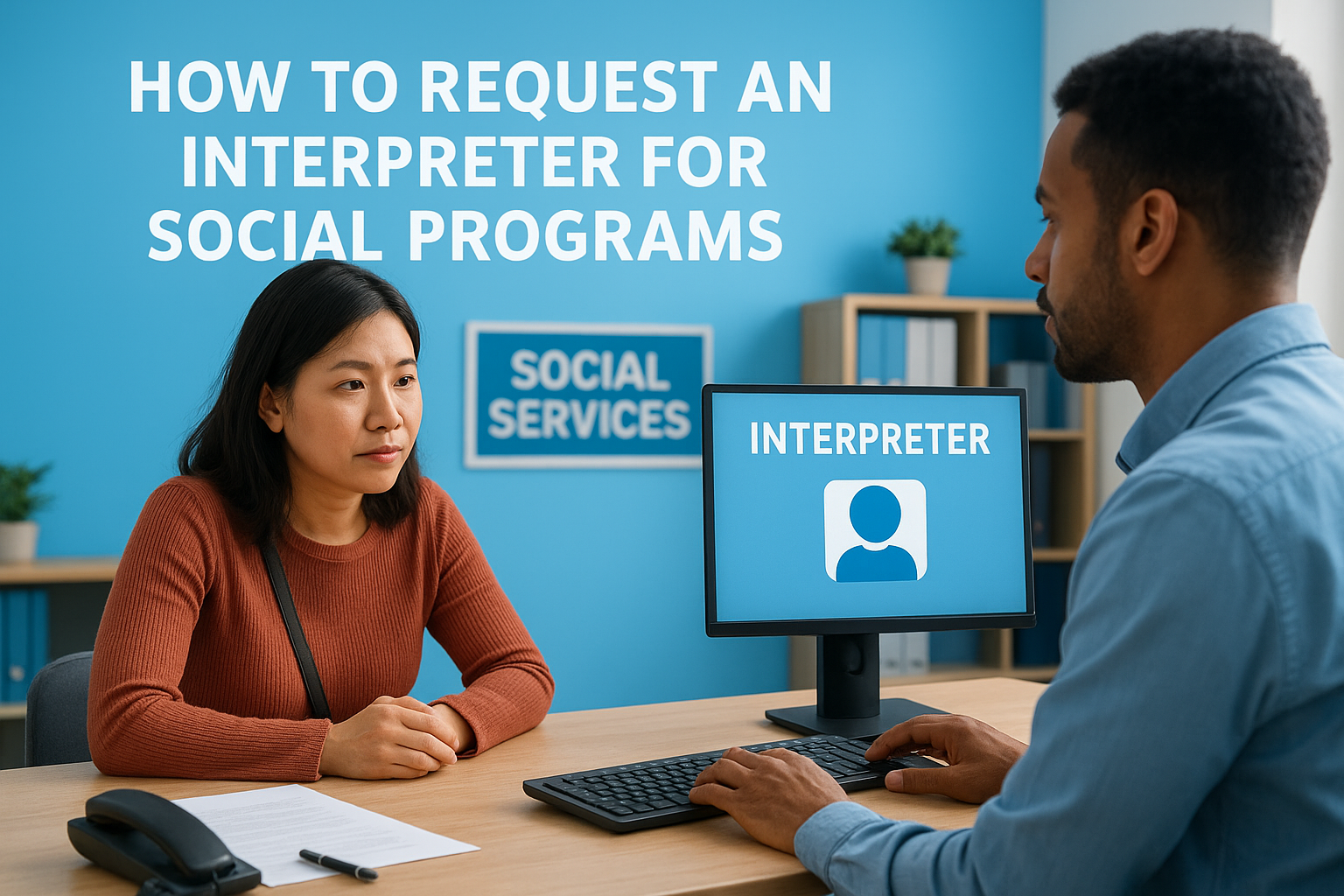
When you visit a social services office in person, tell the receptionist or intake worker immediately that you need an interpreter. Specify your language, including any dialect if relevant (Mandarin versus Cantonese, for example). The agency will either connect you with a telephonic interpreter on the spot or schedule your appointment for a time when an on-site interpreter is available. For planned visits, call ahead to request interpretation services so the office can arrange qualified support before you arrive.
You don’t need to bring family members or friends to interpret; professional interpreters protect your privacy and ensure accurate communication that informal helpers can’t guarantee.
When applying for benefits online or by mail, look for language access notices that explain how to request help in your language. Many applications include checkboxes or phone numbers for interpretation requests. Social Security, SNAP, and Medicaid programs all maintain multilingual customer service lines you can call to complete applications with real-time interpretation support.
Getting help through community organizations
Local nonprofit agencies that serve immigrant communities, refugee resettlement programs, and disability advocacy groups often help clients request interpreters from government offices. These organizations know which agencies provide quality language access and can advocate on your behalf if an office refuses your request or delays scheduling. Community health centers and legal aid societies also assist with navigating the interpretation request process for complex cases involving multiple agencies.
How agencies can provide compliant language access
Social services agencies must establish reliable systems for connecting clients with qualified interpreters whenever language barriers exist. You need contracts with professional interpretation providers, trained bilingual staff, and clear protocols that staff follow when clients request language assistance. Compliance means more than offering interpretation; you must provide timely access without making clients wait days for appointments or forcing them to bring untrained family members who compromise confidentiality.
Building a qualified interpreter network
You should contract with multiple interpretation providers to ensure coverage across the languages your client population speaks. Languages Unlimited maintains a network of over ten thousand interpreters covering more than 200 languages, including rare dialects that smaller vendors can’t support. Establish agreements for both on-site interpretation for scheduled appointments and telephonic or video remote services for walk-ins and urgent situations.
Professional interpretation contracts protect your agency from civil rights complaints while ensuring clients receive accurate information that prevents costly errors in benefit determinations.
Document your language access plan showing which languages you encounter most frequently, how you’ve arranged interpretation coverage, and your process for handling less common language requests. Federal oversight agencies review these plans during compliance audits, so maintaining current contracts and usage data demonstrates your commitment to equal access.
Staff training on language access rights
Train every employee who interacts with clients about federal language access requirements and your agency’s specific procedures for requesting social services interpreter support. Staff need to recognize when clients have limited English proficiency, know how to activate telephonic interpretation immediately, and understand that clients have the right to refuse family members as interpreters. Regular training updates keep your team aware of new contract providers, available languages, and best practices for working effectively with professional interpreters during case interviews.
Next steps
Whether you manage a social services agency needing qualified interpreters or you’re pursuing a career in this field, you now understand the role these professionals play in ensuring equal access to critical government programs. Agencies must establish reliable interpretation systems that comply with federal mandates while serving clients effectively. Individuals seeking interpreter positions should pursue formal training and language proficiency testing to meet employer requirements and deliver ethical, accurate communication.
Languages Unlimited has connected government agencies and social service organizations with professional interpreters since 1994, covering over 200 languages through on-site, telephonic, and video remote services. Our nationwide network ensures you access qualified interpreters who understand the sensitivity and compliance requirements of public-sector work. If your agency needs interpretation support or you want to explore staffing solutions that include bilingual professionals, contact our team to discuss how we can help you serve diverse populations effectively and meet your language access obligations.