



A patient arrives at your clinic speaking only Mandarin. A critical business call comes in from a Spanish-speaking client. A legal proceeding starts in 30 minutes and your witness speaks Vietnamese. When you need an interpreter now, every minute counts, and fumbling through a Google search isn’t the answer.
Finding qualified interpreters quickly used to mean hours of phone calls and crossed fingers. Today, multiple options exist for reaching professional interpreters within minutes, whether through phone, video, or mobile apps.
This guide walks you through the fastest ways to connect with an interpreter when time is tight. At Languages Unlimited, we’ve provided interpretation services since 1994, and we understand that urgent language needs don’t follow a schedule. Below, you’ll learn exactly how to reach an interpreter fast, and what to look for to ensure quality doesn’t suffer in the rush.
When you need an interpreter now
True urgency in language access happens in specific, high-stakes scenarios where waiting even an hour causes measurable harm or risk. You might face a medical emergency where a patient cannot communicate symptoms, a law enforcement situation requiring immediate statements, or a business negotiation that cannot be postponed. These situations demand interpreters who can connect within minutes, not hours or days.
Medical and healthcare situations
Emergency rooms see this constantly. A patient arrives with chest pain but speaks only Korean. Your triage nurse cannot determine if the pain is cardiac or musculoskeletal without accurate communication. Diagnostic delays in these moments can mean life or death. Similarly, psychiatric evaluations, urgent surgeries requiring consent, and labor and delivery scenarios all require immediate language access to ensure patient safety and informed decision-making.
When seconds count, phone or video interpreting connects you to qualified medical interpreters in under two minutes on average.
Legal proceedings and compliance deadlines
Court hearings start on schedule, regardless of language barriers. If your witness or defendant needs an interpreter now, the proceeding cannot begin without one. Police interviews, detention hearings, and time-sensitive filings with immigration authorities all fall into this category. You also encounter compliance deadlines where documents must be translated and submitted by end of business, leaving no room for standard turnaround times.
Business-critical communications
Executive calls with international partners sometimes happen with minimal notice. Your company lands a major client in Brazil, and the CEO wants to speak directly with their leadership team this afternoon. Contract negotiations hit a critical point where both parties need to hash out terms in real time across languages. Product launches, crisis communications, and shareholder meetings can all trigger immediate interpreting needs where postponement means lost revenue or damaged relationships.
Step 1. Pick the fastest interpreting mode
Three modes deliver interpreters fastest: phone, video, and mobile apps. Each connects you within one to three minutes on average, but your specific situation determines which works best. Phone interpreting reaches the widest language pool and works anywhere with cell service. Video interpreting adds visual context for sign language or document review. Mobile apps combine both options with added convenience if your organization already subscribes to one.
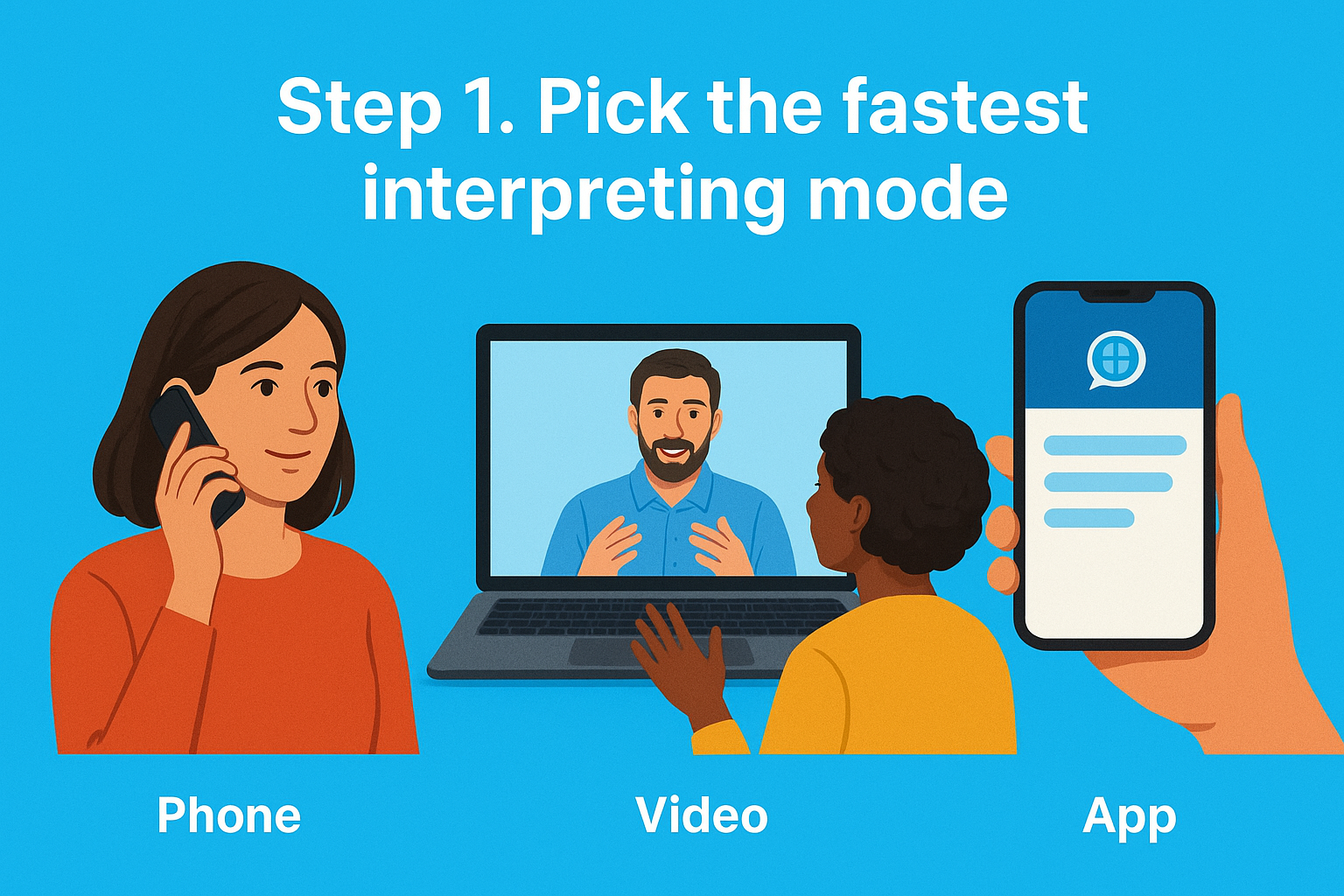
Phone interpreting for instant connection
Dial a toll-free number, provide your account or department code, and request your language. Most reputable services connect you to a qualified interpreter in under 90 seconds for common languages like Spanish, Mandarin, or Arabic. Rare languages may take slightly longer but still beat scheduling an on-site interpreter by hours or days. Phone interpreting works well for medical triage, police interviews, and any situation where you need an interpreter now but don’t require visual elements.
Phone interpreting typically delivers the fastest connection times because it draws from the largest interpreter pools working around the clock.
Video interpreting for visual context
Video platforms connect you just as quickly as phone but add a visual layer that matters in specific scenarios. Sign language interpretation requires video by nature. Document reviews where the interpreter needs to see forms or ID cards benefit from screen sharing. Medical exams involving physical symptoms like rashes or mobility issues become clearer when the interpreter can observe the patient directly through video.
Step 2. Gather key details before you call
Having the right information ready cuts your connection time significantly. Services route interpreters based on specific details you provide upfront, so gathering these facts before dialing means you reach the right professional faster. Two minutes of preparation saves five minutes of hold time and transfers.
Essential information to collect
You need four pieces of information at minimum. First, identify the exact language and dialect required. "Spanish" isn’t specific enough; Mexican Spanish differs from Castilian Spanish in business terminology. Second, note the subject matter (medical, legal, technical) because specialized interpreters handle different fields. Third, confirm the expected call duration so the service can assign an interpreter with appropriate availability. Fourth, have your account or department code ready if your organization uses one.
| Information Type | Example | Why It Matters |
|---|---|---|
| Language + Dialect | Vietnamese (Northern) | Ensures correct interpreter match |
| Subject Matter | Medical cardiology | Routes to specialized interpreter |
| Duration | 15-20 minutes | Prevents mid-session interruptions |
| Account Code | DEPT-4782 | Bypasses billing setup delays |
Why preparation speeds connection time
Interpreting services use your details to filter thousands of interpreters instantly. When you need an interpreter now and call unprepared, you spend precious minutes answering routing questions that could happen before you dial. Operators must verify languages, confirm specialties, and sometimes transfer you between departments.
Having your language code, subject matter, and account details written down before calling typically cuts connection time by 30 to 45 seconds.
Step 3. Connect fast and run a clear session
Once you reach the interpreter, the first 30 seconds set the tone for the entire session. You confirm the language, state your role and situation, and verify audio clarity. These opening moments determine whether you spend five minutes resolving technical issues or jump straight into productive communication. When you need an interpreter now, wasting time on unclear setup defeats the purpose of fast access.
Start with a clear introduction
State your role and location immediately upon connection. "This is Dr. Martinez in the emergency room at County Hospital" tells the interpreter exactly what context they’re entering. Follow with the specific reason for the call: "I need to assess chest pain with a Mandarin-speaking patient." This clarity helps the interpreter prepare for medical terminology.
Clear introductions in the first 30 seconds help interpreters adjust their terminology and approach for your specific situation.
Template for opening statements:
"Hello, this is [Your Name], [Your Role] at [Location].
I need interpretation for [specific situation].
The other party is [present/on the line/arriving now]."
Keep communication direct during the session
Speak in short, complete sentences and pause after each one. "The patient has chest pain" works better than "So, um, the patient is saying they have some discomfort in their chest area." Address the other person directly using "you" rather than third person. Say "Where does it hurt?" instead of "Ask her where it hurts." Avoid idioms that don’t translate well.
Step 4. Cover privacy, compliance, and edge cases
When you need an interpreter now, privacy and compliance requirements still apply. You cannot skip legal protections just because time is short. Medical interpreters must follow HIPAA regulations, legal interpreters must maintain attorney-client privilege, and all professional interpreters adhere to confidentiality standards regardless of how quickly you connect.
HIPAA and confidentiality requirements
Verify your interpreting service provides HIPAA-compliant platforms before sharing patient information. Most reputable phone and video services use encrypted connections and train interpreters in privacy protocols. Ask for documentation confirming compliance if you work in healthcare. Business Associate Agreements (BAAs) should already exist between your organization and the interpreting service.
Reputable interpreting services maintain HIPAA compliance across all delivery modes, but you must verify this before sharing protected health information.
Handling technical failures
Technical problems happen even with reliable services. Your video feed freezes, the phone line drops, or background noise makes communication impossible. Keep backup contact numbers for both phone and video platforms accessible. Switch modes immediately rather than troubleshooting. If video fails, dial the phone line. If one service experiences outages, have a secondary provider ready in your contacts.
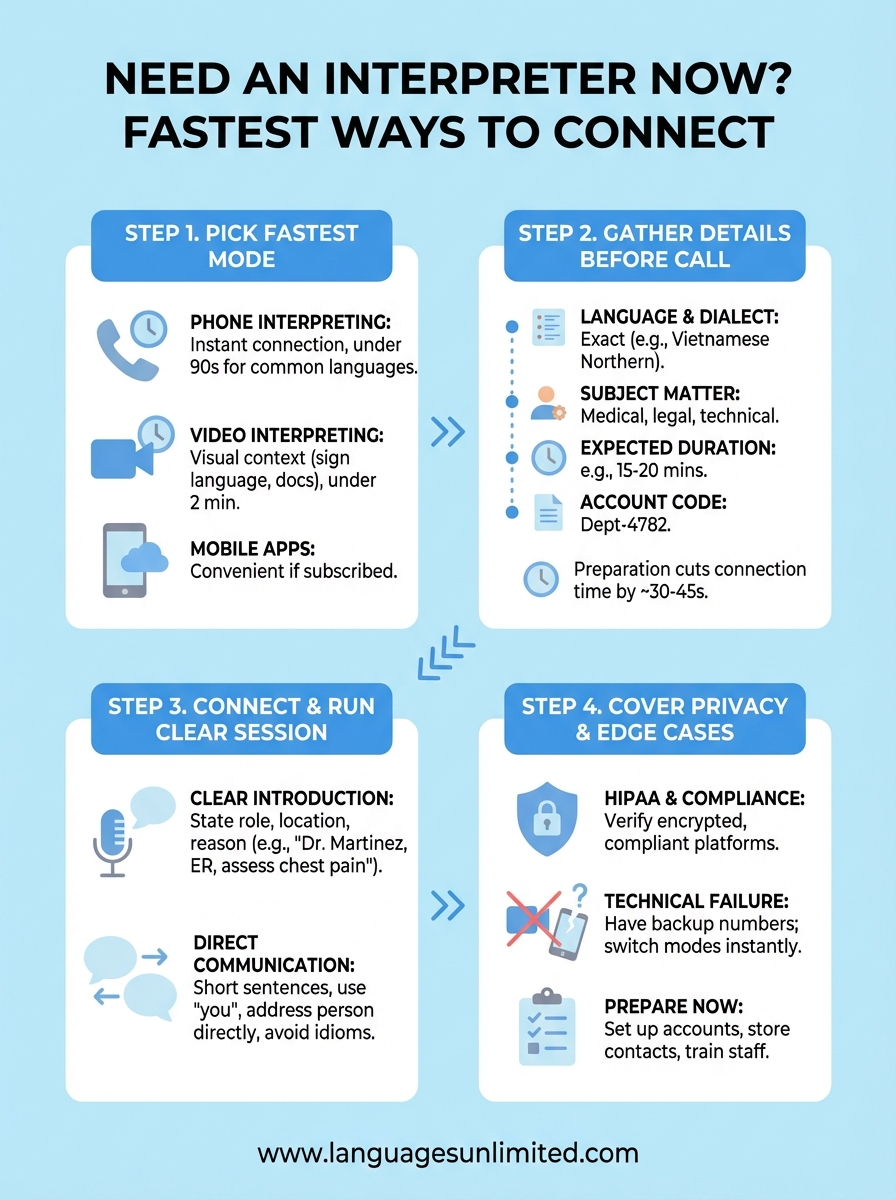
Quick recap and what to do next
When you need an interpreter now, speed and quality both matter. Choose phone or video interpreting for connections under two minutes, gather your language details and account codes before calling, and start sessions with clear introductions. Technical preparation prevents delays, and understanding compliance requirements protects you legally even during urgent requests.
Set up interpreting accounts now rather than waiting for emergencies. Your organization gains faster access when account details and billing are already on file. Store contact numbers for both phone and video services in your department’s emergency contacts, and train staff on basic procedures so anyone can connect when seconds count.
Languages Unlimited provides 24/7 phone and video interpreting with qualified professionals in over 200 languages. Our average connection time stays under 90 seconds for common languages, and we maintain full HIPAA compliance across all platforms. Contact us today to set up your rapid-access interpreting account and ensure you’re ready the next time urgent communication needs arise.