



When a patient walks into an emergency room speaking only Mandarin, or a legal deposition involves a witness fluent in Haitian Creole, communication cannot wait. Remote language support bridges these gaps instantly, connecting organizations with qualified interpreters through video or phone without the delays of scheduling on-site professionals.
At Languages Unlimited, we’ve provided interpretation services since 1994, and we’ve watched remote solutions transform how healthcare facilities, legal firms, and government agencies handle multilingual communication. Our telephonic interpretation system connects callers with interpreters in under a minute, covering more than 200 languages through a network of over ten thousand language professionals.
This article breaks down the types of remote language support available, explains where each fits best, and shares practical guidance for implementation. Whether you’re evaluating options for a hospital system or a single courtroom, you’ll leave with a clear understanding of what works and why.
What remote language support is and is not
Remote language support connects you with live interpreters through technology, delivering real-time spoken communication between people who don’t share a language. You access these professionals through video platforms or telephone lines, and they interpret conversations as they happen, whether you’re conducting a medical exam, a legal consultation, or a benefits interview.
What remote language support includes
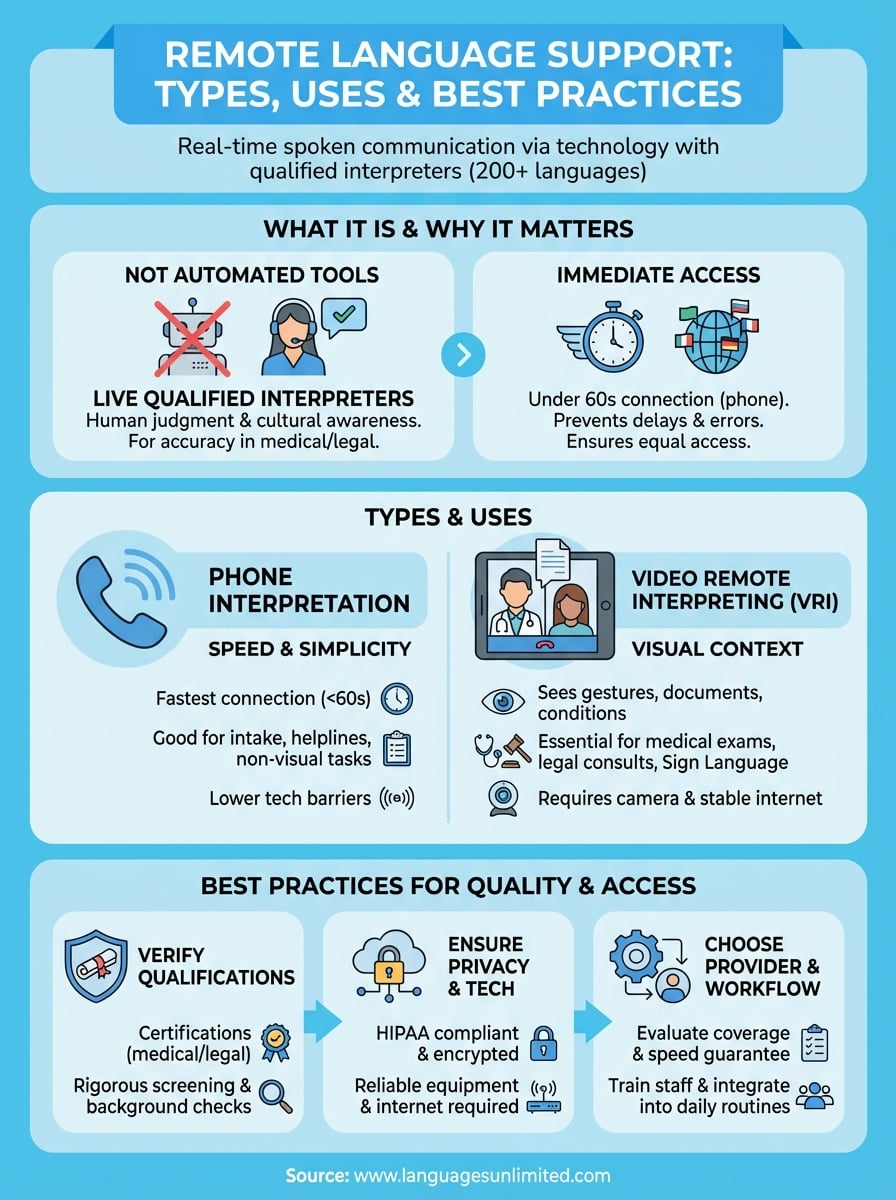
Video remote interpreting puts an interpreter on screen, which lets them see facial expressions, documents, and gestures that add context to spoken words. You point your camera at a prescription label, and the interpreter relays the dosage instructions to your Spanish-speaking patient. Phone interpretation strips away the visual layer but delivers speed and simplicity, connecting you with a Somali interpreter in 45 seconds when a caller reaches your helpline.
Both methods give you immediate access to qualified interpreters without travel costs or scheduling delays. The interpreter joins your conversation from anywhere, translating speech in both directions while you maintain control of the interaction.
Remote interpretation delivers the human judgment and cultural awareness that automated translation tools cannot replicate.
What falls outside this definition
Document translation doesn’t qualify as remote language support because it handles written content, not live conversation. When you need a birth certificate translated for USCIS, you’re requesting a different service that produces a certified written document rather than facilitating real-time dialogue.
Automated translation apps also fall outside this category. While tools like these process text or speech through algorithms, they lack the professional training and contextual understanding that human interpreters bring to medical terminology, legal proceedings, or sensitive discussions. Remote language support specifically refers to live professionals interpreting spoken communication through technology.
Why remote language support matters in real settings
You face real consequences when communication breaks down across languages. A misunderstood medication dosage sends a patient home with dangerous instructions, a legal proceeding stalls because no qualified interpreter appeared, or a benefits applicant leaves your office without the assistance they needed. Remote language support eliminates these failures by putting qualified interpreters at your fingertips within seconds, turning potential crises into resolved conversations.
When minutes determine outcomes
Emergency rooms don’t operate on appointment schedules, and neither do cardiac events or trauma cases. You need a Punjabi interpreter immediately when a patient arrives in respiratory distress, not in three hours when your on-site interpreter finishes their scheduled shift. Phone and video interpretation connect you to professionals in under 60 seconds, letting doctors gather medical histories and explain treatment while conditions remain stable and treatable.
Speed stops medical errors before they happen and keeps legal proceedings moving forward without costly delays.
Reaching languages others cannot cover
Your city might employ interpreters for Spanish and Mandarin, but you’ll struggle to find on-site professionals for Tigrinya, Karen, or Pashto when refugees and immigrants need services. Remote platforms give you access to interpreters covering 200+ languages, including rare dialects that local staffing cannot support, which means every person receives equal service regardless of which language they speak.
Remote support options: phone, video, and more
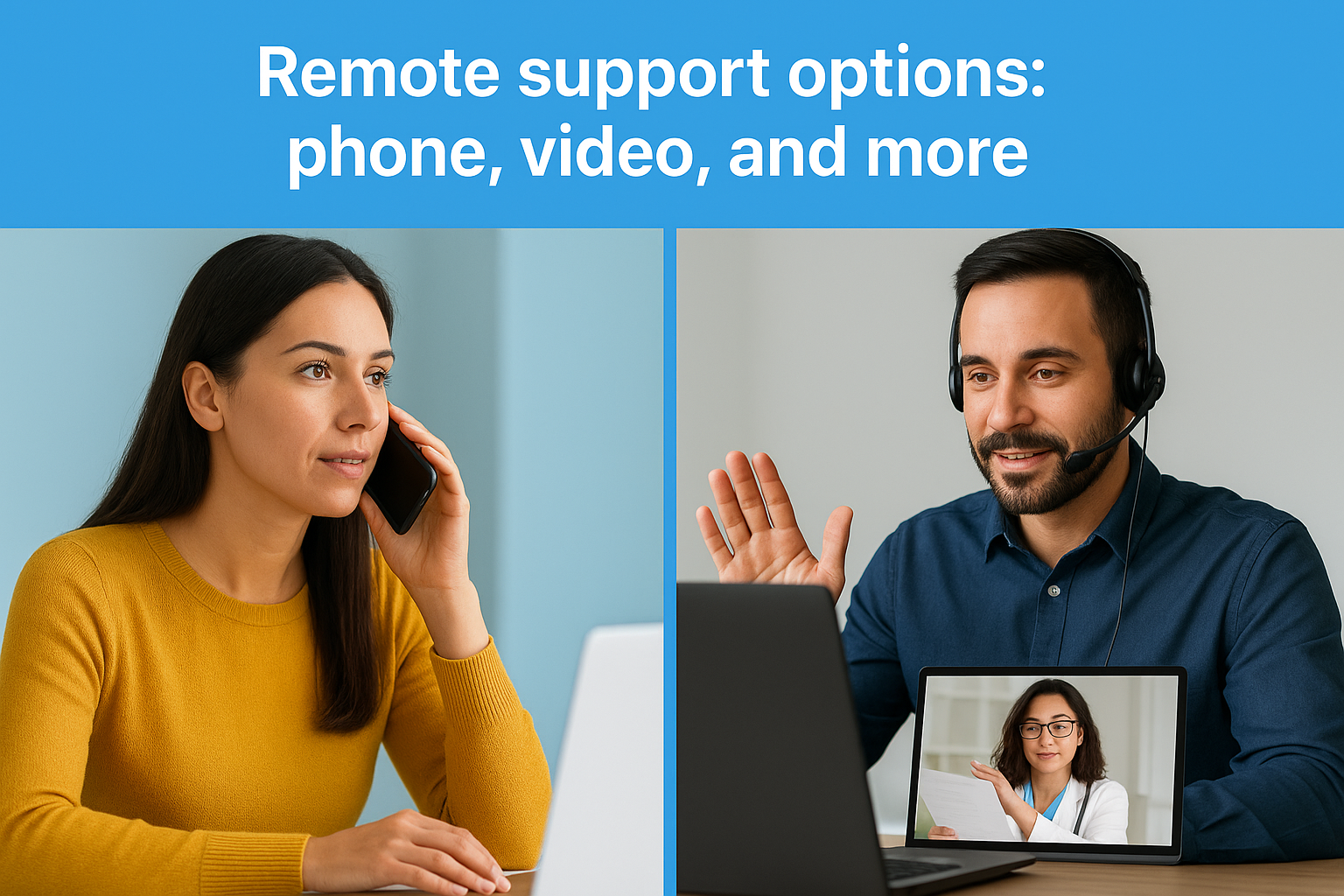
Remote language support splits into two primary channels that serve different communication needs. Phone interpretation gets you connected fastest, while video remote interpreting adds visual elements that matter in specific situations. Understanding which method fits each scenario helps you spend resources wisely and deliver better outcomes for the people you serve.
Phone interpretation delivers speed
You dial a dedicated number or access code, select your target language from a menu or through a live operator, and an interpreter joins within 60 seconds. This method works perfectly for situations where visual information adds little value: intake calls, appointment confirmations, benefits eligibility discussions, or telephone hotlines.
Phone interpretation removes the technology barriers that video platforms introduce while maintaining professional-grade accuracy.
The simplicity keeps costs lower than video options, and anyone with basic telephone access can participate without downloads, cameras, or internet connections. You’ll find this approach especially effective in rural areas where broadband remains unreliable or when serving populations with limited technology access.
Video remote interpreting adds visual context
Video platforms let interpreters see documents, medical conditions, body language, and sign language that phone calls cannot convey. A doctor shows a rash to the interpreter, who describes it to a Farsi-speaking patient. A social worker displays benefit forms on screen while the interpreter guides an Arabic-speaking applicant through each section.
Best practices for quality, privacy, and access
Effective remote language support requires more than connecting to an interpreter. You must verify qualifications, protect sensitive data, and ensure reliable technology reaches everyone who needs these services. These practices separate professional operations from unreliable alternatives that expose your organization to legal risks and communication failures.
Verify interpreter credentials before sessions
Your interpreter should hold relevant certifications for your industry, whether that means medical interpretation credentials for healthcare settings or legal interpretation experience for court proceedings. Ask your provider which interpreters carry state or federal certifications and how they screen for language proficiency beyond basic fluency tests.
Professional interpreters understand confidentiality obligations, cultural nuances, and specialized terminology that untrained bilinguals miss.
Testing happens before interpreters join your network, not during your urgent call. Languages Unlimited screens all professionals through rigorous language assessments and background checks before they handle client conversations, which means you get qualified interpreters every time you connect.
Protect sensitive information during calls
Remote language support in healthcare must comply with HIPAA regulations, requiring encrypted connections and interpreter confidentiality agreements. Legal settings demand similar protections under attorney-client privilege. You verify these safeguards by reviewing your provider’s security certifications and data handling policies before launching services.

Technology access matters equally. Your staff needs working phones or stable internet connections to reach interpreters, and your clients need equipment that supports these platforms without technical barriers.
How to choose a provider and launch a workflow
Selecting the right remote language support provider determines whether your implementation succeeds or fails. You evaluate vendors based on language coverage, response times, interpreter qualifications, and technology reliability, then build workflows that make these services accessible to your staff without adding complexity to their daily routines.
Evaluate provider capabilities first
Your provider must cover the specific languages your organization encounters most frequently, not just common ones like Spanish or Mandarin. Languages Unlimited serves over 200 languages through our network of 10,000+ professionals, which means you handle rare requests without scrambling for backup solutions.
Response time matters equally. You verify whether providers guarantee interpreter connections within 60 seconds for phone services and under two minutes for video. Ask about their uptime records, technical support availability, and backup systems that prevent service interruptions during critical moments.
Provider reliability shows up in their certifications, client references, and years of operation, not marketing claims.
Build your workflow step by step
Start by identifying which departments need immediate access and what situations trigger interpreter requests. Your emergency department connects differently than your billing office, so workflows must match each team’s specific needs and equipment.
Training staff takes priority over technology deployment. You demonstrate how to access services, request specific languages, and handle technical issues before rolling out organization-wide. Pilot programs in one department reveal problems before they affect your entire operation.
What to do next
You now understand how remote language support works, which options fit different scenarios, and what separates reliable providers from unreliable ones. Your next step involves assessing your organization’s specific language needs by reviewing past situations where communication barriers caused delays, errors, or frustration.
Document which languages appear most frequently in your operations and identify departments that need immediate interpreter access. This data guides your provider selection and helps you allocate resources to areas with the highest impact.
Languages Unlimited has delivered interpretation services since 1994, connecting organizations with qualified interpreters in under 60 seconds through our telephone system. Our network covers 200+ languages, and we hold certifications from the American Translators Association, USCIS approval, and GSA contracts that meet federal standards.
Contact our team to discuss your language support requirements and build a workflow that fits your organization’s needs. We’ll help you implement solutions that work from day one.