



An online certified translation service translates your official documents and provides a signed certificate of accuracy that government agencies, courts, and institutions accept as proof of authenticity. You upload your document, a professional translator converts it to your target language, and you receive both the translation and a formal certification statement. This matters when you need to submit birth certificates, diplomas, marriage licenses, or legal papers to USCIS, universities, or other official bodies that won’t accept regular translations.
This guide walks you through everything you need to know about ordering certified translations online. You’ll learn why certification matters for your documents, how to pick a reliable service provider, what to expect in your final deliverable, which documents require this level of translation, and what you’ll pay for different turnaround times. Whether you’re applying for immigration benefits, enrolling in a university, or handling legal matters, you’ll understand exactly how to get translations that meet official requirements.
Why online certified translation matters
Government agencies and official institutions require certified translations because they need assurance that your documents are accurate and complete. A standard translation lacks the legal weight to satisfy immigration officers, university admissions boards, or court clerks who must verify your credentials. When you submit an uncertified translation to USCIS, for example, they reject your application and delay your case for months. Certification adds the translator’s professional attestation that they rendered your document faithfully from the source language.
Official acceptance requirements
Your online certified translation service provides a certification statement that includes the translator’s name, signature, date, and confirmation of accuracy. This statement transforms your translation from an informal document into one that meets regulatory standards across different jurisdictions. USCIS explicitly requires translations accompanied by a certification confirming the translator’s competence and the translation’s completeness. Universities demand similar documentation when evaluating foreign transcripts and diplomas. Courts need certified translations of evidence, contracts, and witness statements before they admit these materials into proceedings.
Online certified translation services streamline this process by handling both the translation work and the certification documentation in one order.
Speed and convenience advantages
You avoid the delays of finding a local translator, scheduling appointments, and arranging document pickup when you use an online platform. Traditional translation services often require you to mail physical documents and wait weeks for return shipping. Digital services process your scanned documents within 24 to 72 hours and deliver both the translation and certification via email or secure download. This speed matters when you face application deadlines or need documents for time-sensitive legal proceedings. You also gain access to translators who specialize in your specific document type, rather than settling for whatever generalist happens to work near your zip code.
Cost transparency and tracking
Physical translation offices charge unpredictable rates and add fees for rush service, notarization, or shipping. Online services publish per-page pricing upfront, typically ranging from $15 to $25 per standard page. You see your total cost before you commit to the order. Many platforms also provide order tracking systems that show you exactly where your project stands in the workflow. This visibility eliminates the uncertainty of wondering whether your translator received your documents or when you’ll get your finished translation back.
How to choose an online certified translation service
You need to evaluate several factors before you place your order with any translation provider. The wrong choice costs you money and delays your application when the receiving institution rejects your translation. Look for services that specialize in certified translations rather than general language services that treat certification as an afterthought. Reputable providers display their credentials prominently, publish clear pricing, and explain their certification process in detail. Your decision should balance quality assurance, acceptance guarantees, and turnaround speed against your budget and deadline requirements.
Check translator qualifications and certifications
Your online certified translation service should employ professional translators who hold recognized credentials in your language pair. Look for providers affiliated with the American Translators Association or similar professional bodies that maintain translator directories and ethical standards. Many services highlight whether their translators have specialized training in legal, medical, or technical fields relevant to your document type. You want someone who understands the terminology in your birth certificate or diploma, not just someone who speaks both languages fluently.

Verify that the service provides ATA-certified translators or equivalent credentials for your specific language combination. Some platforms list translator qualifications on their website or provide this information when you request a quote. Services that refuse to disclose translator credentials or claim that "all our translators are qualified" without specifics often rely on untrained staff or automated tools that produce substandard work.
Review acceptance guarantees and delivery terms
The best providers offer USCIS acceptance guarantees or similar assurances that institutions will accept their certified translations. This guarantee means the service will revise or refund your translation if an official body rejects it due to formatting, accuracy, or certification issues. Read the terms carefully because some guarantees exclude rejections based on document content rather than translation quality. You should also confirm that the service provides digital delivery of your certified translation, with the option to receive hard copies if needed.
Services that stand behind their work with concrete guarantees demonstrate confidence in their translation quality and certification process.
Compare pricing structure and turnaround options
Most online services charge between $15 and $25 per page, with a page typically defined as 250 to 300 words. Watch for hidden fees that inflate your final cost, such as charges for certification statements, shipping, or payment processing. Transparent providers display their per-page rate prominently and calculate your total before you submit payment information. Rush service usually adds 50% to 100% to the base price but delivers your translation within 24 hours instead of the standard 48 to 72 hours. Calculate whether paying extra for rush service makes sense based on your actual deadline, since normal turnaround times satisfy most situations.
What certified translation includes
Your certified translation package contains three essential components that work together to meet official requirements. You receive the translated document formatted to match your original, a certification statement signed by the translator, and any supporting materials needed for submission. Understanding what each piece includes helps you verify that your online certified translation service delivered everything you need before you submit your application or file your documents with the relevant authority.
The translated document itself
Your translator converts every word, stamp, and notation from your source document into the target language. The translated version preserves the original’s layout and formatting so reviewers can easily compare the two documents side by side. This includes translating official seals, signatures, and any handwritten notes that appear on the original. The translator maintains paragraph breaks, section numbers, and table structures exactly as they appear in your source material. Professional services also match font sizes and document dimensions to create a faithful reproduction that looks official and complete.
Your certified translation captures both the content and the visual structure of your original document, making it easy for officials to verify accuracy.
The certification statement
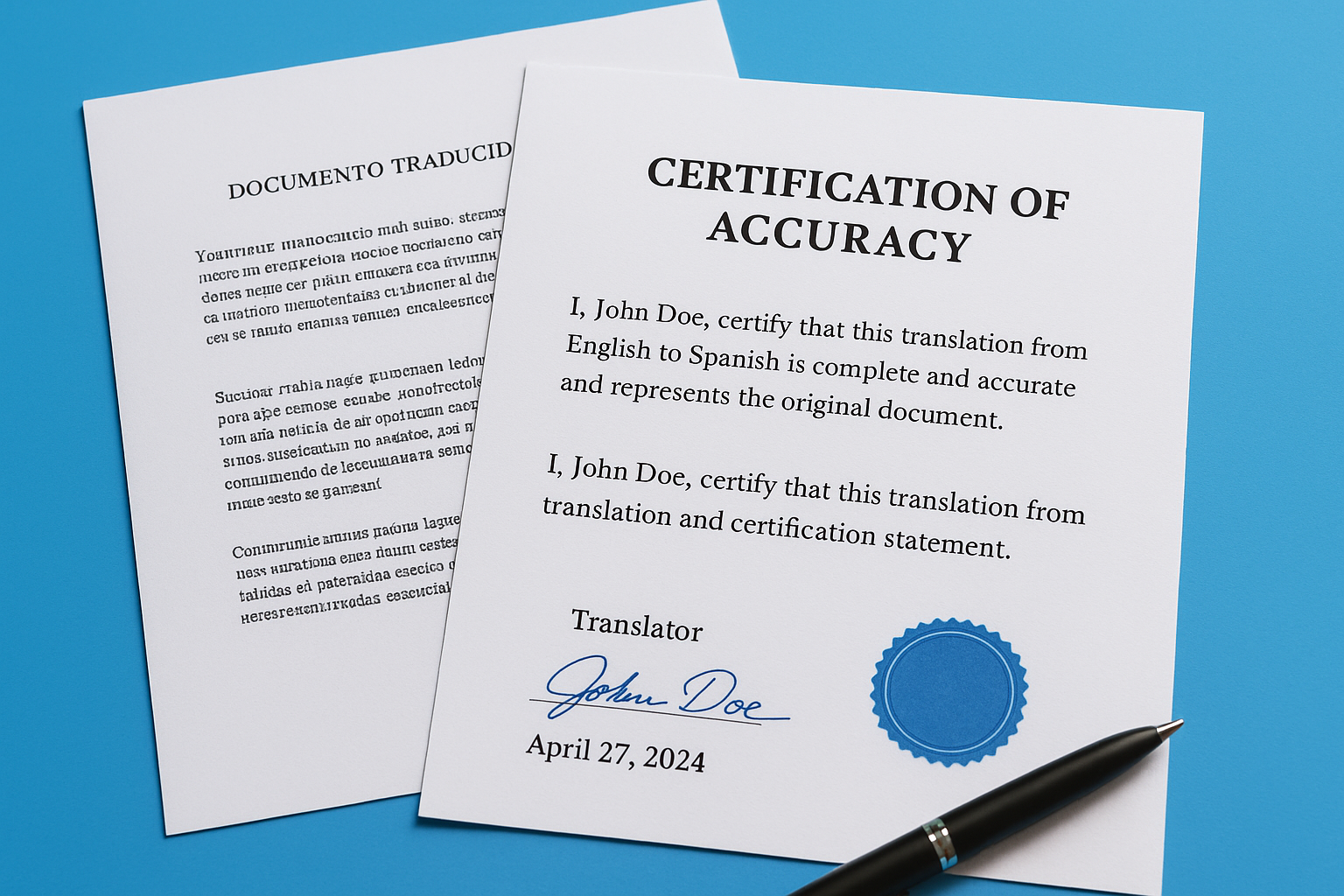
Every certified translation includes a separate certificate of accuracy that contains specific information about the translator and the translation process. The statement identifies the translator by name, confirms their language qualifications, and declares that the translation accurately represents the original document. This certificate also includes the translator’s signature and the date of completion. Some services provide this statement on letterhead that displays their company information and contact details. Others attach it as a separate page that accompanies your translation. Both formats satisfy official requirements as long as the certification contains all mandatory elements.
Supporting materials and delivery format
Your package typically includes digital copies of both the translation and certification statement in PDF format for immediate use. Many services also provide the original source document as part of your digital package, creating a complete set you can submit electronically or print for physical submission. If you ordered notarization as an add-on service, you receive the notary’s seal and signature on the certification statement. Some providers include return envelopes or shipping labels when you order hard copies, while others offer tracking numbers for courier delivery. The complete package arrives ready for submission without requiring additional formatting or preparation on your part.
Documents that need certified translation
You must obtain certified translations for any official documents issued in a foreign language when you submit them to government agencies, educational institutions, or legal entities in the United States. These organizations reject standard translations because they need verified proof that your documents are accurate and complete. The type of document determines which authority requires certification, but immigration services, universities, and courts consistently demand this level of translation for nearly all foreign-language materials. Your online certified translation service handles the most common document categories that official bodies review regularly.
Personal identity documents
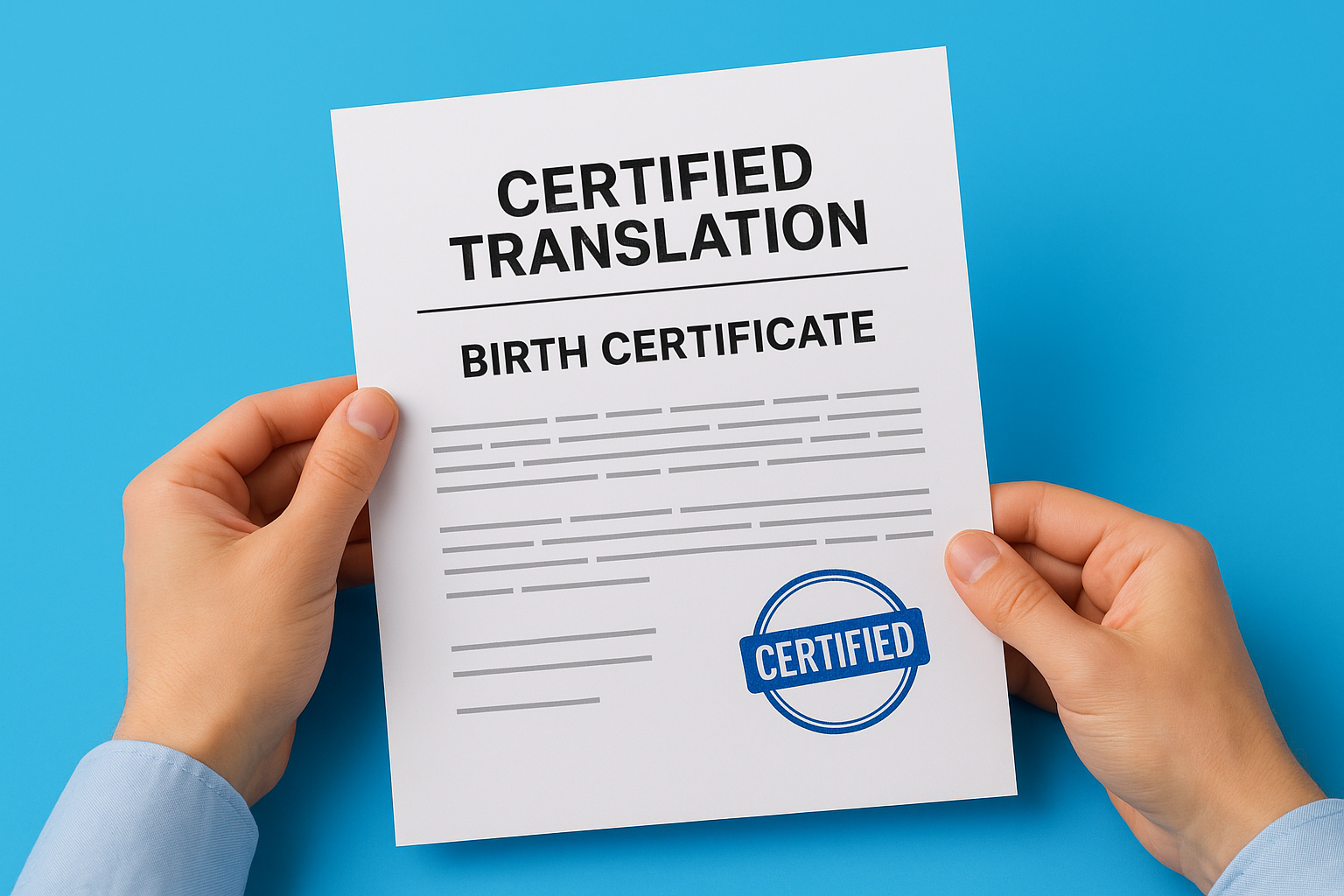
Immigration authorities require certified translations of your birth certificate, marriage license, divorce decree, adoption papers, and death certificates when you apply for visas, green cards, or citizenship. USCIS reviews these documents to verify your identity, marital status, and family relationships. You also need certified translations of national ID cards, passports, and police clearance certificates as part of most immigration applications. Each document must include every detail from the original, including official seals, stamps, and registration numbers that prove authenticity.
Educational credentials
Universities and licensing boards demand certified translations of your academic transcripts, diplomas, and degree certificates when you apply for admission or professional credentials. Your transcripts must show course names, grades, credit hours, and graduation dates in English so admissions committees can evaluate your qualifications. Professional licensing agencies also require certified translations of your educational documents before they issue medical licenses, engineering certifications, or other professional credentials. Some universities accept translations from any certified provider, while others specify particular translation services they recognize.
Your certified academic translations enable US institutions to accurately assess your foreign education and determine your eligibility for admission or licensure.
Legal and financial records
Courts require certified translations of contracts, court judgments, powers of attorney, and business documents when these materials serve as evidence or legal instruments. Banks and financial institutions need certified translations of your foreign bank statements, tax returns, and property deeds when you apply for mortgages or establish business accounts. Your medical records also require certification when you transfer care between countries or pursue medical malpractice claims in US courts.
Costs, timelines, and acceptance guarantees
Your budget and deadline requirements directly influence which online certified translation service you choose, since pricing structures and delivery speeds vary significantly across providers. Most services charge between $15 and $25 per page for standard certified translations, with pages defined as 250 to 300 words of source text. You need to understand how these costs break down, what affects your delivery timeline, and what protection you get if institutions reject your translation. Knowing these factors upfront helps you avoid surprises and ensures you receive your certified documents when you need them.
Standard pricing models
Reputable providers use transparent per-page pricing that includes both the translation work and the certification statement. Your total cost multiplies the number of pages by the per-page rate, with some services adding flat fees for notarization or apostille services if you request them. Rush orders typically cost 50% to 100% more than standard turnaround but deliver your translation in 24 hours instead of the usual 2 to 3 business days. Watch for providers that charge separately for certification, since this adds unnecessary expense to what should be an all-inclusive service. You may also encounter minimum order fees, usually around $25 to $30, that apply when you translate very short documents like single-page certificates.
Services that hide fees or charge separately for certification often lack transparency in other aspects of their business.
Turnaround time expectations
Standard delivery for certified translations takes 48 to 72 hours from when you submit your document and payment. This timeline works for most applications since immigration deadlines, university enrollment periods, and legal filing dates usually allow several weeks of preparation time. Rush service reduces your wait to 24 hours or less by prioritizing your project, but you pay premium pricing for this speed. Some providers offer same-day delivery for extremely urgent needs, though availability depends on your language pair and document complexity. Complex documents like multi-page court transcripts or technical medical records may require additional time regardless of whether you select rush service.
Understanding acceptance guarantees
Your online certified translation service should promise that government agencies and institutions will accept their translations or they’ll revise the work at no charge. These acceptance guarantees typically cover USCIS, state courts, universities, and licensing boards across all 50 states. Read the guarantee terms carefully because most exclude rejections based on document content rather than translation quality or formatting issues. For example, if USCIS rejects your birth certificate because it lacks required information, not because the translation is inaccurate, the guarantee won’t apply. Strong guarantees last for the lifetime of your document and include unlimited revisions if formatting requirements change after your initial submission.

Final thoughts
You now understand how an online certified translation service works, what makes a provider trustworthy, and what you should expect in your final deliverable. Your choice of translation service affects whether institutions accept your documents on the first submission or reject them due to formatting or certification issues. You save time and reduce stress when you select a provider with clear acceptance guarantees, transparent pricing, and qualified translators who specialize in your document type. Remember to verify that your chosen service includes the certification statement in the base price and offers delivery timelines that match your actual deadline.
Languages Unlimited provides certified translations with USCIS approval, ATA membership, and delivery within 24 to 72 hours across all major languages. You receive both digital and hard copy options with complete certification documentation that meets requirements for government agencies, universities, and courts nationwide.