



When a medical crisis strikes or a disaster unfolds, clear communication can mean the difference between life and death. An emergency interpreter provides immediate language support during these high-stakes moments, bridging critical gaps when every second counts.
Whether you’re a hospital administrator handling a patient who speaks limited English, a first responder at an accident scene, or a government agency coordinating disaster relief, knowing when and how to request emergency interpretation services is essential. At Languages Unlimited, we’ve provided round-the-clock interpreting solutions since 1994, supporting healthcare providers, legal professionals, and public safety teams across all 50 states.
This guide explains what emergency interpreters do, the situations that require them, and how to access qualified professionals when urgency demands it.
Why emergency interpreters matter in a crisis
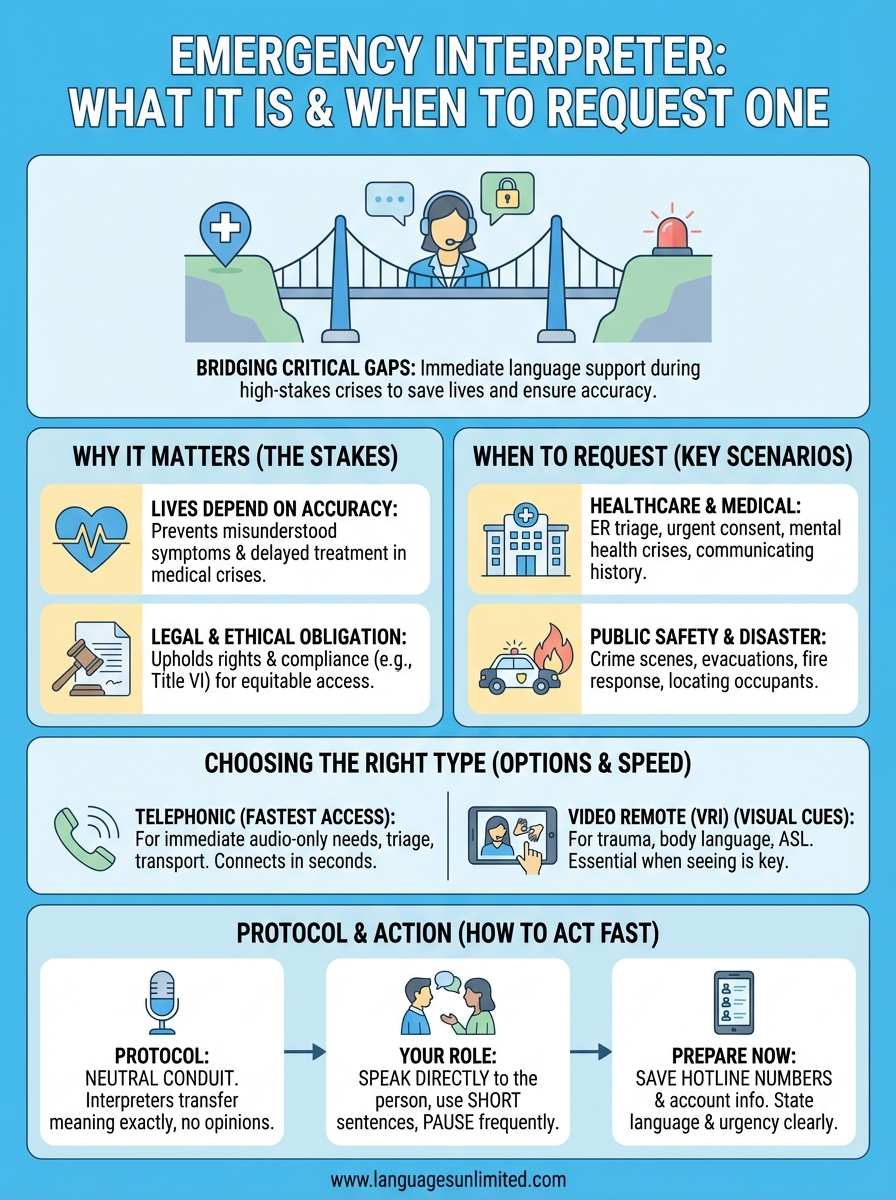
You face profound risks when language barriers prevent clear communication during emergencies. Misunderstood symptoms can lead to incorrect diagnoses, delayed treatment puts patients in danger, and confused instructions during evacuations create chaos. Emergency interpreters eliminate these risks by providing instant, professional language support when stakes are highest and time is shortest.
Lives depend on accurate information
Medical emergencies demand precise communication between healthcare providers and patients. When you can’t explain chest pain severity, allergies to medications, or symptoms of a stroke, critical treatment decisions become guesswork. A professional emergency interpreter ensures doctors understand exact patient conditions and that patients comprehend care instructions, consent forms, and discharge procedures. This accuracy directly impacts survival rates and recovery outcomes.
Without proper interpretation, a simple word mix-up between "constipated" and "congested" changed a patient’s entire treatment plan.
First responders at accident scenes or natural disasters need immediate situational awareness from witnesses and victims. Police officers require accurate statements from non-English speakers during active emergencies. Fire departments must understand building layouts and occupant locations. Each scenario requires real-time language support to coordinate effective responses and protect public safety.
Legal and ethical obligations
Federal laws mandate language access in healthcare settings, including emergencies. You must provide meaningful access to limited English proficient individuals under Title VI of the Civil Rights Act and Section 1557 of the Affordable Care Act. Failing to secure interpretation services during crises exposes your organization to legal liability and civil rights violations. Beyond compliance, providing emergency interpreters upholds ethical standards that respect every patient’s right to understand their care and make informed decisions during vulnerable moments.
When to request an emergency interpreter
You need an emergency interpreter whenever language barriers threaten immediate safety, health outcomes, or legal proceedings that cannot wait. These situations demand real-time language support without the luxury of scheduling appointments or waiting for on-site professionals to arrive.
Healthcare and medical emergencies
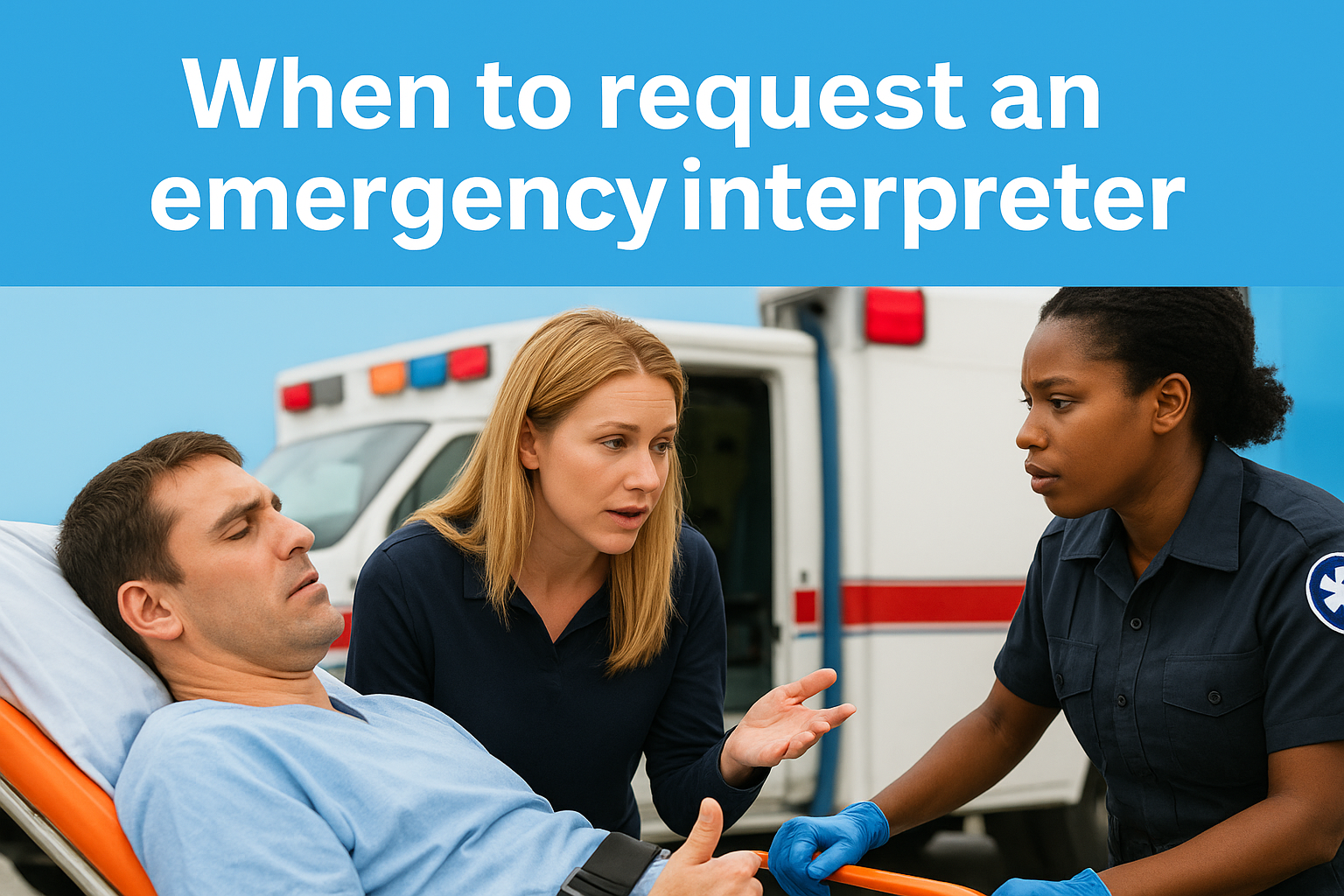
Request an emergency interpreter immediately when patients arrive at emergency departments unable to communicate symptoms, medical history, or allergies in English. Ambulance crews transporting non-English speakers need interpretation to assess conditions during transport. Urgent surgeries requiring informed consent from limited English proficient patients cannot proceed without proper interpretation. Mental health crises involving suicide risk or violent behavior demand instant communication to prevent harm.
A patient’s inability to describe chest pain location delayed cardiac treatment by crucial minutes until interpretation arrived.
Public safety and disaster response
Police officers investigating active crime scenes or questioning witnesses who speak other languages must request emergency interpreters to gather accurate statements. First responders coordinating evacuations during natural disasters need interpretation to issue life-saving instructions to affected communities. Child protective services removing children from dangerous situations require immediate language support to understand circumstances and explain actions to non-English speaking families. Fire departments responding to structural emergencies use interpretation to locate trapped occupants and understand building hazards.
Emergency interpreting types and how to choose
You have three primary options when you need an emergency interpreter: telephonic, video remote (VRI), and on-site services. Your choice depends on the urgency level, visual communication needs, and access to technology at the emergency scene.
Telephonic interpretation for immediate access
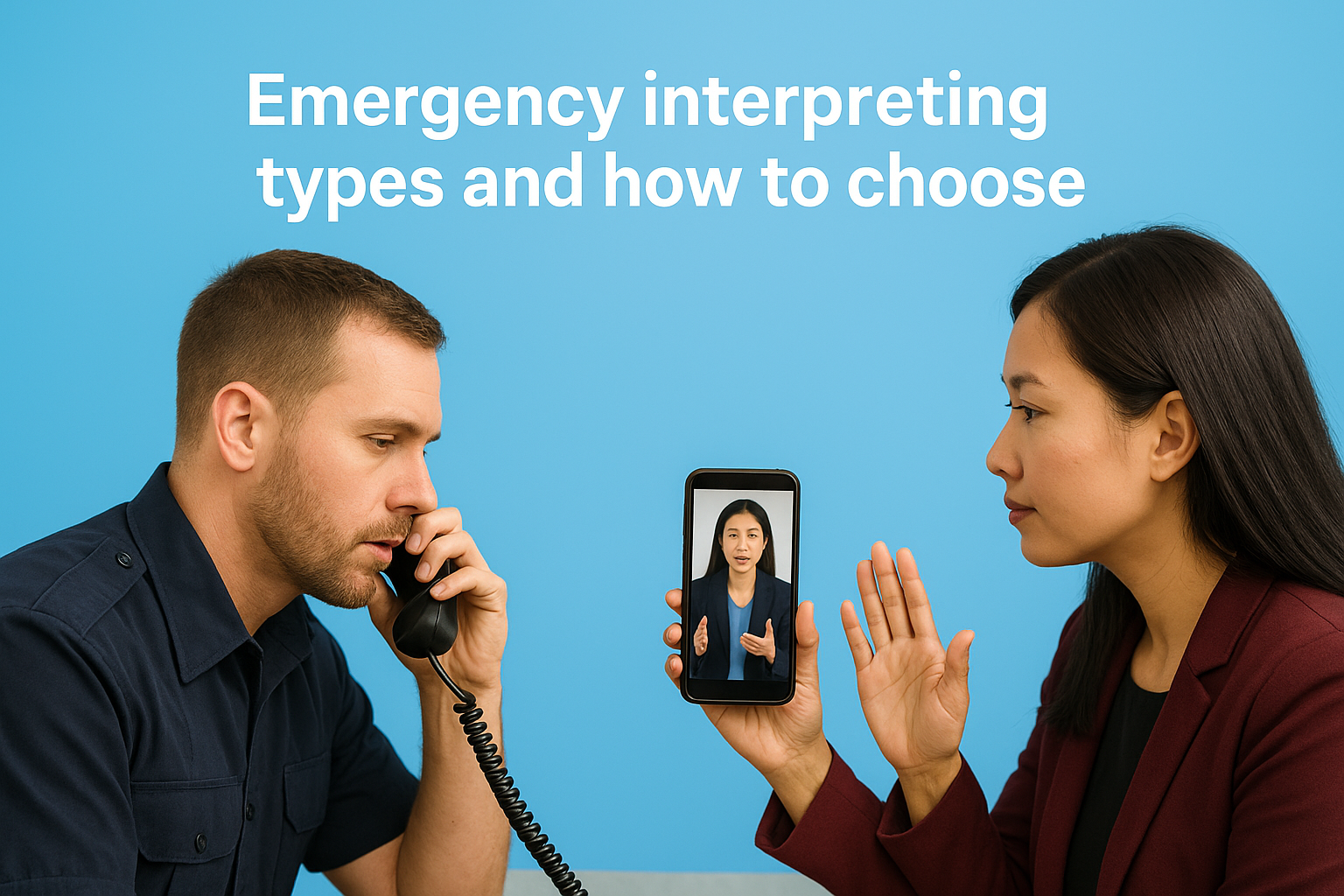
Phone interpretation connects you to qualified interpreters within seconds, making it the fastest option for most emergency situations. You dial a dedicated hotline, select your language, and begin communicating immediately without equipment beyond a basic telephone. Healthcare facilities use this method for emergency room triage, ambulance transports, and urgent consultations when visual cues aren’t critical. Police officers rely on telephonic interpretation during traffic stops, domestic disturbance calls, and initial witness interviews.
Response times under 30 seconds mean you start communicating before an on-site interpreter could even leave their office.
Video remote interpreting when visual cues matter
Video remote interpreting provides face-to-face communication through smartphones, tablets, or computers when you need to observe body language, facial expressions, or demonstrate medical procedures. Emergency departments choose VRI for trauma assessments where observing patient reactions guides diagnosis. This method proves essential for American Sign Language interpretation in emergencies, as visual connection is mandatory for effective communication with deaf patients.
What to expect during an emergency interpreted call
Professional emergency interpreters follow strict protocols to ensure accurate communication between you and the limited English speaker during critical situations. The interpreter will identify themselves, confirm the language, and explain their role as a neutral conduit who transfers meaning without adding opinions or advice. Expect brief pauses as they interpret each statement completely before the other party responds, maintaining the natural flow of conversation while allowing time for precise translation.
The interpreter’s role and protocol
Your emergency interpreter maintains professional boundaries by interpreting everything said without filtering, summarizing, or editing content. They will ask speakers to pause after short segments to ensure accurate transmission of medical terms, addresses, or technical details. Interpreters may request clarification if they encounter ambiguous phrases or need to verify specialized terminology relevant to the emergency. They remain impartial observers who facilitate communication without providing medical advice or personal opinions about the situation.
Interpreters work in first person, saying "I need oxygen" rather than "She says she needs oxygen" to create direct communication.
Your responsibilities during the call
You must speak directly to the limited English speaker, not to the interpreter, using clear short sentences without idioms or slang. Address the patient as "you" and maintain eye contact with them during video calls, pausing frequently to allow interpretation. Avoid side conversations, technical jargon, or speaking over the interpreter while they work to maintain accuracy.
How to arrange emergency interpreting fast
You can secure an emergency interpreter within minutes by contacting 24/7 language service providers who maintain staffed phone lines and video platforms around the clock. Most healthcare facilities maintain pre-established accounts with interpretation services, allowing immediate access without contracts or payment delays. If your organization lacks these arrangements, many providers accept emergency calls from new clients, though you’ll provide basic information before connecting.
Keep essential contact information ready
Store emergency interpretation hotline numbers in your phone contacts, reception desk directories, and emergency response protocols before crises occur. Healthcare facilities should post language service contact information in triage areas, ambulance bays, and nurse stations where staff need instant access.
Include your organization’s account numbers and credentials in accessible locations so anyone can request interpretation without searching during emergencies. First responders should carry laminated cards with interpretation service contact details in their vehicles for roadside situations.
State your emergency clearly
When you call for an emergency interpreter, immediately identify the language needed and the emergency type (medical, police, fire) to expedite connection. Specify whether you need American Sign Language interpretation or spoken language support, as providers route these requests differently.
Emergency preparedness means having interpretation contact numbers accessible before you need them.
Explain the situation’s urgency so the service prioritizes your connection, bypassing standard queues to connect you within seconds.
Quick recap and next steps
You’ve learned that emergency interpreters provide critical language support during life-threatening situations when clear communication cannot wait. Whether you face medical emergencies in healthcare settings, coordinate disaster response efforts, or manage public safety incidents, having immediate access to qualified interpreters protects lives and ensures legal compliance.
The most important step you can take right now is preparing before emergencies strike. Store emergency interpretation service contact information where your team can access it instantly, establish accounts with 24/7 language providers, and train staff on proper protocols for requesting and working with interpreters during crises.
Languages Unlimited offers round-the-clock emergency interpreter services through telephonic, video remote, and on-site options across all 50 states. Our network of over ten thousand language professionals ensures you connect with qualified interpreters within seconds when emergencies demand it. Contact us today to establish your emergency language access plan.