



When delegates from different countries gather at a summit, or when medical professionals meet for an international symposium, communication has to be seamless. That’s where conference interpreting comes in. The conference interpreting definition centers on the real-time conversion of spoken language during formal, multilingual events, a service that demands precision, deep subject-matter knowledge, and the ability to perform under pressure. It’s one of the most specialized forms of professional interpretation available.
At Languages Unlimited, we’ve provided interpretation services across all 50 states since 1994, supporting everything from government proceedings to large-scale corporate events. With a network of over ten thousand language professionals, we work in hundreds of languages and dialects, and conference interpreting is a core part of what we do. That firsthand experience shapes every detail in this guide.
This article breaks down what conference interpreting actually involves, the primary modes interpreters use (simultaneous and consecutive), the types of events that require it, and the specific skills that separate qualified conference interpreters from general linguists. Whether you’re planning a multilingual event or exploring interpretation as a career, you’ll walk away with a solid, practical understanding of the field.
What conference interpreting means
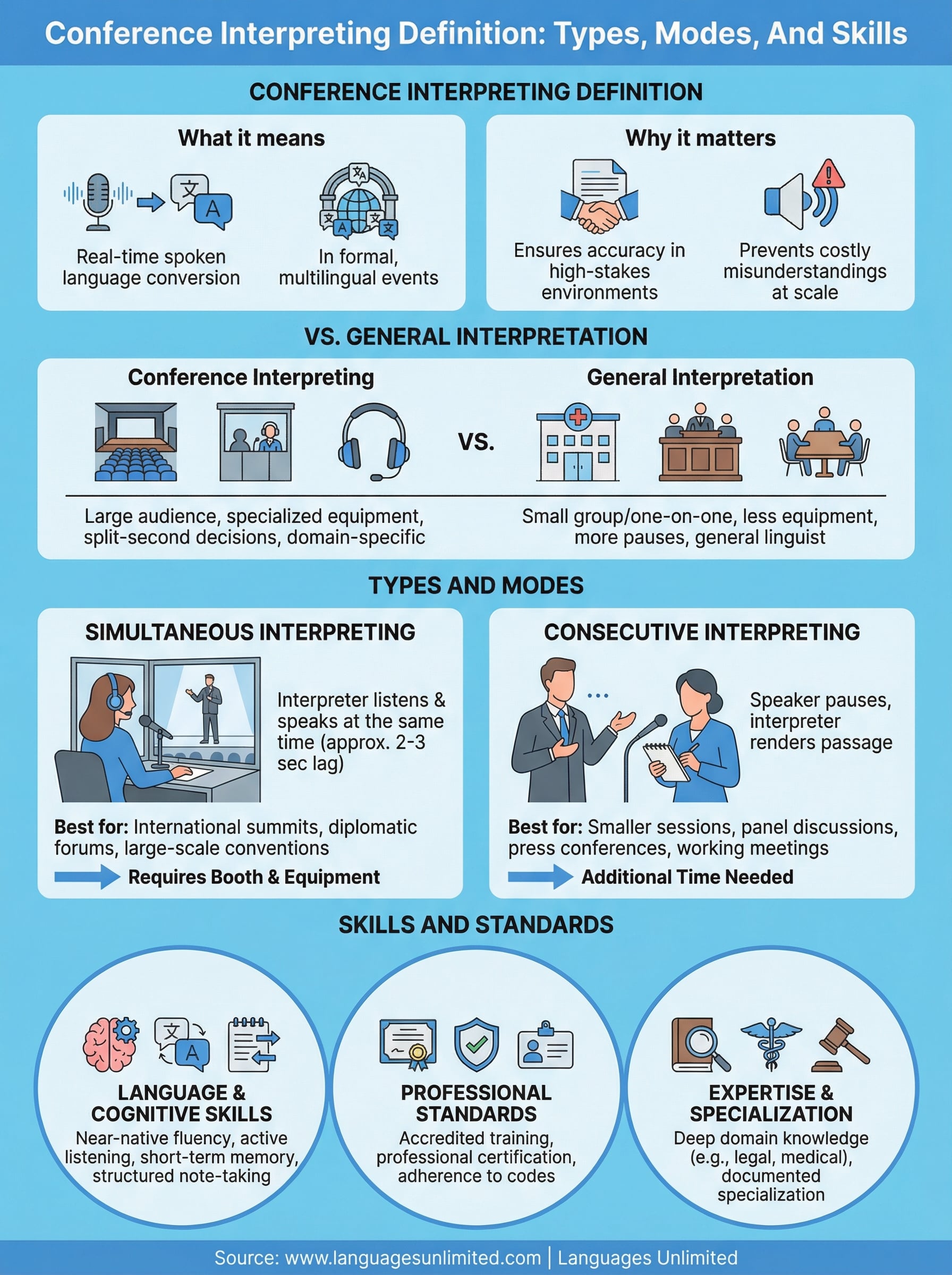
Conference interpreting is a specialized language service where trained professionals convert spoken language in real time, or in structured turns, during large formal gatherings such as international summits, diplomatic meetings, academic conferences, and industry conventions. The conference interpreting definition distinguishes itself from everyday translation or general interpretation by the complexity of the setting, the technical subject matter involved, and the strict professional standards interpreters must meet to serve the room accurately.
The core definition
A conference interpreter works within multilingual, high-stakes environments where accuracy is non-negotiable. Unlike a community interpreter who might assist in a clinic or a courtroom, a conference interpreter typically handles subject matter ranging from international policy and trade law to advanced medical research. Formal training and deep domain knowledge are built into the role, because one misinterpreted term can shift the meaning of an entire statement for hundreds of attendees at once.
Conference interpreters are not simply bilingual speakers; they are trained professionals who carry the full weight of cross-language communication for an entire audience.
How it differs from general interpretation
The clearest way to understand what sets conference interpreting apart is to focus on scale and structure. General interpretation often involves one-on-one or small-group settings, such as a medical appointment or a legal consultation. Conference interpreting, by contrast, serves large audiences simultaneously, requiring specialized equipment, soundproof booth setups, and relay systems when more than two languages are active in the room.
You also need to factor in the time pressure. A conference interpreter rarely has the option to pause and search for the right word. Split-second decision-making and subject mastery are built into every assignment, which is why most conference interpreters specialize in specific fields rather than working across unrelated domains.
Why conference interpreting matters
When multilingual stakeholders gather for a high-stakes event, the quality of interpretation directly shapes the outcome. A poorly interpreted statement at a trade negotiation or a medical conference can break trust, stall progress, or lead to costly misunderstandings. Understanding the conference interpreting definition gives organizers and participants a clear picture of what’s actually at stake when they hire for this role.
The real cost of poor interpretation
Miscommunication at scale carries consequences that go far beyond a single confused attendee. When you’re running an international conference with hundreds of participants across multiple languages, one inaccurate interpretation can ripple through every breakout session, official statement, and follow-up agreement that follows.
Accurate conference interpreting is not a convenience; it is a foundational requirement for meaningful cross-language dialogue at any formal event.
Professional conference interpreters protect the integrity of your event’s content by maintaining strict accuracy standards, even under significant time pressure. That’s why organizations ranging from United Nations agencies to large multinational corporations invest in qualified, trained interpreters rather than relying on bilingual staff who lack formal preparation for the demands of a live conference setting.
How conference interpreting works in real events
Understanding the conference interpreting definition in practice means seeing how these professionals operate within a structured environment purpose-built for accuracy and scale. At a live event, every technical and logistical element is designed to deliver seamless language access to all participants, across multiple languages at once.
The booth and equipment setup
Most formal conferences use soundproof interpreter booths placed at the back or side of the main hall. Each interpreter listens through headphones and speaks into a microphone, while participants tune their personal receivers to the channel matching their language. This setup allows several languages to run simultaneously without interrupting the event’s flow.
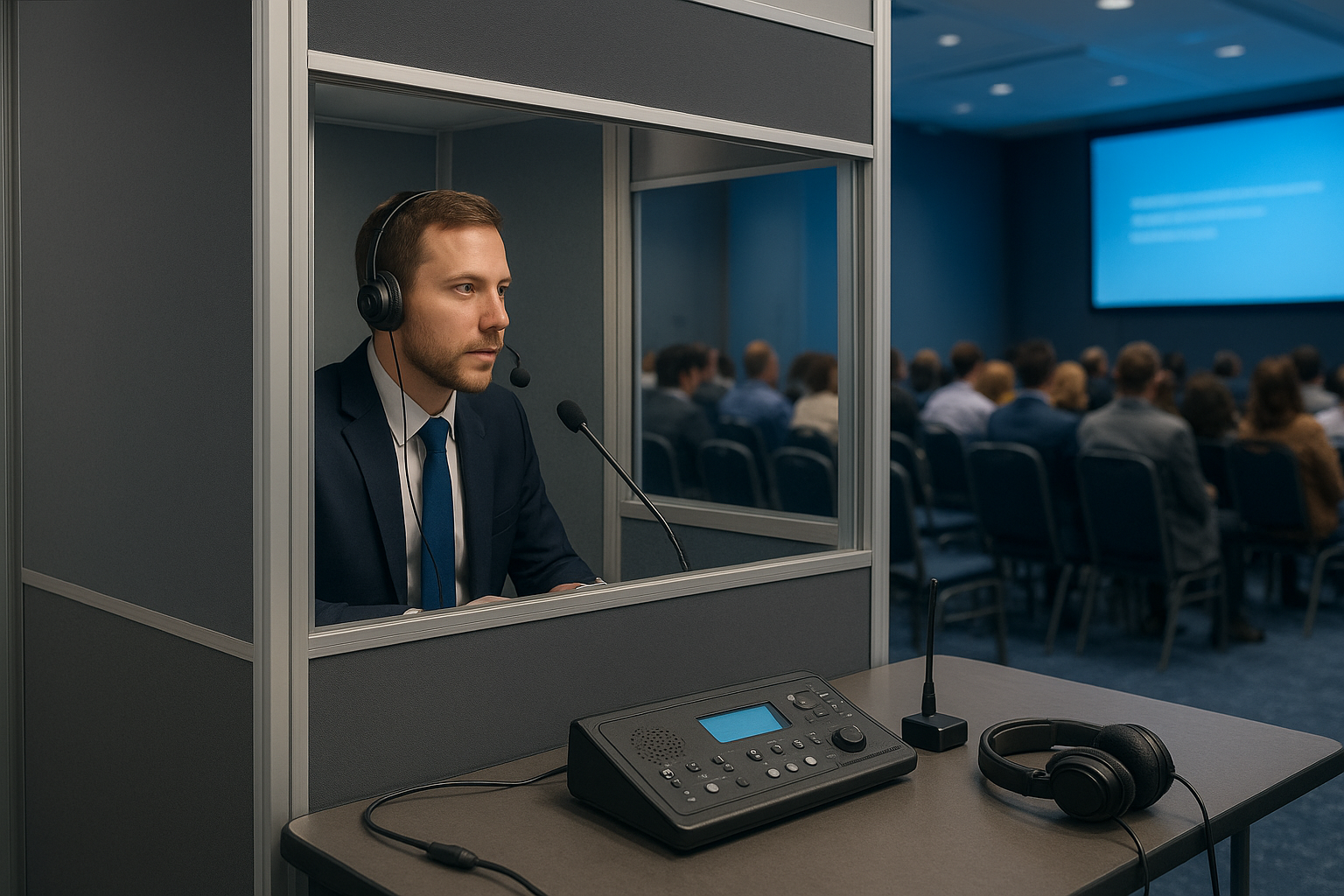
When your event spans more than two languages, the booth and relay system carry the entire multilingual structure of the conference.
Working in pairs
Conference interpreters work in teams of two, switching every 20 to 30 minutes. The cognitive demand of sustained simultaneous interpreting is intense, and even minor fatigue affects accuracy.
Your booking decisions need to reflect this reality. For a full-day conference, plan on at least two qualified interpreters per language pair to maintain consistent, reliable output from the opening remarks through the closing session. Skimping on coverage at this stage puts the accuracy of your entire event at risk.
Types and modes of conference interpreting
When you work through the conference interpreting definition, two primary modes define how interpreters deliver language access: simultaneous and consecutive. Each mode fits different event formats, and choosing the right one shapes both the logistics and the overall participant experience at your event.
Simultaneous interpreting
Simultaneous interpreting is the mode most associated with large formal conferences. The interpreter listens and speaks at the same time, typically with a two to three second lag behind the speaker. This keeps the event moving at its natural pace, making it the standard choice for international summits, diplomatic forums, and large-scale conventions where stopping for interpretation is not practical.
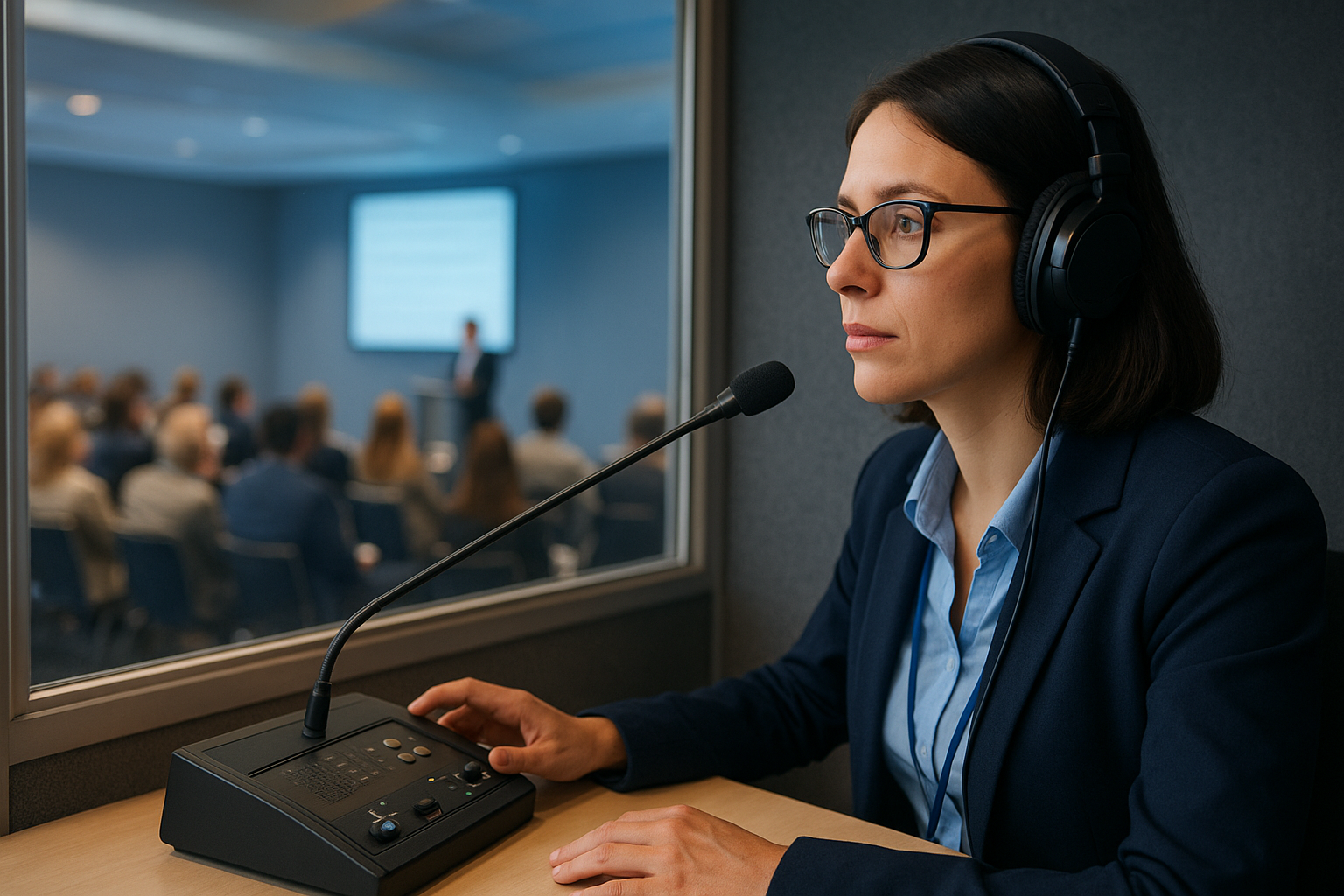
Simultaneous interpreting requires booth equipment, receiver headsets, and trained interpreter pairs to function correctly at any live event.
Consecutive interpreting
Consecutive interpreting works differently. The speaker pauses after completing a thought, and the interpreter then renders that passage in the target language. This mode suits smaller sessions, panel discussions, press conferences, and working meetings where a booth setup is not available.
You don’t need specialized audio equipment for consecutive work, but you do need to account for the additional time each round adds to your schedule. Every statement is effectively delivered twice, so build that buffer into your agenda before the event starts.
Skills and standards conference interpreters use
The conference interpreting definition extends beyond language knowledge. Conference interpreters combine active listening, real-time processing, and deep subject expertise while delivering accurate output under sustained pressure. These capabilities require formal training and consistent professional development, not just bilingual fluency.
Hiring a conference interpreter without verifying their credentials and domain specialization puts the entire quality of your event at risk.
Language and cognitive skills
Conference interpreters maintain near-native fluency in at least two working languages while simultaneously processing incoming speech and producing accurate output. They also develop strong short-term memory and structured note-taking techniques, particularly for consecutive work, to hold complex ideas intact before rendering them accurately in the target language.
Professional standards and certification
Formal certification and adherence to professional codes separate qualified conference interpreters from general linguists. When you evaluate candidates for your event, look for professionals who meet these key standards:
- Completion of accredited interpreter training programs
- Alignment with recognized bodies such as the International Association of Conference Interpreters
- Documented specialization in your event’s subject area
- A verifiable track record in formal conference settings
Next steps for a multilingual event
Now that you have a clear picture of the conference interpreting definition and how the role works in practice, the next move is straightforward: match the right mode and interpreter team to your specific event format. Review your agenda, expected audience size, and language combinations before reaching out to a service provider. If your event runs more than a few hours, you need at least two interpreters per language pair. If your sessions mix large plenary presentations with smaller breakouts, you may need both simultaneous and consecutive coverage planned in advance.
Working with an experienced language services provider gives you direct access to vetted, credentialed interpreters who already carry documented experience in your subject area. That preparation protects your event’s accuracy from the first speaker to the final session. Don’t wait until the week before to lock in your team. Contact Languages Unlimited to discuss your multilingual event needs and get qualified interpreters in place well ahead of your date.