



If you’re preparing for a USCIS immigration interview and don’t speak fluent English, understanding the USCIS interpreter policy is essential. The rules dictate who can accompany you as an interpreter, what forms they need to complete, and what behavior is expected during the interview. Getting any of these details wrong can delay your case or lead to complications you didn’t see coming.
USCIS updated its interpreter guidelines with changes that took effect in 2025, tightening requirements around qualifications, conduct, and documentation. Whether you’re an applicant, an attorney, or someone asked to interpret for a family member, knowing these rules before the interview date matters more than most people realize. The stakes are high, a denied or rescheduled interview costs time, money, and peace of mind.
At Languages Unlimited, we’ve provided USCIS-approved translation and interpretation services since 1994, supporting applicants and legal professionals across all 50 states. This article breaks down the current interpreter policy in full, covering eligibility rules, required forms, and the specific responsibilities interpreters must follow so you can walk into your interview prepared.
What the USCIS interpreter policy is in 2025
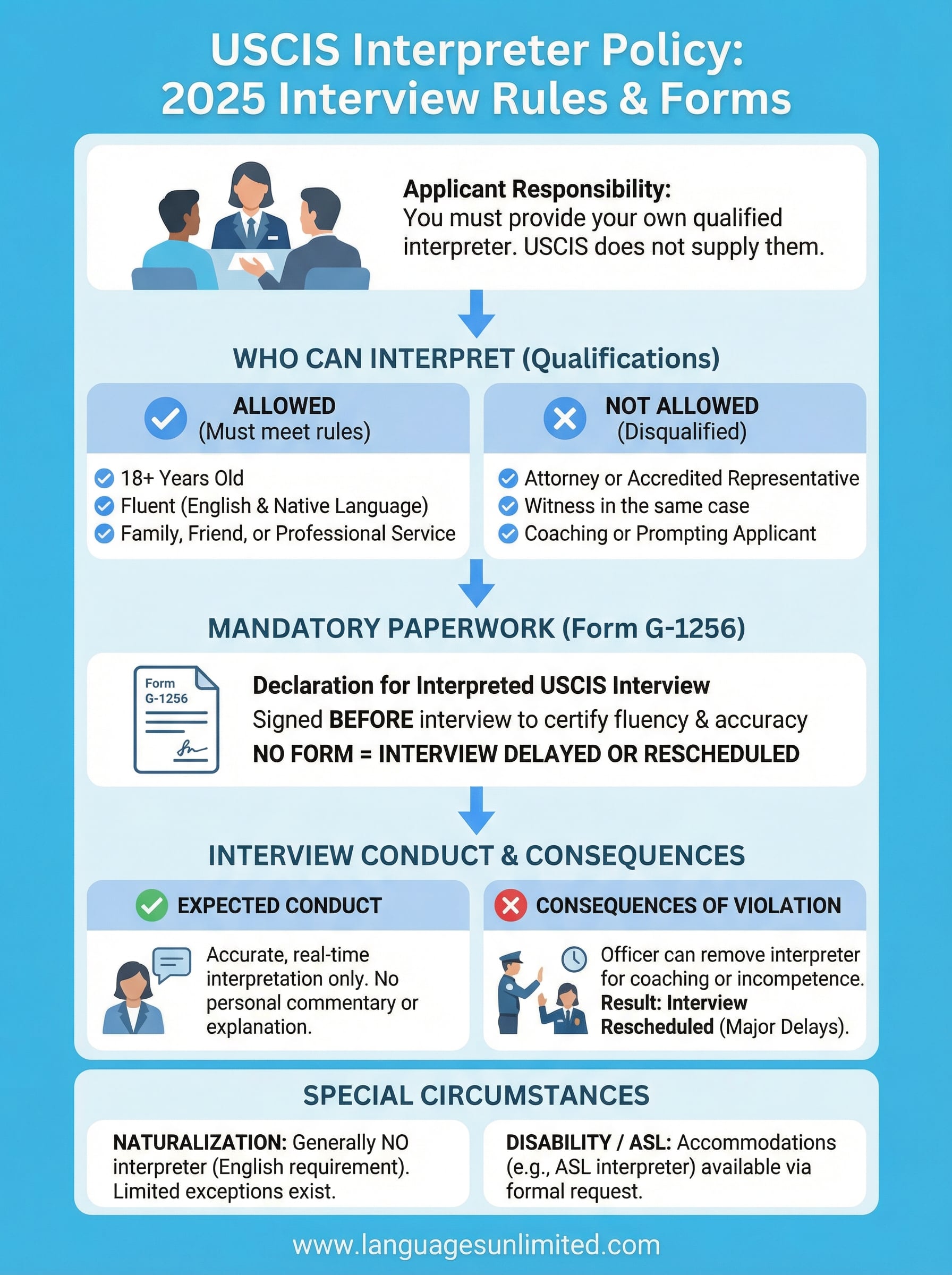
The USCIS interpreter policy sets the rules for how non-English-speaking applicants can bring language assistance to their immigration interviews. Under current guidelines, you are responsible for providing your own qualified interpreter if you cannot communicate effectively in English. USCIS does not supply interpreters at field offices, so arriving without one when you need language support will typically result in your interview being rescheduled.
How the policy took shape
A significant rule change took hold in 2023 and carried through into 2025, shifting the burden of interpreter arrangements fully onto the applicant. Before this shift, some USCIS field offices offered limited interpreter assistance in certain situations. That option no longer exists, and the expectation now is that every applicant who needs help arrives with someone who meets specific, documented qualifications. The policy also expanded paperwork requirements, making Form G-1256 a mandatory part of every interpreted interview without exception.
USCIS will reschedule your interview if you arrive without a qualified interpreter when one is required, which can add several months to your case timeline.
What the policy actually covers
The interpreter policy applies to all benefit interviews conducted by USCIS, including adjustment of status, asylum interviews, and most other immigration benefit applications. It outlines who is eligible to serve as your interpreter, what conduct standards apply during the session, and what steps the officer can take if your interpreter is deemed unqualified. Both you and your interpreter are expected to follow specific rules from the moment you check in, not just during formal questioning.
Your interpreter also takes on legal responsibility by signing Form G-1256 before the interview begins. That signature binds them to accurate interpretation under penalty of law. Providing false or misleading interpretation is treated as a serious violation, and a USCIS officer has the authority to remove an interpreter mid-interview if they determine the individual is not performing their role correctly or is coaching the applicant.
Who can interpret and who USCIS can reject
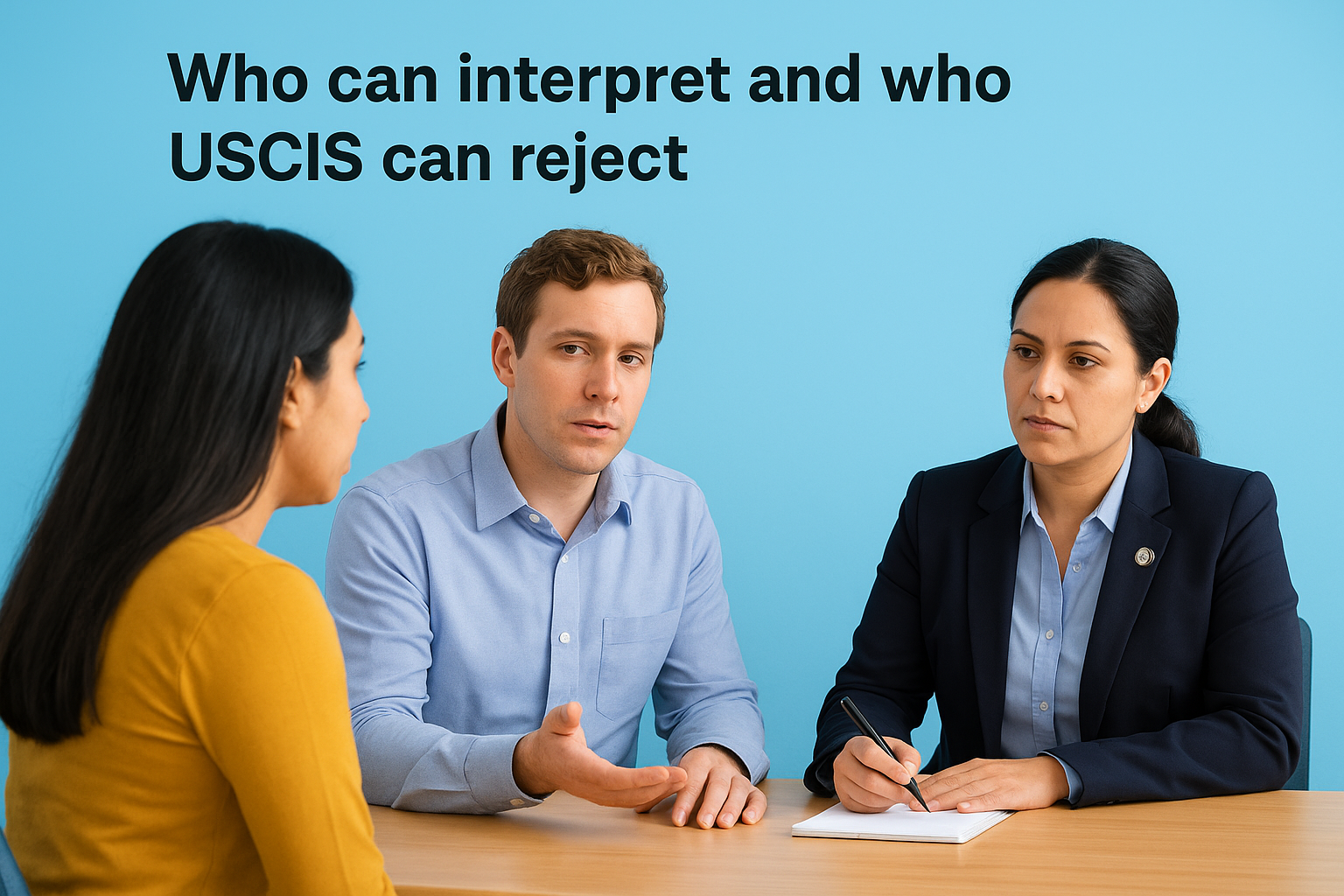
Under the current USCIS interpreter policy, not everyone qualifies to sit beside you during your interview. Your interpreter must be at least 18 years old and fluent in both English and your target language. They also cannot be your attorney, accredited representative, or a witness in the same proceeding. USCIS built these rules to protect the integrity of the interview, not to create obstacles for applicants.
Who qualifies
Your interpreter can be a family member, a friend, or a professional service provider, as long as they meet USCIS requirements. Fluency in both English and your native language is mandatory, and the officer will evaluate this throughout the session. If your interpreter visibly struggles or mistranslates a response, the officer has full authority to pause the interview and schedule a new date.
Who USCIS will turn away
Some situations will get your interpreter rejected on the spot. Attorneys and accredited representatives cannot double as interpreters because their role creates a direct conflict of interest. Witnesses in the same interview are also disqualified without exception. Beyond official roles, USCIS officers watch closely for behavior like coaching, prompting, or expanding on your answers, all of which are grounds for immediate removal from the interview room.
If your interpreter is removed mid-interview, USCIS will reschedule the session, which can add months to your overall case timeline.
Form G-1256 and what happens at the interview
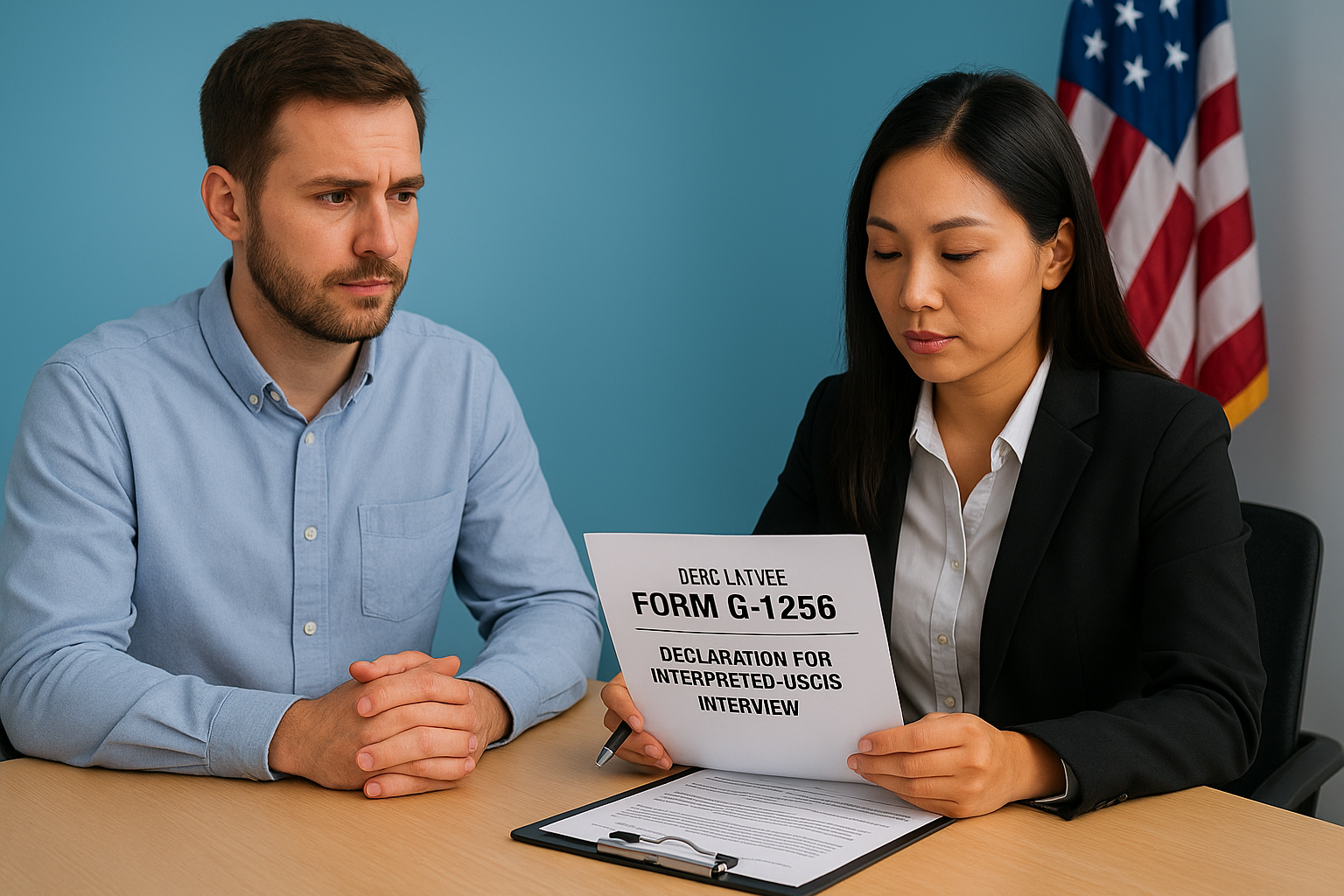
Form G-1256, officially titled "Declaration for Interpreted USCIS Interview," is the document your interpreter must sign before any session begins. Under the uscis interpreter policy, this form is mandatory without exception. Your interpreter certifies in writing that they are fluent in both languages and will interpret accurately, acknowledging the legal consequences of providing false or misleading interpretation.
What your interpreter signs
The form requires your interpreter to provide personal identifying information and their language pair. They also certify they have no disqualifying conflict of interest, such as serving as your attorney or as a witness in the same proceeding. USCIS retains the signed form as part of your official case record, so there is no scenario where skipping it is an option.
Arriving without a completed Form G-1256 will delay your interview immediately, since USCIS officers review it before the session officially begins.
What to expect during the session
Once Form G-1256 is signed and reviewed, the interview proceeds with your interpreter present throughout. Officers direct all questions to you, and your interpreter renders each question and answer in real time without adding personal commentary or explanation.
Any discrepancy the officer notices between your spoken words and the interpreted version can result in them pausing or ending the session and flagging the issue in your case file. Coaching, prompting, or elaborating on your answers is treated the same way, giving the officer grounds to remove your interpreter from the room entirely and reschedule the interview.
Special cases: naturalization, disability, ASL
Not every USCIS interview follows the same format, and the uscis interpreter policy accounts for several situations where standard interpreter rules shift. Knowing how these exceptions apply to your specific case keeps you from preparing under the wrong set of rules.
Naturalization interviews
Naturalization applicants face a stricter language standard than most. English proficiency is a legal requirement for citizenship, so USCIS does not allow interpreters at naturalization interviews under normal circumstances. Bringing an interpreter to a naturalization interview will not be permitted, and the officer will conduct the entire session in English regardless of your comfort level.
Limited exceptions exist for applicants aged 50 or older with at least 20 years of permanent residence, or aged 55 or older with at least 15 years, under what USCIS calls the "50/20" and "55/15" exemptions.
Disability accommodations
If you have a physical or cognitive disability that affects your communication, USCIS offers formal accommodation options through its disability accommodation request process. You can submit a written request before your interview date, and USCIS will review it and respond with approved modifications. Extra time, adjusted seating, or alternative communication methods may all be granted depending on your documented need.
ASL and deaf applicants
Deaf and hard-of-hearing applicants can request a qualified ASL interpreter through the standard accommodation process. Your ASL interpreter still must meet the same baseline eligibility requirements as any spoken-language interpreter, including signing Form G-1256 before the session begins.
How to prepare and avoid delays
Preparation separates a smooth interview from a rescheduled one. The uscis interpreter policy gives officers clear authority to remove unqualified interpreters, so verifying everything well before your appointment is the most effective way to protect your timeline. Start your preparations at least two weeks out to give yourself room to fix any problems before they affect your case.
Confirm your interpreter’s eligibility early
Your interpreter needs to meet every requirement before entering the building. Check their age and verify their fluency in both English and your native language, then confirm they hold no disqualifying role, such as serving as your attorney or as a witness in the same proceeding. Ask them to review Form G-1256 in advance so they fully understand exactly what they are committing to sign.
Reviewing Form G-1256 together before interview day removes confusion or hesitation at check-in.
Bring the right documents on interview day
Show up with a copy of Form G-1256 for your interpreter to sign in front of the officer. Your interpreter should also carry a valid government-issued photo ID, since officers may check their identity before the session begins. Use this checklist to stay organized:
- Form G-1256 (your interpreter signs at check-in, not before)
- Government-issued photo ID for your interpreter
- Your USCIS appointment notice
- Supporting documents listed on your interview notice
Wrap-up and next steps
The USCIS interpreter policy in 2025 is clear: bring a qualified interpreter, have them sign Form G-1256, and know the conduct rules before you walk in. Missing any one of these steps can push your interview date back by months, which affects every other part of your immigration timeline and creates unnecessary stress you can easily avoid.
Your best move now is to lock in a qualified interpreter well before your appointment and review every eligibility requirement together. Professional interpretation services remove the uncertainty entirely, since certified interpreters already know the rules, the forms, and the conduct standards USCIS expects from the moment you check in.
Languages Unlimited has supported applicants and legal professionals with USCIS-compliant interpretation since 1994. Our interpreter network covers over 200 languages across all 50 states, so finding the right person for your specific interview is straightforward. Contact our team today to get matched with a certified interpreter before your upcoming USCIS interview.