



Medical translation takes healthcare documents written in one language and converts them into another language with complete accuracy. This specialized field covers everything from patient records and pharmaceutical labels to clinical trial protocols and medical device manuals. The work demands more than basic language skills because a single mistranslation can lead to serious consequences for patient safety, regulatory compliance, and treatment outcomes.
This guide explains what medical translation covers, why accuracy matters so much in healthcare settings, and how it differs from medical interpretation. You’ll learn what types of documents typically need translation, how professional translators ensure quality results, and what to look for when choosing a translation provider. Whether you work in healthcare, legal services, government, or another field requiring medical translations, you’ll understand exactly what this specialized service involves and why getting it right makes all the difference.
Why medical translation matters in healthcare
Understanding what is medical translation means recognizing its direct impact on patient outcomes and healthcare delivery. Healthcare providers face real liability when patients misunderstand their medications, treatment plans, or consent forms due to language barriers. A mistranslated dosage instruction can lead to overdoses or ineffective treatment, while errors in consent forms create legal exposure and ethical violations. Beyond individual patient care, hospitals and healthcare systems serving diverse populations must provide accurate translations to meet regulatory requirements and maintain quality care standards across all language groups.
Patient safety depends on accurate translations
Medical errors rank as one of the leading causes of death in healthcare settings, and language barriers significantly increase this risk. When your hospital translates a discharge summary incorrectly, patients may miss critical follow-up appointments or take medications at the wrong times. Pharmaceutical companies face similar stakes when translating drug labels and package inserts. A single word error in contraindications or side effects can result in patient harm and costly litigation. Professional medical translation protects patients by ensuring every instruction, warning, and piece of medical information transfers correctly across languages.

Accurate medical translation isn’t just about words; it’s about preserving the precise clinical meaning that keeps patients safe.
Regulatory compliance across borders
Healthcare organizations must meet strict regulatory requirements when operating internationally or serving multilingual populations. The FDA requires pharmaceutical companies to submit translated clinical trial data that matches source documents exactly. Insurance providers need accurate translations of medical records to process claims correctly. Government health agencies mandate translated materials for public health campaigns and patient education programs. Without proper medical translation, your organization risks regulatory penalties, approval delays, and legal complications that can cost millions and damage your reputation in the healthcare market.
How to ensure accurate medical translation
Ensuring accuracy in medical translation requires specific protocols and qualified professionals who understand both medical terminology and translation best practices. When you know what is medical translation and its stakes, you realize that standard translation approaches don’t work for healthcare documents. Your organization needs translators with medical backgrounds or specialized training, combined with rigorous quality control processes that catch errors before they reach patients or regulatory bodies. The right approach combines human expertise with systematic verification to deliver translations that meet healthcare standards.
Work with specialized medical translators
Professional medical translators bring clinical knowledge and language expertise together in ways general translators cannot match. Look for translators who hold medical degrees, nursing certifications, or pharmacy credentials in addition to translation qualifications. These professionals understand anatomical terms, drug mechanisms, diagnostic procedures, and treatment protocols at a technical level. They recognize when a term refers to a specific condition versus a general symptom and know how medical terminology varies across regions even within the same language. Your translator should also maintain active membership in professional organizations that require continuing education and adherence to ethical standards.
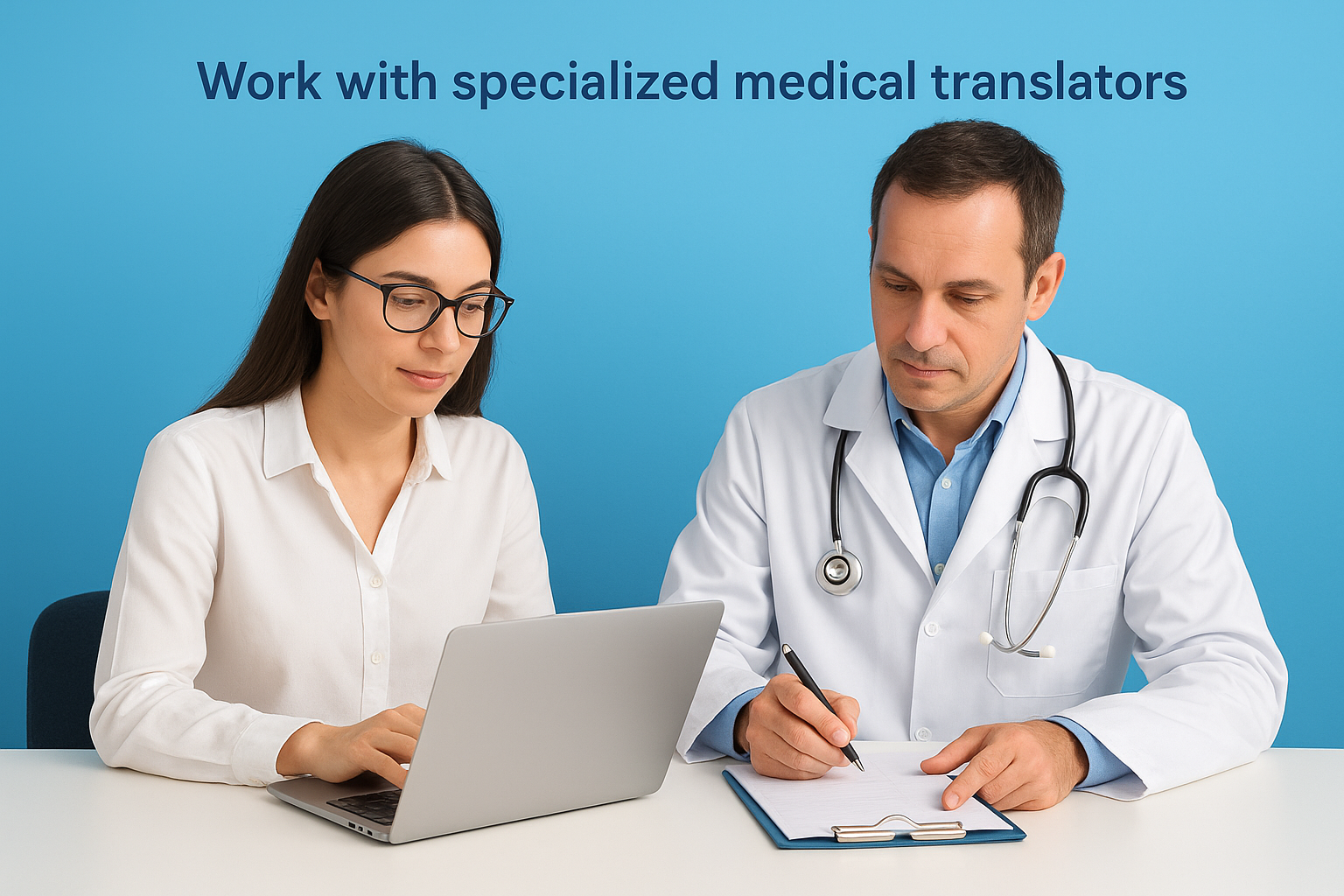
Medical translation demands translators who think like healthcare professionals while writing like language experts.
Implement multi-step quality control
Accuracy requires multiple review stages before any medical translation reaches its final audience. Your quality process should start with the initial translation by a qualified medical translator, followed by editing by a second medical language expert who checks for technical accuracy and terminology consistency. Add a proofreading stage where a third reviewer examines formatting, completeness, and readability without introducing new errors. Many healthcare organizations also use back-translation for critical documents like clinical trial protocols or pharmaceutical labels, where an independent translator converts the translated text back to the source language to verify meaning stayed intact. Track and maintain glossaries of approved medical terms to ensure consistency across all your translated documents.
What medical translation includes
Understanding what is medical translation requires knowing the full range of documents and materials that need language conversion in healthcare settings. The field covers everything from highly technical scientific papers to patient education brochures, each requiring different approaches but the same commitment to accuracy. Your organization might need translations for regulatory submissions, clinical operations, patient care, marketing materials, or internal training resources. Medical translation encompasses both content written for medical professionals and information designed for patients, with each category demanding specific expertise and attention to regulatory requirements that govern healthcare communication.

Clinical and regulatory documentation
Healthcare organizations rely on accurate translations of complex technical documents that support medical research, drug development, and regulatory compliance. Clinical trial protocols define how studies run and require precise translation to ensure consistent implementation across international sites. Your regulatory submissions to agencies like the FDA must include translated safety data, efficacy reports, and manufacturing specifications that match source documents exactly. Informed consent forms need translation that preserves legal protections while remaining comprehensible to study participants. Medical device submissions require translated technical specifications, safety testing results, and quality control documentation that regulatory bodies use to evaluate product approvals.
Patient-facing and commercial materials
Medical translation also covers documents that patients and healthcare consumers interact with directly in their daily lives. Pharmaceutical companies translate drug labels, package inserts, and medication guides that patients reference when taking prescriptions. Healthcare providers need translated discharge instructions, treatment plans, and educational materials that help patients manage conditions at home. Insurance companies require translations of benefits explanations, claim forms, and coverage policies. Medical device manufacturers translate user manuals and safety warnings for equipment used in home care settings.
Medical translation vs medical interpretation
Understanding what is medical translation helps clarify how it differs from medical interpretation, though both bridge language gaps in healthcare. Medical translation works with written documents that require careful review and editing before delivery, while medical interpretation handles spoken communication in real time during patient appointments, procedures, or consultations. Translation gives you time to research terminology, verify accuracy, and implement quality controls, whereas interpretation demands immediate language conversion without pause. Your hospital might need both services but for completely different situations: translators handle consent forms and discharge papers while interpreters facilitate doctor-patient conversations.
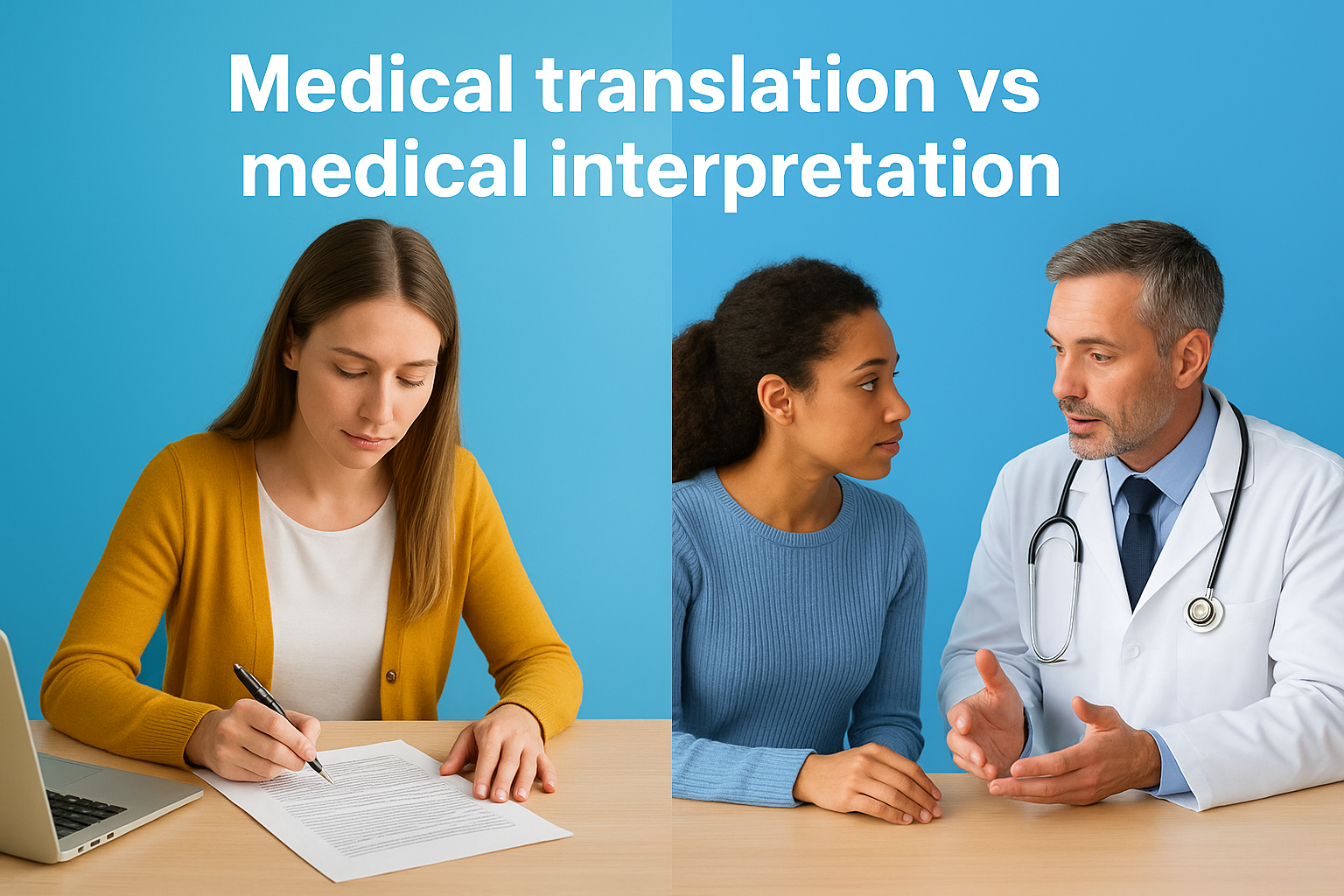
The timing and format difference
Translation operates asynchronously with no immediate deadline for completing the language transfer. Your translator receives a medical record, researches unfamiliar terms, and delivers a polished document hours or days later. This time allows for multi-step quality processes that ensure accuracy. Interpretation happens synchronously as conversations unfold, requiring instant speech conversion without dictionaries or verification time.
Medical translation builds accuracy through revision while interpretation requires accuracy on the first attempt.
The permanent versus temporary nature also separates these services. Translated documents become lasting records that multiple people reference over time, while interpreted conversations exist only in the moment unless recorded separately.
Choosing a professional medical translation provider
Your choice of medical translation provider directly affects patient safety, regulatory compliance, and operational efficiency in healthcare settings. When you understand what is medical translation and its complexity, you recognize that not all translation services can handle medical documents properly. The wrong provider risks mistranslations that lead to patient harm, regulatory rejections, or expensive revisions. Your organization needs specific selection criteria that go beyond basic language capabilities to evaluate medical expertise, quality processes, and industry credentials that separate professional medical translation from general services.
Verify medical credentials and certifications
Professional medical translation providers employ translators with healthcare backgrounds or specialized medical training beyond language degrees. Ask about translator qualifications including medical degrees, nursing licenses, pharmacy certifications, or documented experience in healthcare settings. Your provider should demonstrate membership in recognized professional organizations that require continuing education and ethical standards compliance. Check for certifications like ATA membership, ISO 17100 compliance, or USCIS approval for specific document types. Request sample translations or client references from organizations in your healthcare sector to evaluate both language quality and medical terminology accuracy.
Professional credentials ensure your medical translations come from people who understand healthcare at a clinical level.
Evaluate quality control processes
Quality assurance separates professional providers from basic translation services through systematic verification steps that catch errors before delivery. Your provider should explain their review process including how many qualified reviewers check each translation and what medical expertise those reviewers bring. Ask about terminology management systems that maintain consistency across documents and prevent conflicting translations of the same medical terms. Confirm they offer back-translation services for critical documents and maintain detailed audit trails that regulatory bodies may require during compliance reviews.

Bringing it all together
Medical translation requires specialized expertise that combines healthcare knowledge with language proficiency to protect patient safety and maintain regulatory compliance. Understanding what is medical translation means recognizing the high stakes involved when converting clinical documents, pharmaceutical information, and patient materials across languages. Your organization needs qualified translators with medical credentials, systematic quality control processes, and proven experience handling healthcare documentation.
Languages Unlimited brings over 25 years of experience delivering accurate medical translations for healthcare providers, pharmaceutical companies, and government agencies across all 50 states. Our network of medical professionals turned translators ensures your documents receive the clinical expertise and linguistic precision that healthcare requires. Contact our team today to discuss your medical translation needs and discover how we protect your patients through accurate, compliant language services that meet the highest healthcare standards.