



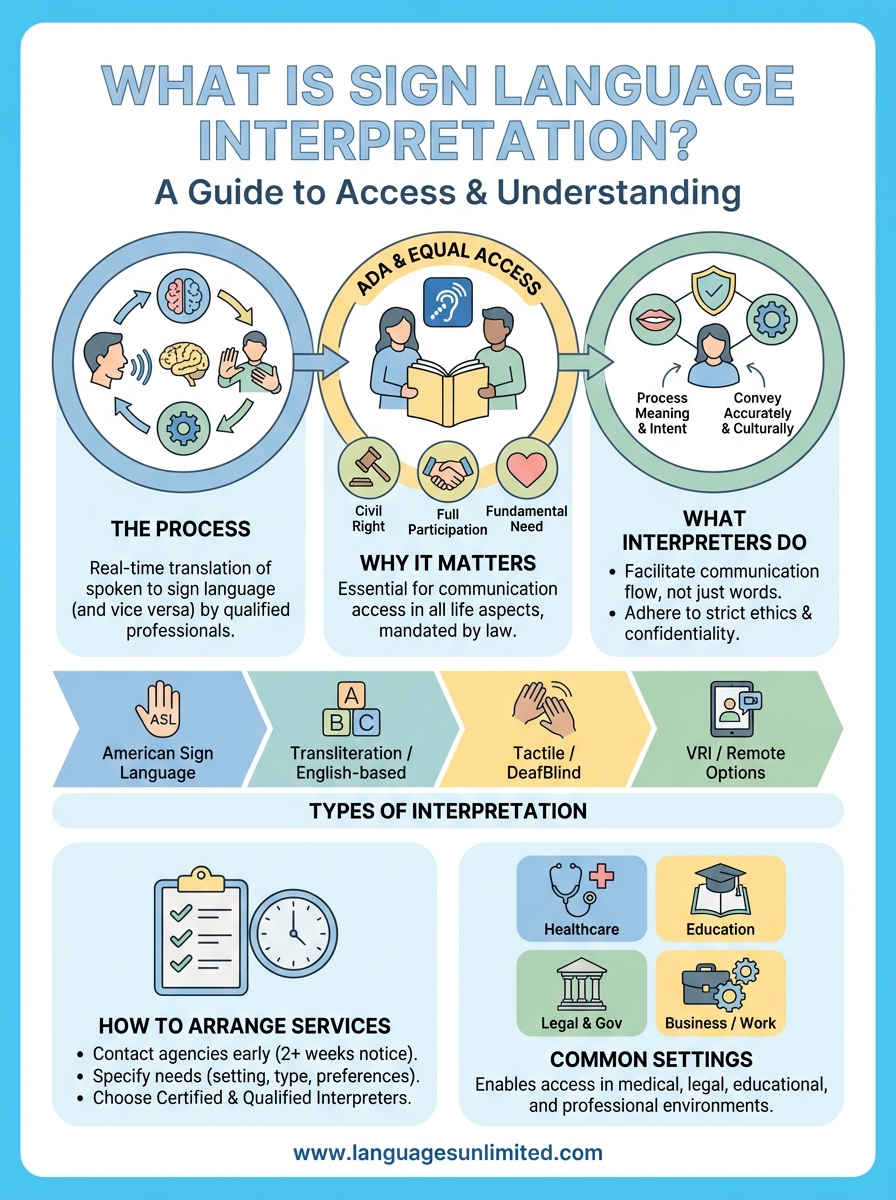
Sign language interpretation is the process of translating spoken language into sign language and vice versa. It enables deaf, hard of hearing, and hearing people to communicate effectively across language barriers. An interpreter watches what one person says, processes that message, and conveys it accurately in sign language to the deaf person. Then the process reverses when the deaf person signs back. This real time translation requires deep fluency in both languages and specialized training that goes far beyond knowing conversational signs.
This guide explains what sign language interpretation actually involves and how you can access these services when you need them. You’ll learn about the different types of interpretation available, from on site interpreters to video remote options. We’ll walk through what interpreters do during their work and the various settings where they provide services. You’ll also see practical examples of interpretation in action across legal, medical, educational, and business environments. By the end, you’ll understand exactly how interpretation works and how to arrange qualified interpreters for your specific needs.
Why sign language interpretation matters
Sign language interpretation creates equal access to information and communication for deaf and hard of hearing individuals. Without qualified interpreters, deaf people face barriers in healthcare, legal proceedings, education, employment, and countless daily interactions. Federal law recognizes this fundamental need through the Americans with Disabilities Act (ADA), which requires businesses and government entities to provide effective communication access. When you understand what is sign language interpretation and why it matters, you recognize that it’s not a convenience but a civil rights issue that ensures full participation in society.
Legal and accessibility requirements
The ADA mandates that organizations provide qualified interpreters as a reasonable accommodation when needed for effective communication. This legal obligation applies to hospitals, courts, schools, government offices, and most businesses serving the public. You can’t substitute an interpreter with a family member, a smartphone app, or written notes in situations requiring accurate and complete communication. Courts have consistently ruled that effective communication means professional interpretation, not improvised alternatives that put the deaf person at a disadvantage.

Professional interpretation is legally required because communication access is a fundamental right, not an optional service.
Equal access in everyday situations
Beyond legal compliance, interpretation matters because it allows deaf individuals to participate fully and independently in all aspects of life. A deaf patient needs to understand their diagnosis, treatment options, and medical instructions directly from their doctor. A deaf employee deserves to engage in team meetings and contribute their expertise without barriers. Parents need to attend their children’s school conferences and understand what teachers share about their child’s progress. Interpretation removes communication barriers that would otherwise exclude deaf people from these essential experiences, enabling them to make informed decisions and exercise their rights just like anyone else.
How to arrange sign language interpretation
Arranging interpretation starts with understanding your specific communication needs and timeline. You need to contact interpreter service providers or interpreting agencies well in advance of your event or meeting, as qualified interpreters often book up quickly. Most agencies ask for at least two weeks notice for standard assignments, though many can accommodate shorter timelines depending on availability. When you reach out, be prepared to share details about the setting, topic, duration, and the deaf person’s communication preferences to ensure the agency matches you with the right interpreter.
Identifying your interpretation needs
Start by assessing what type of interpretation will work best for your situation. You need to determine whether on site interpretation makes the most sense or if video remote interpreting (VRI) could serve your needs effectively. Consider the length of your event, the complexity of the content, and the environment where interpretation will occur. Medical appointments discussing technical diagnoses typically require in person interpreters who can see visual aids and interact with all parties directly. Simple informational meetings or brief consultations might work well with video remote options that connect you to interpreters within minutes.
Ask the deaf person about their communication preferences before booking services. Some individuals prefer American Sign Language (ASL) interpreters while others may need different accommodations. Understanding what is sign language interpretation from the deaf person’s perspective helps you arrange the most effective service. Their input ensures you request interpreters with the right skill level and specialization for your specific content area.
Choosing qualified interpreter services
Select interpreters who hold professional certifications and relevant experience in your field. Look for credentials from the Registry of Interpreters for the Deaf (RID), which verifies an interpreter’s competency and ethical standards. You want interpreters who maintain current licensure where your state requires it and who follow the professional code of conduct that protects confidentiality.

Certified interpreters bring verified skills and ethical standards that protect all parties in the communication exchange.
Contact established interpreting agencies rather than trying to find individual interpreters on your own. Agencies maintain rosters of qualified professionals, handle scheduling logistics, provide backup interpreters when needed, and ensure consistency in service quality. They also manage the administrative details like contracts, payment processing, and compliance documentation that you need for legal and institutional requirements.
Types of sign language interpretation
Understanding what is sign language interpretation requires knowing that several distinct types exist to meet different communication needs. The type you need depends on the deaf person’s language preferences, the setting requirements, and the nature of your interaction. Each interpretation type uses different techniques and serves specific purposes, from American Sign Language to tactile methods for deafblind individuals.
ASL interpretation
American Sign Language interpretation represents the most common type you’ll encounter in the United States. Interpreters translate between spoken English and ASL, which has its own grammar, syntax, and cultural expressions separate from English. These interpreters work simultaneously or consecutively, processing one language and expressing it fluently in the other in real time. You’ll see ASL interpreters in settings ranging from business meetings to educational lectures, where they convey both the content and the speaker’s intent through facial expressions, body language, and precise signing.
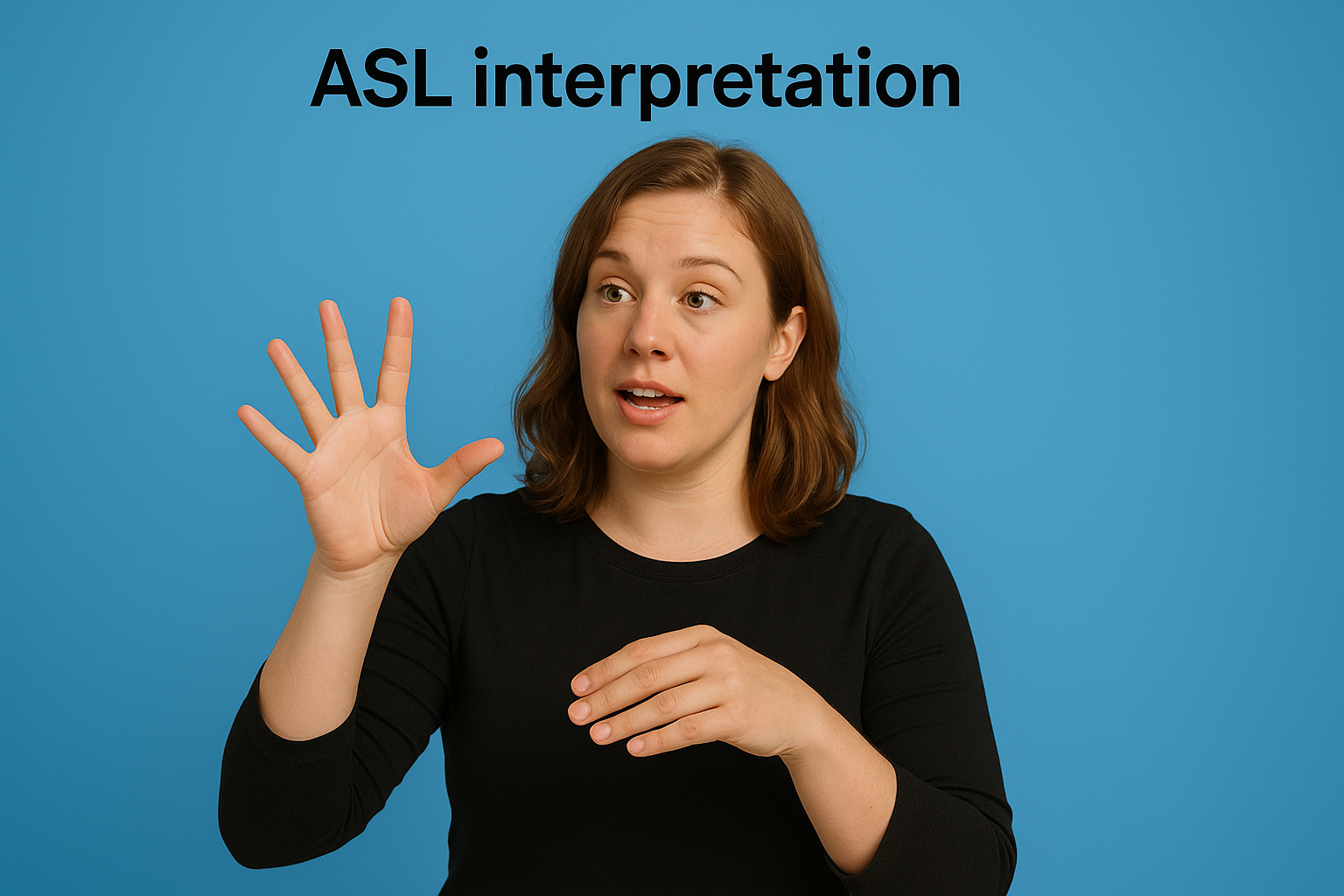
ASL is a complete language with its own grammar structure, not a signed version of English.
Transliteration and oral methods
Transliteration differs from ASL interpretation by using signs that follow English word order rather than ASL grammar, often called Contact Sign or Pidgin Signed English. This method works well for deaf individuals who prefer English based signing or who learned sign language later in life. Oral transliteration serves people who rely on speechreading by having the interpreter silently mouth words while using strategic gestures and clear facial expressions to enhance understanding. Both approaches offer alternatives when ASL interpretation doesn’t match the deaf person’s communication style.
Tactile and specialized interpretation
Tactile interpretation serves deafblind individuals who cannot see signs visually. The interpreter signs directly into the person’s hands, allowing them to feel each sign through touch. Protactile interpretation goes further by incorporating environmental information and spatial awareness through tactile channels, providing context about surroundings and activities. These specialized methods require additional training and certification beyond standard interpretation skills.
Remote interpretation options
Video remote interpreting connects you to qualified interpreters through internet enabled devices like computers, tablets, or smartphones. This technology delivers immediate access to interpretation services when you need them quickly or when on site interpreters aren’t available. Remote services work well for brief interactions, scheduled appointments, and situations where visual communication through screens provides adequate clarity for all participants.
What sign language interpreters actually do
Sign language interpreters perform complex cognitive work that involves far more than knowing how to sign. They actively listen to spoken language while simultaneously processing meaning and cultural context, then express that message accurately in sign language. This bidirectional translation happens in real time, requiring interpreters to manage the flow of conversation, retain information, and adjust their approach based on the deaf person’s comprehension and communication style. Understanding what is sign language interpretation means recognizing that interpreters function as linguistic and cultural bridges who ensure both parties understand each other completely.
Processing and conveying messages
Interpreters analyze the speaker’s intent and meaning rather than simply converting words into signs. They must understand idiomatic expressions, technical terminology, humor, and emotional nuances, then find equivalent ways to express those concepts in sign language. You see this skill when an interpreter processes a complex English sentence structure and renders it according to ASL grammar rules, which operate differently from English. They also work receptively by watching the deaf person’s signing, comprehending their message fully, and voicing it naturally in English for hearing participants.
Professional interpreters convey meaning and intent, not just word-for-word translations between languages.
Managing communication flow and environment
Beyond translation, interpreters control pacing and turn taking to ensure smooth exchanges between all parties. They position themselves strategically so the deaf person can see them clearly while maintaining visual connection with speakers and any visual materials. Interpreters monitor the deaf person’s comprehension signals and will ask speakers to pause, clarify, or repeat information when needed. They also assess lighting, background noise, and physical arrangements that affect communication quality, advocating for adjustments that improve access.
Cultural and ethical responsibilities
Interpreters follow strict confidentiality standards that protect all information shared during assignments. They maintain professional boundaries by interpreting everything said without adding their own opinions, omitting content, or intervening in conversations unless necessary for clarity. You rely on interpreters to understand both Deaf culture and hearing culture, navigating potential misunderstandings that arise from different cultural norms. Their code of conduct requires impartiality, accuracy, and respect for the autonomy of deaf individuals to make their own decisions based on complete information.
Common settings and real world examples
Sign language interpretation occurs across virtually every environment where communication matters. You encounter interpreters in hospitals, courtrooms, schools, businesses, and public events, each setting presenting unique challenges and requirements. Real world applications demonstrate how interpretation enables deaf individuals to access the same information and opportunities available to hearing people, from routine doctor visits to complex legal proceedings.
Healthcare and medical appointments
Medical settings require interpreters to handle sensitive health information and technical terminology while maintaining patient confidentiality. You see this when a deaf patient meets with their doctor to discuss test results, treatment options, or medication instructions. The interpreter conveys everything the physician says about diagnoses, side effects, and care instructions while also voicing the patient’s questions, concerns, and medical history. Emergency room situations demand immediate access to qualified interpreters, as delays in communication can compromise patient safety and treatment outcomes.

Medical interpretation ensures deaf patients understand their healthcare options and can make informed decisions about their treatment.
Educational environments
Schools and universities employ interpreters to provide deaf students with equal access to classroom instruction and campus activities. Interpreters work through lectures, lab sessions, group discussions, and student conferences, enabling deaf students to participate fully in their education. You find educational interpreters managing complex academic content across subjects from mathematics to literature, adapting their vocabulary to match course requirements while maintaining accuracy.
Legal and government settings
Courts mandate certified legal interpreters for deaf defendants, witnesses, and attorneys participating in proceedings. These interpreters navigate specialized legal terminology during trials, depositions, attorney consultations, and police interviews. Government offices also provide interpretation for public services, including social security appointments, DMV transactions, and city council meetings where deaf residents need to understand policies affecting their communities.
Business and employment contexts
Workplaces use interpreters for job interviews, training sessions, team meetings, and performance reviews, allowing deaf employees to contribute their skills and advance their careers. Business negotiations, conferences, and client presentations often require interpretation services when deaf professionals participate in high stakes discussions that shape company decisions and strategies.
Bringing it all together
You now understand what is sign language interpretation and how it creates equal access to communication across all life situations. This professional service goes beyond simple signing to provide accurate, real-time translation that respects both languages and cultures involved. Whether you need interpretation for healthcare appointments, legal proceedings, educational settings, or business meetings, qualified interpreters ensure effective communication that meets legal standards and human needs. Ready to arrange professional interpretation services for your organization or upcoming event? Contact our team to discuss your specific requirements and connect with certified interpreters who can support your communication access needs.