



You need to submit foreign documents to USCIS but they are not in English. Every document must include a certified English translation or your application gets delayed or rejected. The catch is that many people misunderstand what USCIS actually requires for a certified translation. You might think you need an expensive agency or a notarized seal. You might worry that a simple mistake will derail months of work.
The truth is simpler than you expect. USCIS sets clear rules about who can translate your documents and how to certify them. You do not need special credentials or government approval. You need the right format and a competent translator who can vouch for accuracy.
This guide walks you through each requirement step by step. You will learn what USCIS means by certified translation, which documents need translating, how to choose a qualified translator, and how to format the certification statement properly. You will also get templates and answers to common questions that trip people up. By the end, you will know exactly how to prepare translations that USCIS accepts the first time.
What USCIS means by a certified translation
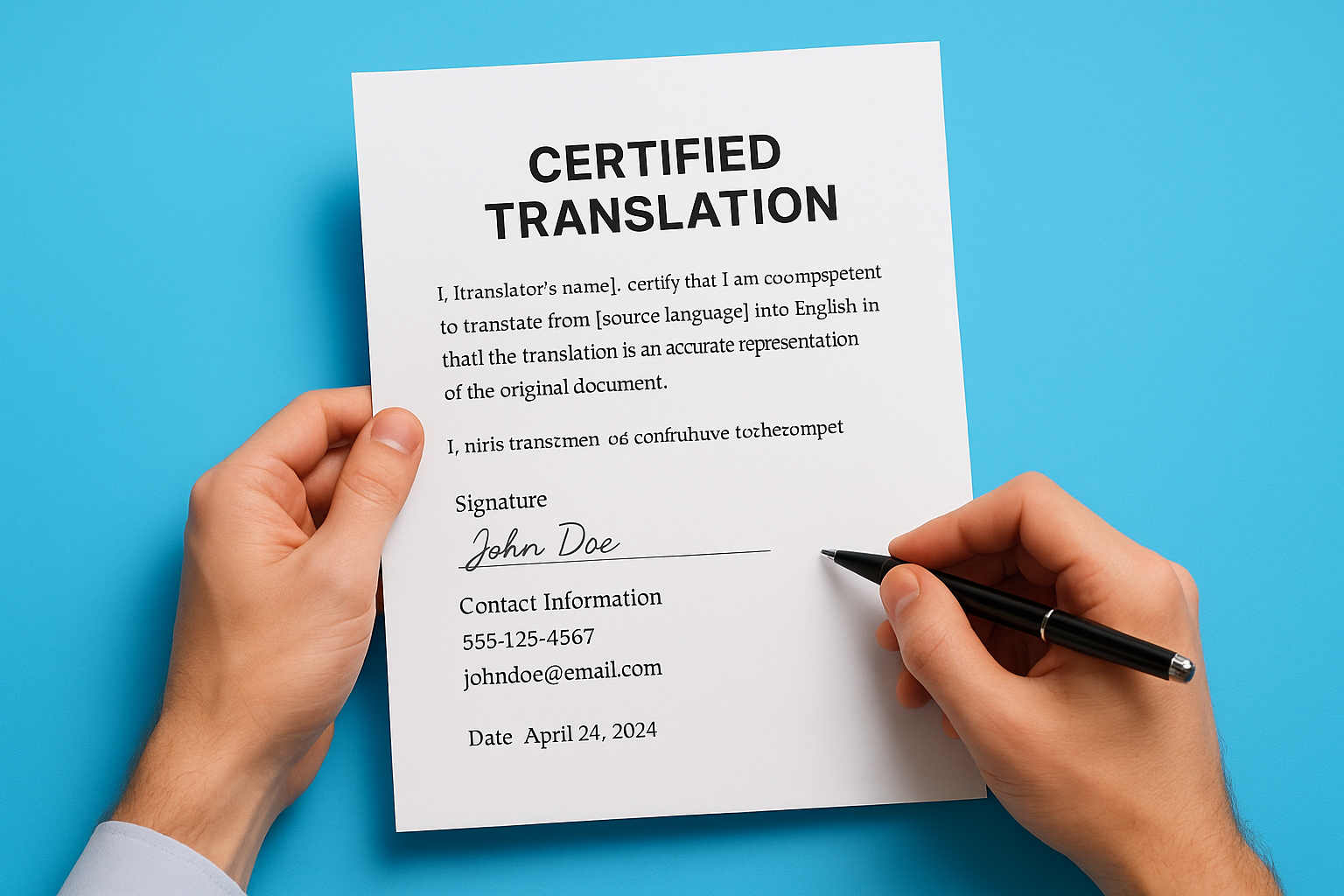
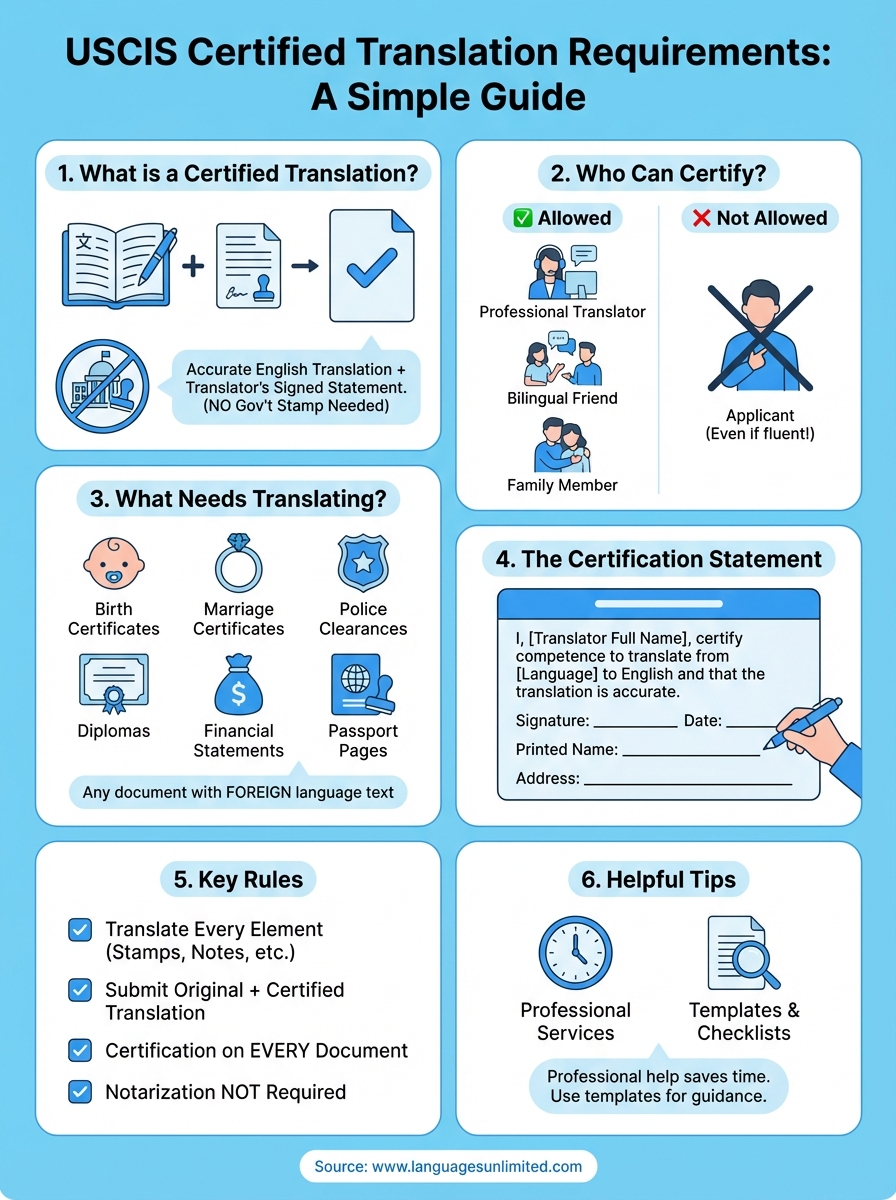
A certified translation is not what most people assume. You do not need a government stamp or a special license. USCIS defines a certified translation as any complete and accurate English translation that comes with a signed statement from the translator. That statement must confirm two things: the translator is competent to translate from the source language into English, and the translation accurately represents the original document.
The core requirement
The uscis translation requirements rest on a simple foundation. Your translator must attach a certification statement to every translated document. This statement includes the translator’s full name, signature, contact information, and date. The translator declares under their own authority that they understand both languages well enough to produce an accurate translation. USCIS does not verify credentials or test language skills. The system relies on the translator’s personal attestation of competence and accuracy.
You do not need to hire someone with formal certification or government credentials to meet USCIS standards.
Who can certify a translation
Anyone fluent in both languages can certify a translation for USCIS. This includes professional translation services, bilingual friends or family members, or even you if you are fluent in both languages. The only exception is that you cannot certify your own documents for yourself. USCIS requires an independent party to provide the certification, even if that party is a relative. Professional translators bring experience and reduce the risk of errors, but USCIS places no legal requirement on credentials or membership in translation organizations.
Step 1. Gather the documents you must translate
Your first task is to identify every document in your USCIS application package that contains foreign language text. Even a single word or phrase that is not in English triggers the translation requirement. Start by reviewing your entire application form by form and checking each supporting document you plan to submit. Make a list as you go so nothing gets overlooked.
Common documents requiring translation
Most applicants need to translate civil documents and personal records from their home country. USCIS frequently requires translations for birth certificates, marriage certificates, divorce decrees, adoption papers, death certificates, police clearance records, military service records, court judgments, academic transcripts, diplomas, and financial statements. Bank statements, tax documents, and employment letters also need translation if they contain any foreign language content.
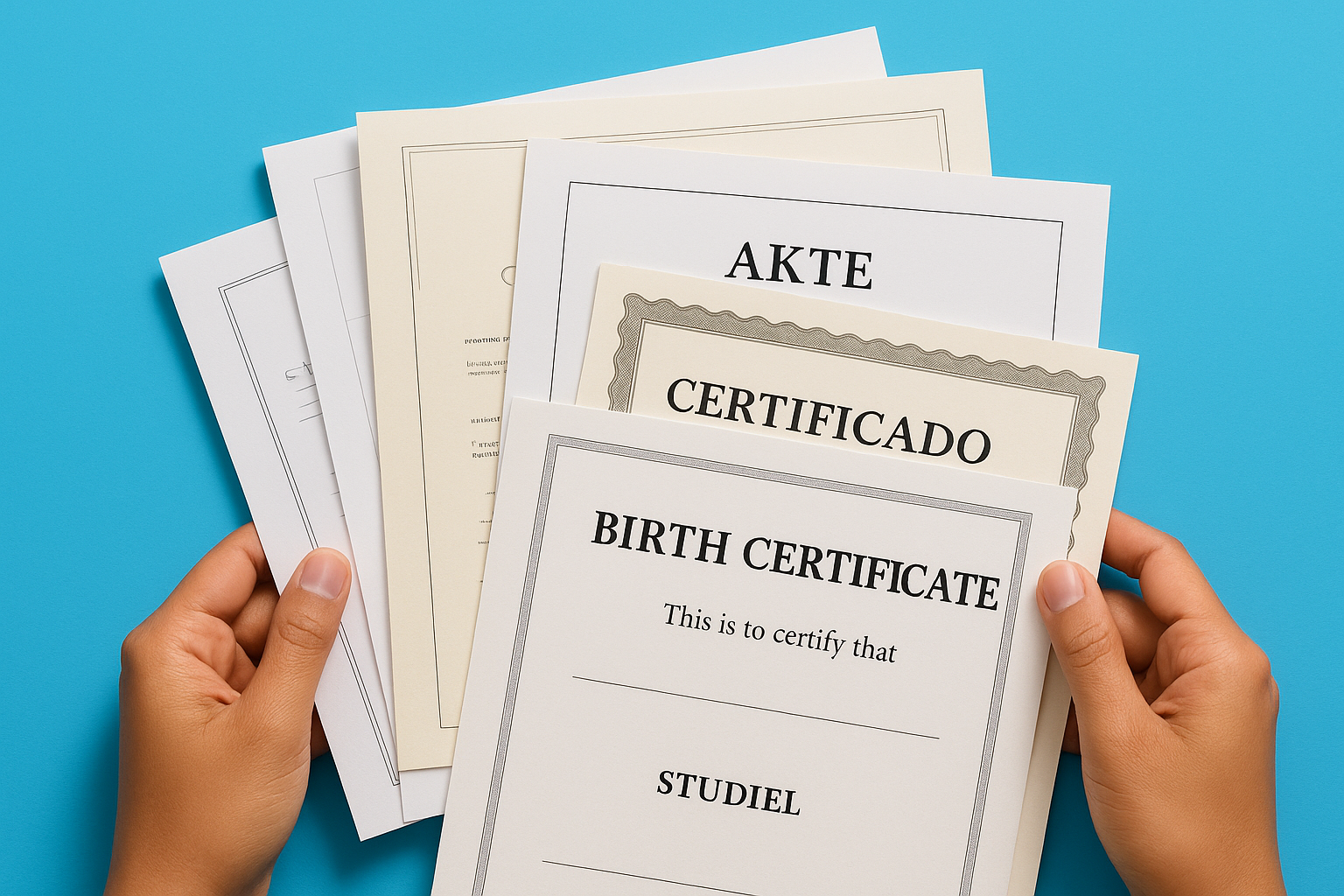
You must also translate passport pages that include stamps, visas, or entries in another language. Even if most of your passport is in English, any foreign language annotations require translation.
What to exclude
Do not translate documents that USCIS already provides in English. Standard government forms like the I-130 or I-485 do not need translation because USCIS publishes them. You also skip translation for documents that are already entirely in English or contain only proper names, addresses, and numbers that remain the same across languages.
Documents with mixed languages need full translation of all foreign language portions, even if English appears elsewhere on the same page.
Step 2. Select a qualified translator
Your choice of translator determines whether USCIS accepts your documents without delay. You can hire a professional translation service, ask a bilingual friend or relative, or use any competent person who understands both languages. The uscis translation requirements do not mandate formal credentials, but you must ensure your translator can produce accurate work and certify it properly.
Professional translation services vs. personal translators
Professional services bring experience with USCIS formatting and quality control processes that reduce errors. They understand document layout, legal terminology, and certification requirements. Professional translators typically charge per page or word, but they deliver polished translations with proper certification statements already formatted. Personal translators cost less or nothing but require you to guide them through the certification format and review their work carefully for accuracy.

Both options satisfy USCIS rules as long as the translator signs the certification statement and confirms their competence. You take more responsibility for quality when using friends or family, but you save money and often get faster turnaround.
The translator cannot be you, even if you are fluent in both languages, because USCIS requires an independent party to certify the translation.
What to verify before hiring
Confirm your translator understands both the source language and English at a level sufficient for formal documents. Ask about their experience translating civil records like birth certificates or court documents, since these require precision with official terminology. Check whether they provide the certification statement or if you need to prepare it separately. Professional services include certification automatically, but individual translators may need a template from you.
Request a sample certification statement before starting work so you know the translator follows proper format. Verify they will include their contact information and signature on each translated document. This preparation prevents problems when you submit your application.
Step 3. Create and review your certified translations
Your translator produces the actual English version of each foreign language document once you provide the originals. The translation must be complete and word-for-word accurate, matching the content and structure of the source document. Every detail matters, including dates, names, official seals, stamps, signatures, and marginal notes. The translator must not skip sections or summarize. USCIS expects a full verbatim translation that mirrors the original layout as closely as possible.
Translate every element on the page
Your translator starts by converting all text from the original document into English. This includes headers, footers, stamps, handwritten notes, and printed information. Names of people and places stay in their original form but get transcribed accurately into Roman characters if needed. Dates convert to month-day-year format standard in the United States. Official titles and positions require translation that reflects their meaning in the source country’s system.
The translator types the translation neatly on clean white paper or as a professional document file. Each translated page should indicate which page of the original it corresponds to if the document spans multiple pages.
Format the certification statement correctly
You attach a certification statement to each translated document that meets uscis translation requirements. This statement appears on a separate page or at the end of the translation. The format follows this structure:
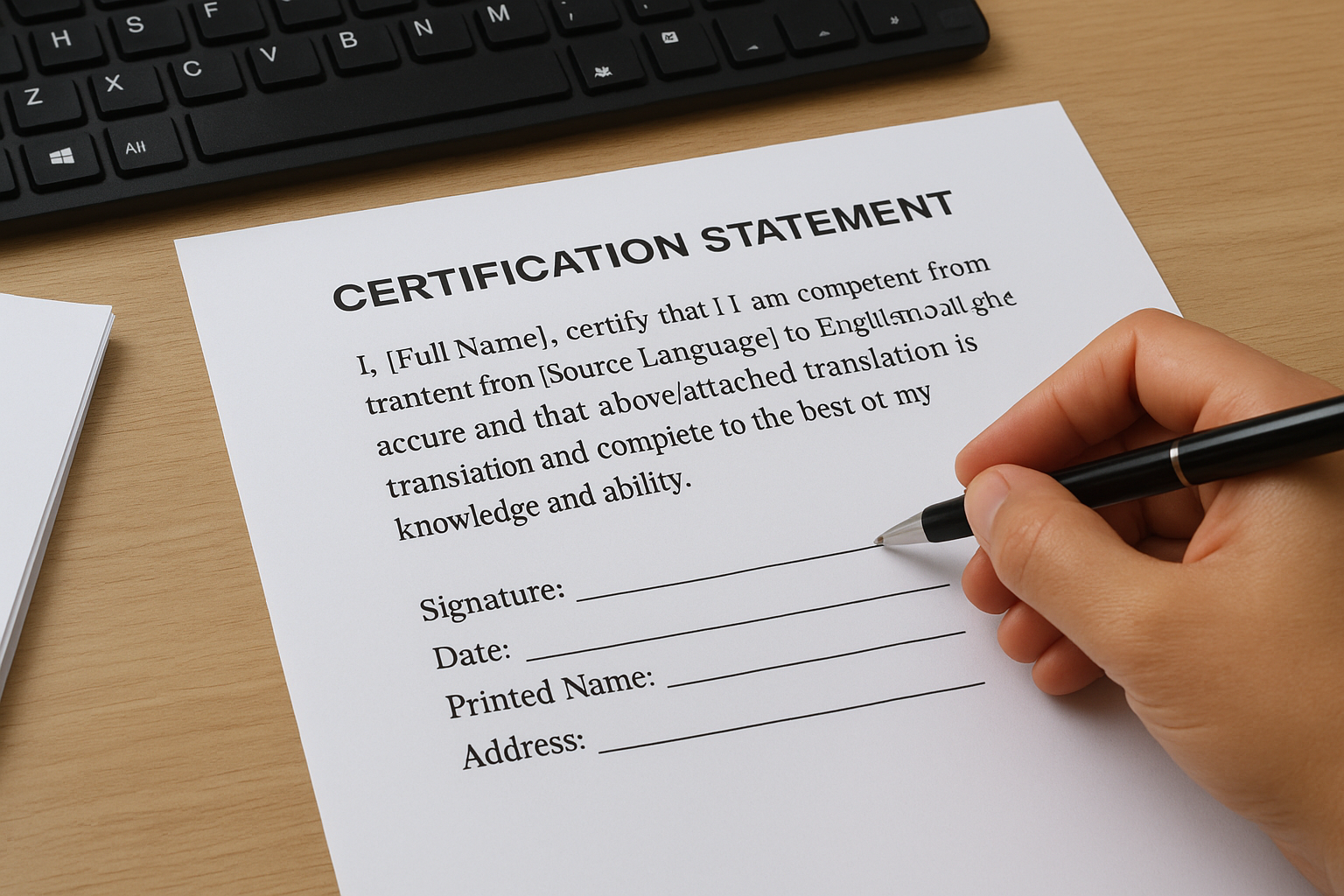
I, [Full Name], certify that I am competent to translate from [Source Language]
to English and that the above/attached translation is accurate and complete to
the best of my knowledge and ability.

Signature: ___________________
Date: ___________________
Printed Name: ___________________
Address: ___________________
         ___________________
The translator signs by hand even if the translation itself is typed. Include their full contact information so USCIS can verify the certification if needed.
Your certification statement must appear on every translated document separately, not just once for a package of multiple documents.
Review the final product before submission
Check that the translation includes every word and marking from the original. Compare names, numbers, and dates character by character. Verify the certification statement contains all required elements with proper signature and date. Make sure you submit both the original foreign language document and the certified translation together as USCIS requires both for processing.
Checklists, templates, and common questions
You need to verify your translations meet every requirement before submission. This section provides practical tools and direct answers to questions that applicants ask most often. Use these resources to double-check your work and avoid the mistakes that cause USCIS to request additional evidence or reject applications outright.
Pre-submission checklist
Run through this checklist for each translated document in your application package. Confirm you have the original foreign language document attached to its certified English translation. Verify the certification statement includes the translator’s signature, printed name, full address, and date. Check that every word on the original appears in the translation, including stamps and handwritten notes. Make sure the translator is not you if you are the applicant.
Sample certification statement
Copy this template and fill in the specific details for your situation. Your translator signs the statement by hand after printing it.
I, [Translator Full Name], certify that I am competent to translate
from [Source Language] to English and that the attached translation
of the [Document Type, e.g., "Birth Certificate"] is accurate and
complete to the best of my knowledge and ability.

Signature: ___________________
Date: ___________________
Printed Name: ___________________
Address: ___________________
         ___________________
Phone: ___________________
Does USCIS require notarization?
No. The uscis translation requirements do not mandate notarization of the certification statement. Your translator’s signed statement alone satisfies the rules. Some applicants add notarization for extra assurance, but USCIS does not require it and does not give preference to notarized translations. Save the notarization fee unless you have a specific reason to add it.
Moving forward
You now understand the uscis translation requirements and how to prepare documents that USCIS accepts on first submission. The process requires attention to detail but follows straightforward rules once you know them. Every document with foreign language text needs a complete English translation plus a signed certification statement.
Your next step is to review your application package and identify which documents need translation. Professional help saves time and reduces errors if you handle multiple documents or complex legal records. Languages Unlimited provides certified translation services that meet USCIS standards for all document types. You can also prepare translations yourself using the templates and checklists in this guide. Either path works as long as you follow the certification format and verify completeness before submission.