



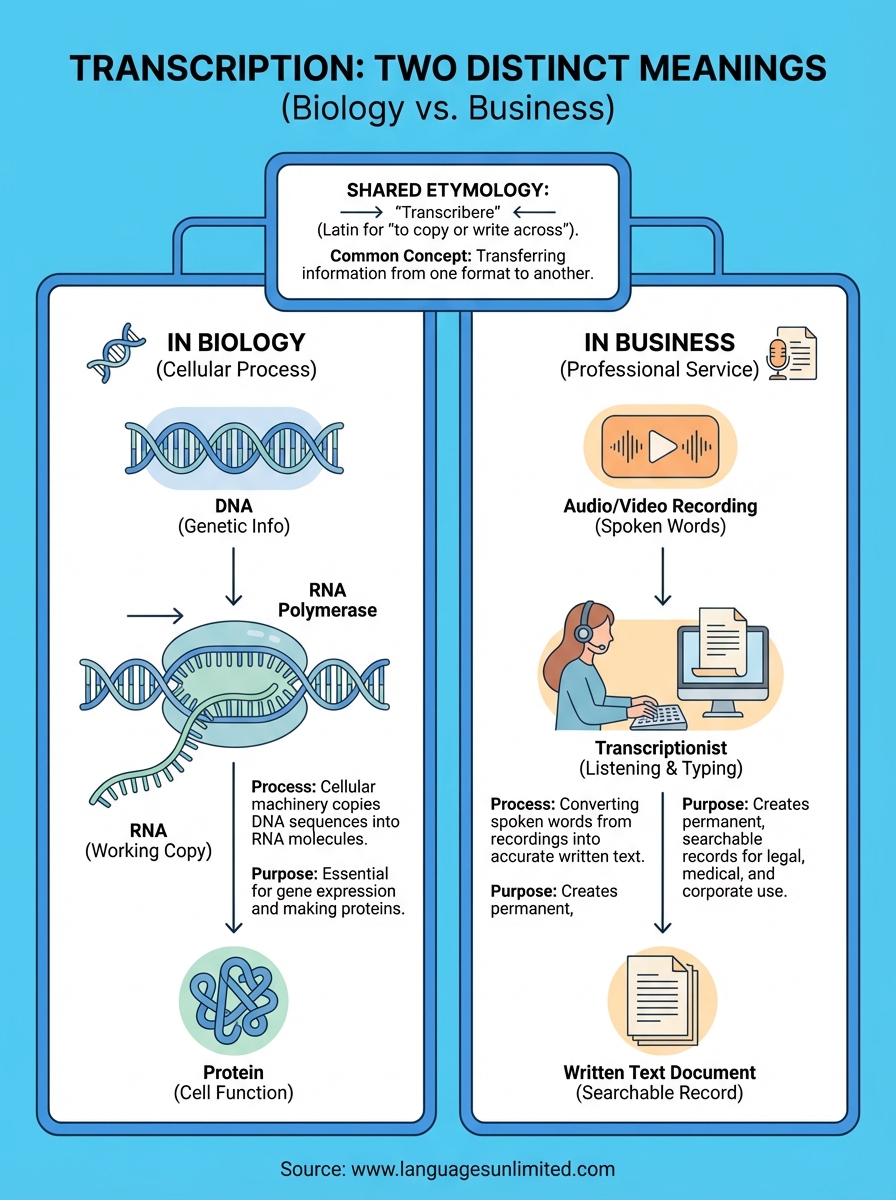
What is transcription? The term has two distinct meanings depending on the context. In biology, transcription refers to the process where DNA sequences get copied into RNA molecules inside your cells. In business and professional services, transcription means converting spoken words from audio or video recordings into written text. Both processes involve transferring information from one format to another, which explains why they share the same name.
This article breaks down both definitions so you understand exactly what transcription means in each field. You’ll learn how DNA transcription works at the molecular level and why it matters for understanding genetics and cellular function. You’ll also discover how professional transcription services operate, including the different types of transcripts businesses use, accuracy standards, and compliance requirements. Whether you’re studying biology, need transcription services for your organization, or simply want to understand what the term means, you’ll find clear answers here.
Why the word transcription causes confusion
The word "transcription" creates confusion because it refers to two completely different processes that happen to share the same name. When you ask "what is transcription," you might get an answer about cellular biology or professional document services, depending on who you’re talking to. Unlike most technical terms that belong to a single field, transcription operates in two separate domains with no practical overlap.
The etymology behind both meanings
Both uses of transcription stem from the Latin word "transcribere," which means to copy or write across. In biology, your cells copy genetic information from DNA molecules to RNA molecules. In professional services, transcriptionists copy spoken words from audio recordings to written documents. The connection stops at this basic concept of transferring information from one format to another.
The confusion deepens because neither field borrowed the term from the other. Scientists have used transcription to describe DNA-to-RNA copying since they discovered the process in the 1960s. Professional transcriptionists have used the same word for over a century to describe their work converting speech to text. Each field independently chose the term to describe its own distinct copying process.
The dual meaning creates genuine communication problems when context isn’t clear, forcing you to specify which type of transcription you need.
When the confusion actually matters
You encounter this confusion in academic settings, search results, and business communications. Students researching transcription for a biology class might accidentally land on pages about professional transcription services. Healthcare administrators looking for medical transcription providers might sift through molecular biology articles first. Search engines struggle to determine your intent when you type "transcription" without additional context.
Professional contexts create the most awkward situations. When someone at a medical facility mentions transcription, they could mean the biological process happening in patient cells or the administrative service that converts doctor recordings into written reports. Legal professionals discussing transcription might reference court reporting services, while geneticists in the same conversation think about gene expression.
Why context clues don’t always help
The confusion persists because both meanings appear legitimate in many professional environments. Healthcare, research institutions, and academic settings regularly deal with both types of transcription. A hospital laboratory studies cellular transcription while the same hospital’s administrative department outsources audio transcription. Universities teach molecular transcription in biology departments while offering transcription services through accessibility offices.
You can’t rely on industry alone to clarify which meaning applies. The overlap in professional settings means you need explicit context every time someone uses the word. This forces speakers and writers to add qualifiers like "DNA transcription" or "audio transcription" to prevent misunderstandings. Without these clarifiers, you risk wasting time pursuing the wrong type of information or service entirely.
What transcription means in biology
In biological terms, transcription describes the cellular process where your cells copy genetic information from DNA into RNA. This happens continuously in every living cell as part of gene expression. Your DNA holds the complete instructions for making proteins, but it stays safely locked in the cell nucleus. Transcription creates temporary RNA copies of specific DNA segments so your cells can use those instructions without exposing the original DNA to damage.
The cellular copying mechanism
Your cells use specialized enzymes called RNA polymerases to read DNA sequences and build matching RNA molecules. Think of DNA as a master blueprint that never leaves the architect’s vault. Transcription creates working copies of individual pages from that blueprint. These RNA copies travel out of the nucleus to protein-building machinery in your cells, carrying instructions for making specific proteins your body needs.
The process serves as the first step in gene expression, which determines how your genetic code produces actual proteins. Without transcription, your cells couldn’t access the genetic instructions stored in DNA. Every protein your body makes, from enzymes that digest food to antibodies that fight infection, starts with a transcription event.
Transcription allows your cells to selectively activate specific genes while keeping others turned off, controlling which proteins get made and when.
Why this matters for understanding genetics
When you ask what is transcription in a biological context, you’re exploring how genetic information flows from storage to function. Scientists study transcription to understand disease mechanisms, gene regulation, and cellular responses to environmental changes. Mutations that affect transcription can cause genetic disorders because they disrupt the cell’s ability to produce essential proteins. Understanding transcription helps researchers develop treatments that target gene expression problems at the molecular level.
How DNA gets transcribed into RNA
Your cells follow a precise three-step process to copy DNA sequences into RNA molecules. The process happens thousands of times per second in each of your cells, producing the RNA molecules your body needs to make proteins. Understanding this mechanism answers what is transcription at the molecular level and reveals how your genetic code actually functions inside living cells.
The three stages of transcription
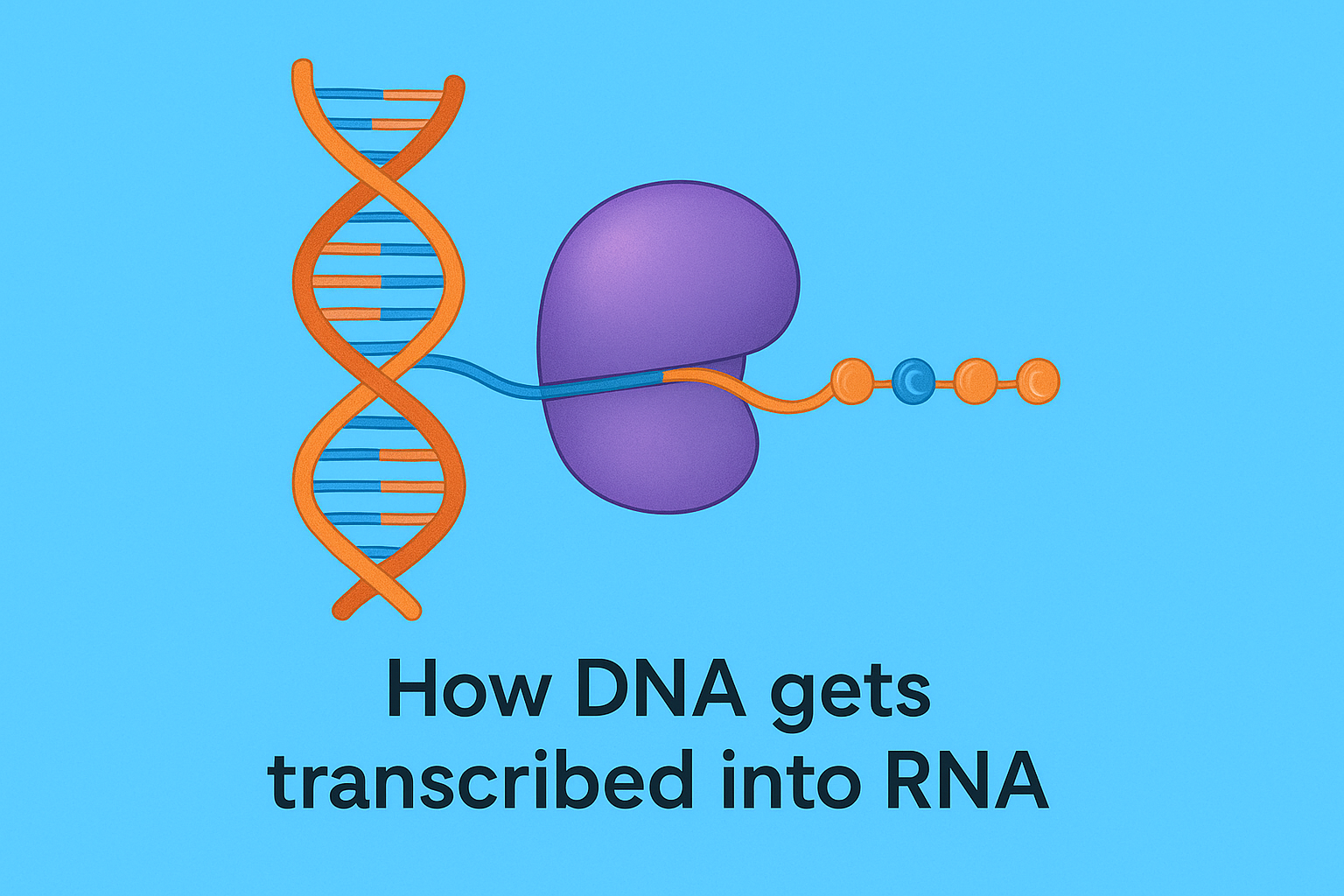
The process begins with initiation, where RNA polymerase enzymes bind to specific DNA sequences called promoters. These promoters mark the starting points for genes. Once attached, the enzyme unwinds the double helix DNA strand at that location, creating a temporary opening where it can access the genetic code. Your cells use regulatory proteins to control which genes get transcribed and when, allowing them to respond to different needs and conditions.
Elongation forms the second stage, where RNA polymerase moves along the DNA template strand, reading the sequence of nucleotide bases (adenine, thymine, guanine, cytosine). The enzyme builds a complementary RNA strand by adding matching RNA nucleotides one at a time. RNA uses uracil instead of thymine, so every adenine in DNA gets paired with uracil in RNA. The growing RNA molecule emerges from the enzyme as it progresses along the DNA.
The RNA polymerase acts like a molecular copy machine that reads DNA at approximately 40 nucleotides per second, building a matching RNA strand with remarkable accuracy.
Termination completes the process when RNA polymerase reaches specific DNA sequences that signal the end of the gene. The enzyme releases the newly formed RNA molecule and detaches from the DNA strand. The DNA double helix re-forms immediately behind the enzyme, protecting the genetic information. Your cells then modify the raw RNA transcript, removing unnecessary sections and adding protective caps before the final messenger RNA exits the nucleus to direct protein production.
What happens to the RNA afterward
The completed RNA molecule serves different functions depending on its type. Messenger RNA carries genetic instructions to ribosomes for protein synthesis. Transfer RNA and ribosomal RNA participate directly in building proteins. Your cells degrade these RNA molecules after use, which allows them to adjust protein production quickly based on changing needs without altering the permanent DNA blueprint.
What transcription means in business
In business contexts, transcription refers to the professional service of converting spoken words from audio or video recordings into written text documents. This definition stands completely separate from the biological process. When you ask what is transcription in a business setting, you’re asking about a specialized service that takes meetings, interviews, legal proceedings, medical dictations, or any recorded speech and produces accurate written records. Organizations across industries rely on transcription to create searchable, shareable documentation from verbal communication that would otherwise remain locked in audio-only formats.
The shift from spoken to written
Professional transcriptionists listen to audio or video files and type out everything they hear word-for-word. Your recorded content gets transformed into text formats like Word documents, PDFs, or plain text files that you can edit, search, and distribute. The transcriptionist captures not just the words but often includes speaker identification, timestamps, and notation for non-verbal sounds when relevant to understanding context.
This process creates permanent records of temporary spoken content. You gain the ability to search specific phrases, extract quotes accurately, and reference exact wording from conversations that would otherwise require listening through entire recordings. Written transcripts let multiple team members review the same information simultaneously without competing for access to a single audio file.
Transcription transforms ephemeral spoken communication into permanent, searchable written records that you can share, edit, and archive indefinitely.
Common business applications
Organizations use transcription services for legal proceedings where court reporters create official trial records and deposition transcripts. Medical facilities transcribe doctor dictations into patient records and clinical documentation that integrate with electronic health systems. Corporate teams transcribe board meetings, training sessions, and conference calls to maintain institutional knowledge and ensure nothing gets lost in verbal discussions. Academic researchers convert interview recordings into analyzable text for qualitative studies and peer review. Media companies transcribe podcasts and videos to improve accessibility for deaf audiences and enhance search engine visibility.
How professional transcription works
Professional transcription follows a structured workflow where trained specialists convert your audio or video files into written text through careful listening and typing. You upload your recording files to a transcription service provider, and they assign the work to qualified transcriptionists who have experience in your specific industry or subject matter. The process combines human expertise with quality control steps to ensure you receive accurate, formatted documents that match your requirements.
The human transcription workflow
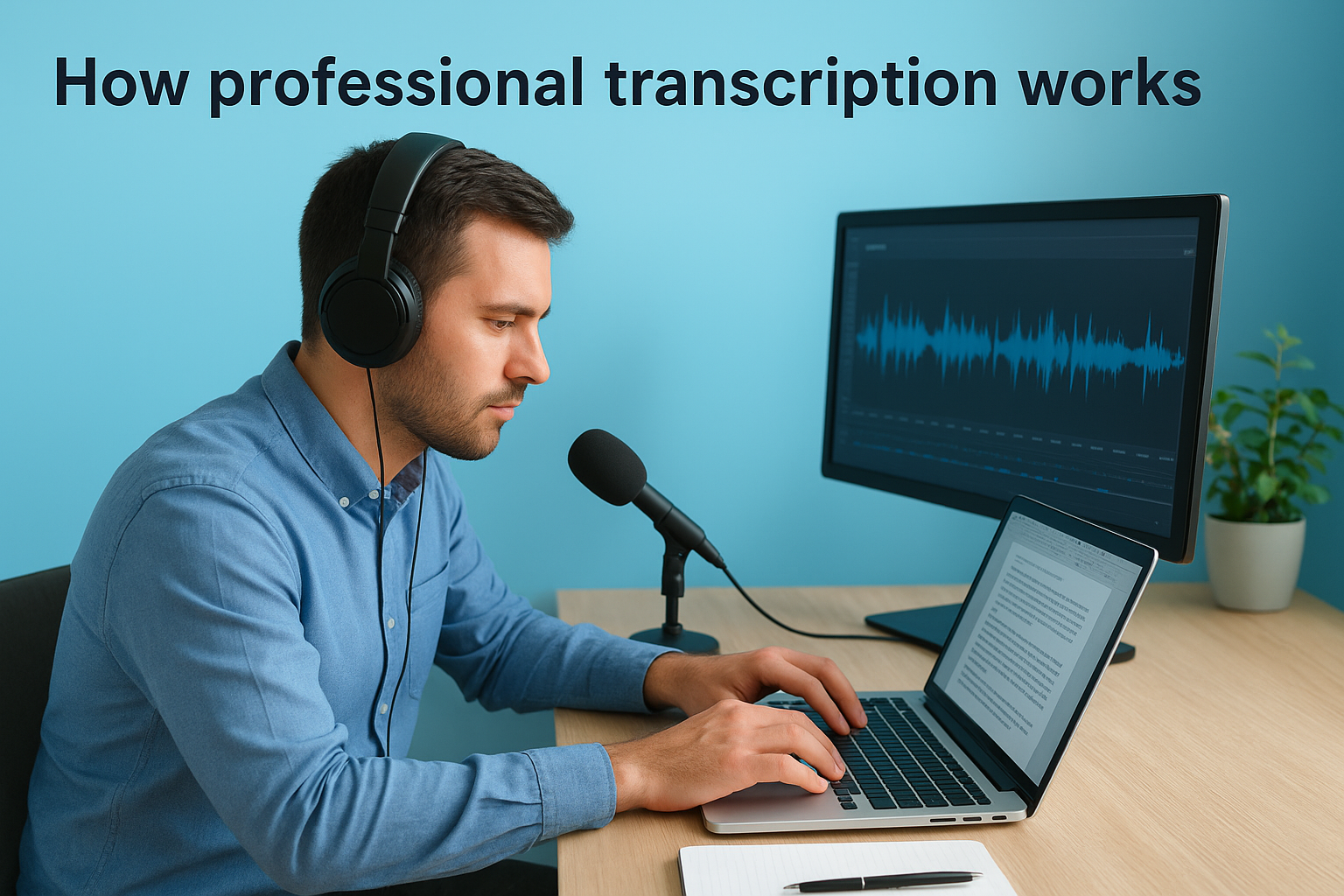
Your transcriptionist downloads the audio file and uses specialized playback software that allows precise control over speed and replay. They listen to small segments, typically three to five seconds, type what they hear, then move to the next segment. Professional transcriptionists maintain typing speeds of 75 to 100 words per minute while simultaneously listening and comprehending complex content, technical terminology, or multiple speakers. They identify different speakers, note unclear audio sections, research proper spellings of names or technical terms, and format the document according to your specifications.
The transcriptionist marks timestamps at regular intervals or when you request them for specific moments. They indicate inaudible sections rather than guessing at words, which protects the accuracy of your final document. Background noise, accents, overlapping speech, and poor audio quality all slow the process, which explains why clear recordings significantly reduce turnaround time and costs.
Professional human transcriptionists achieve 98-99% accuracy rates by combining expert listening skills with industry knowledge and careful verification of uncertain segments.
Quality control and review processes
Reputable transcription services implement multi-tier review systems before delivering your files. A second transcriptionist or editor reviews the initial transcript while listening to your original audio, correcting errors and verifying formatting. This quality assurance step catches mistakes the first transcriptionist might miss, particularly in challenging audio sections or specialized terminology. Your completed transcript goes through final formatting checks to ensure consistency in speaker labels, timestamps, and document structure before you receive the finished file.
Types of transcripts and common formats
Understanding what is transcription means recognizing that different transcript types serve distinct purposes based on your specific needs. Professional transcription services offer multiple format options that determine how your spoken content appears in written form. You choose between various transcript styles and file formats depending on whether you need word-for-word records, readable summaries, or specialized documentation for legal or medical purposes. Your choice affects both the final cost and the usefulness of the transcript for your intended application.
Verbatim versus edited transcripts
Verbatim transcripts capture every single word, sound, and utterance exactly as spoken, including filler words like "um," "uh," and "like," along with false starts, repetitions, and grammatical errors. You receive a precise record that shows how people actually spoke, which proves essential for legal depositions, court proceedings, academic research, and any situation where exact wording matters for analysis or legal purposes. Verbatim transcription takes longer and costs more because transcriptionists must document every verbal element without interpretation or correction.
Edited transcripts remove filler words, fix grammar, and polish the language while preserving the original meaning and intent of what speakers said. Your transcriptionist eliminates verbal stumbles and reorganizes sentences for clarity without changing the substance of statements. These cleaned-up versions work well for business meetings, interviews, podcasts, and corporate communications where you want readable documentation that focuses on content rather than speech patterns. Edited transcripts arrive faster and cost less because they require less detailed work.
Verbatim transcription preserves linguistic patterns and speech characteristics that edited versions eliminate, making your choice between them depend entirely on whether you need exact wording or polished readability.
Standard delivery formats
Transcription services typically deliver your finished documents as Microsoft Word files, PDFs, plain text files, or specialized formats like SubRip (.srt) files for video captioning. Word documents allow you to edit content directly, while PDFs provide locked formatting that prevents accidental changes to official records. You might request timestamps embedded in the text at regular intervals or only at speaker changes. Some providers offer custom formatting templates that match your organization’s documentation standards for consistency across multiple transcription projects.
Accuracy, confidentiality, and compliance
Professional transcription services operate under strict quality standards that protect both the integrity of your content and the sensitivity of your information. When you evaluate what is transcription providers can deliver, accuracy rates, data security measures, and regulatory compliance separate legitimate professional services from unreliable alternatives. Your transcripts often contain proprietary business information, personal health data, or legally protected communications that require proper handling according to industry regulations and privacy laws.
Accuracy standards you should expect
Reputable transcription companies guarantee accuracy rates between 98% and 99% for standard audio quality, though this depends on your recording conditions and content complexity. You receive higher accuracy when your audio has clear sound, minimal background noise, and distinct speaker voices. Professional services employ quality assurance processes where editors verify the initial transcript against your original recording, correcting errors before delivery. Technical or specialized content requires transcriptionists with subject matter expertise who understand industry terminology and can accurately capture complex discussions without introducing mistakes through unfamiliarity.
Confidentiality and data protection
Your transcription provider should implement secure file transfer protocols, encrypted storage systems, and strict access controls that limit who can view your recordings and transcripts. Professional transcriptionists sign non-disclosure agreements that legally bind them to maintain confidentiality about your content. You want providers who delete your files after project completion unless you specifically request longer retention, which reduces your exposure to potential data breaches or unauthorized access.
Professional transcription services protect your sensitive information through encrypted transmission, secure storage, confidentiality agreements, and controlled file access that prevents unauthorized disclosure.
Industry-specific compliance requirements
Certain industries impose regulatory requirements that your transcription provider must meet. Healthcare transcription requires HIPAA compliance to protect patient privacy, which means providers need business associate agreements, encrypted systems, and trained staff who understand healthcare documentation rules. Legal transcription demands adherence to court reporting standards and chain of custody protocols for official legal records. Government agencies often require transcriptionists with security clearances and providers who maintain FedRAMP certification or meet other federal security standards for handling classified or controlled information.
Next steps
You now understand what is transcription means in both biological and business contexts. The biological process drives gene expression in your cells, while professional transcription services convert your audio recordings into written documents. These separate meanings share only the basic concept of transferring information from one format to another.
If you need professional transcription services for business meetings, legal proceedings, medical dictations, or any other recorded content, choose providers who deliver high accuracy rates, maintain strict confidentiality protocols, and meet relevant compliance requirements for your industry. Clear audio quality, proper file formats, and specific instructions about verbatim versus edited transcripts help you receive documents that match your exact needs.
Languages Unlimited provides professional transcription services with experienced specialists who handle complex audio content across multiple industries. Contact our team to discuss your transcription project requirements and receive a detailed quote for your specific needs.