



Every day in courtrooms across the United States, critical legal proceedings unfold where the stakes couldn’t be higher, immigration hearings that determine a family’s future, criminal trials where freedom hangs in the balance, and civil cases involving life-changing outcomes. For the millions of people in these situations who don’t speak English fluently, understanding what is court interpreting becomes essential. Without skilled interpreters, equal access to justice simply wouldn’t exist for non-English speakers.
Court interpreting is far more than translating words from one language to another. It requires specialized knowledge of legal terminology, strict adherence to ethical standards, and the ability to work under intense pressure while maintaining complete accuracy. Interpreters in legal settings use specific modes of interpretation, including simultaneous and consecutive, depending on the situation. They also follow rigorous certification requirements that ensure they’re qualified to handle the weight of their responsibility.
This guide breaks down everything you need to know about court interpreting: the interpreter’s role and responsibilities, the different interpretation modes used in legal proceedings, and what it takes to pursue this career path. At Languages Unlimited, we’ve provided professional legal interpretation services since 1994, working with courts, law firms, and government agencies across all 50 states. Our network of over ten thousand language professionals gives us firsthand insight into what this demanding field requires, and why it matters so much to the people who depend on it.
Why court interpreting matters for access to justice
The United States justice system rests on a fundamental principle: everyone deserves the right to understand the proceedings that affect their lives. When you face criminal charges, civil litigation, or immigration proceedings without understanding English, a qualified court interpreter becomes your bridge to justice. This isn’t a convenience or courtesy. For millions of people with limited English proficiency (LEP), professional court interpretation serves as the only way to exercise their constitutional rights.
The constitutional right to understand
Your Sixth Amendment right to confront witnesses and your Fifth Amendment right to due process mean nothing if you can’t understand what witnesses say against you or what charges you’re facing. Courts recognize this reality, which is why federal law requires qualified interpreters for LEP individuals in criminal and civil proceedings. Understanding what is court interpreting helps you see why these protections exist: without accurate interpretation, you can’t effectively participate in your own defense, respond to questions appropriately, or make informed decisions about plea agreements or testimony.
When language barriers prevent someone from understanding legal proceedings, the entire foundation of fair trial rights crumbles.
Real consequences without qualified interpreters
Courtrooms that rely on unqualified interpreters or family members to interpret see devastating outcomes. You might face wrongful convictions based on miscommunications, accept unfavorable plea deals without understanding the terms, or lose custody battles because nuances in your testimony get lost. Studies have documented cases where poor interpretation led to innocent people serving prison time simply because they couldn’t accurately communicate their defense. Professional court interpreters prevent these failures by rendering every word with precision, maintaining the legal record’s integrity while protecting your right to be heard and understood in the language you speak.
What court interpreters do and do not do
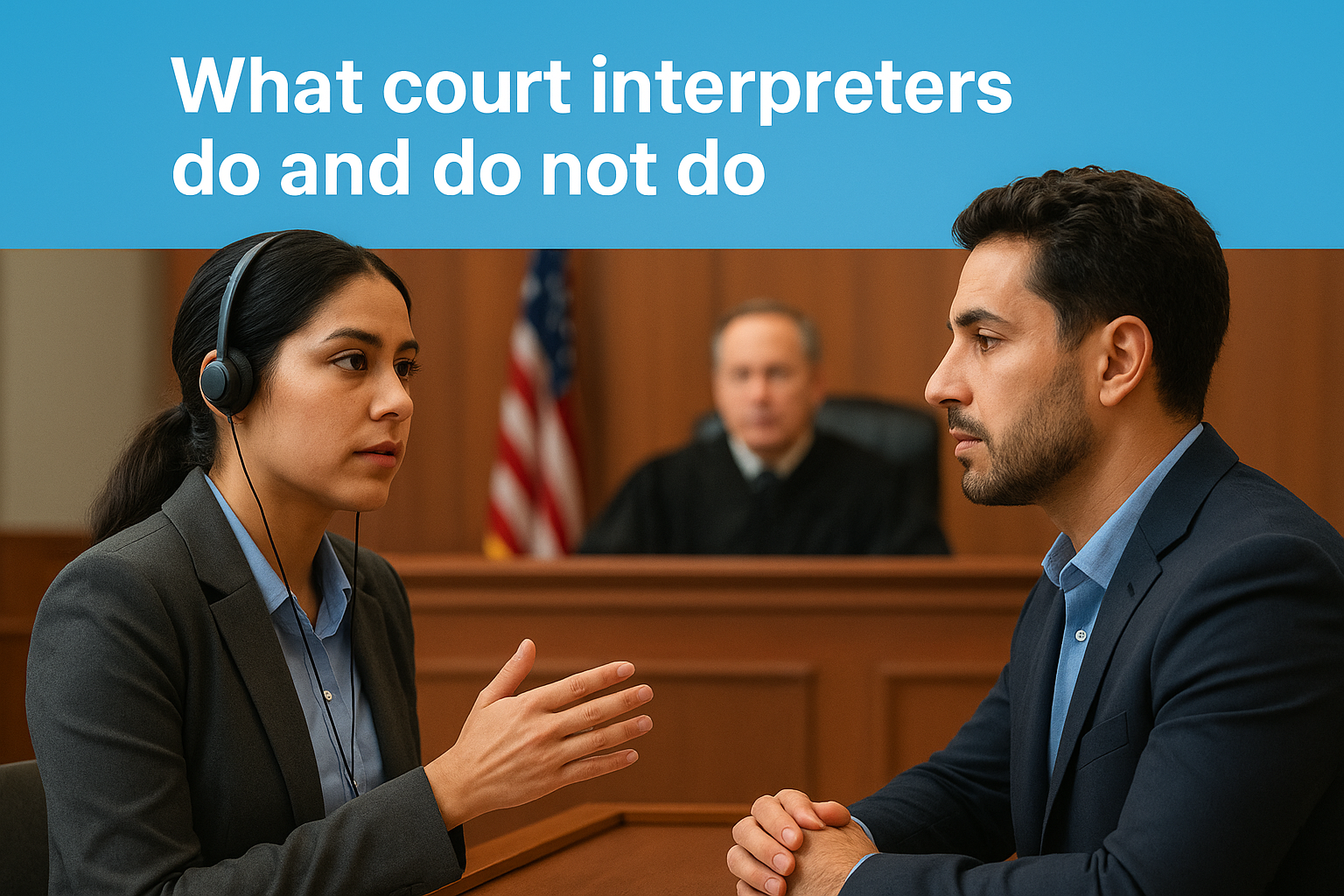
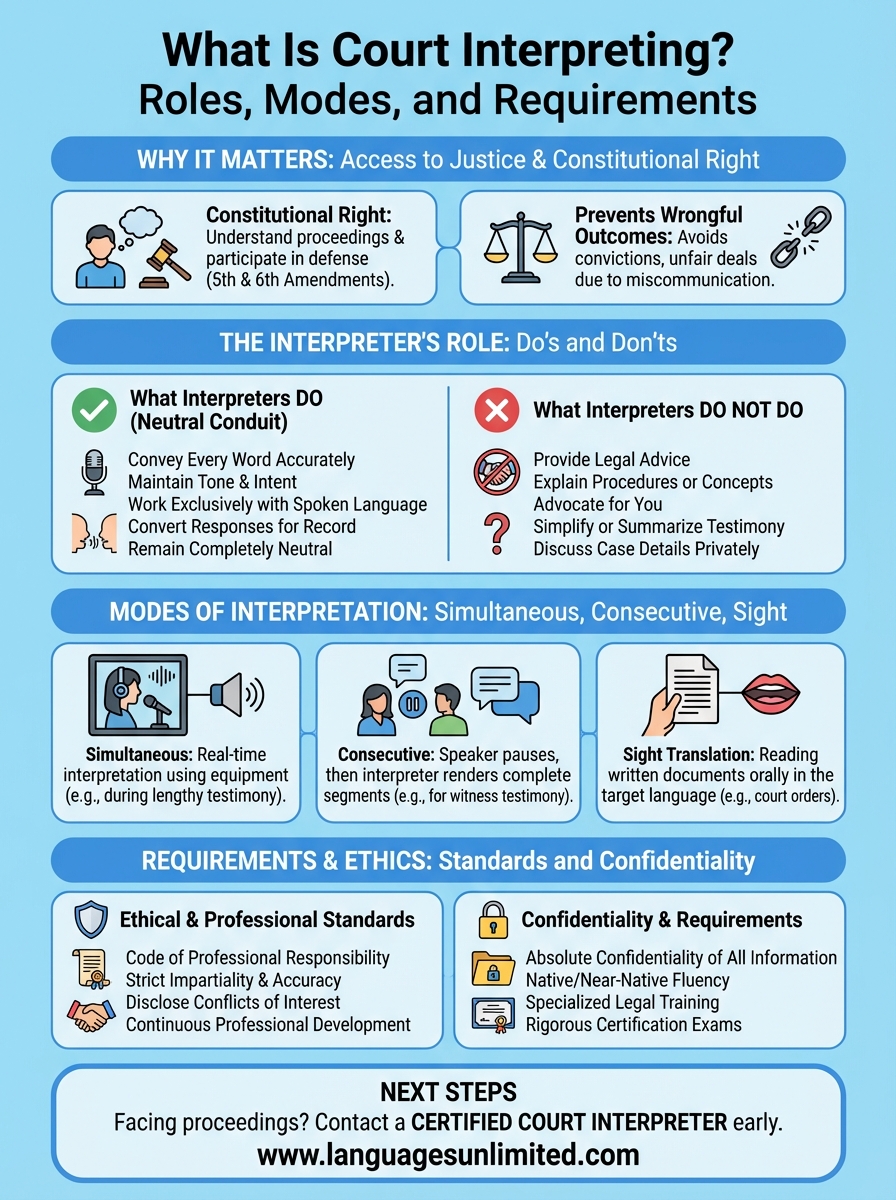
Understanding what is court interpreting means recognizing the precise boundaries of the interpreter’s role. You might assume interpreters simply translate words, but their responsibilities carry far more weight and operate under strict limitations. Court interpreters serve as neutral language conduits who convey every word spoken in proceedings with complete accuracy, maintaining the tone, register, and intent of the original speaker.
The interpreter’s primary responsibility
Your court interpreter captures everything said in the courtroom, from witness testimony to judge’s instructions, and renders it in your language without adding, omitting, or altering anything. They work exclusively with spoken language, converting statements in real time so you understand proceedings as they unfold. Professional interpreters also convert your responses back into English for the court record, ensuring your voice reaches judges, attorneys, and juries exactly as you intended.
The interpreter’s oath requires absolute fidelity to every word spoken, regardless of how difficult or uncomfortable the content becomes.
What interpreters cannot do
Court interpreters cannot provide legal advice, explain procedures, or answer your questions about the case. They won’t advocate for you, offer opinions, or clarify confusing legal concepts. You can’t ask them to simplify complex testimony or summarize lengthy statements. Interpreters also maintain strict confidentiality and cannot discuss case details outside the courtroom or communicate with you privately during proceedings.
Modes used in court: simultaneous, consecutive, sight
Court interpreters switch between three distinct interpretation modes depending on what the proceeding requires. Understanding what is court interpreting includes recognizing how these modes work and when interpreters use each one. The three primary modes are simultaneous interpretation, consecutive interpretation, and sight translation, each serving specific functions during legal proceedings.
Simultaneous interpretation during proceedings
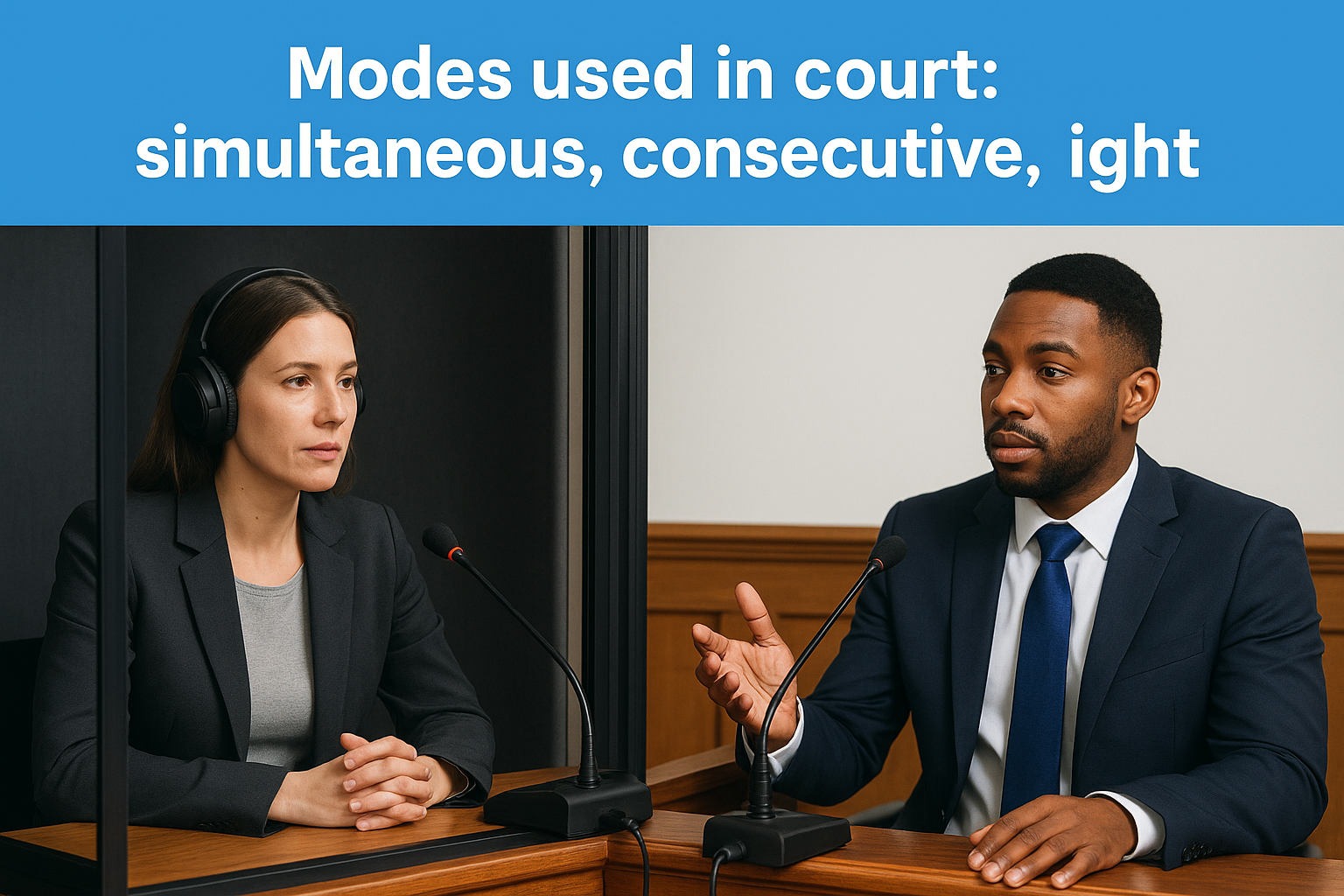
You hear simultaneous interpretation through specialized equipment when interpreters render speech in real time as speakers talk. Courts use this mode during lengthy testimony, jury instructions, or when multiple witnesses speak, allowing you to follow proceedings without constant pauses. The interpreter sits in a soundproof booth or uses portable equipment, speaking into a microphone while you listen through headphones, receiving interpretation just seconds behind the original speech.
Simultaneous interpretation requires intense concentration, which is why interpreters typically work in teams of two, switching every 20 to 30 minutes.
Consecutive interpretation for witness testimony
Consecutive mode involves the interpreter listening to complete segments of speech before rendering them in your language. The speaker pauses after every few sentences, giving the interpreter time to deliver an accurate, complete interpretation. Courts prefer this mode for witness examinations and attorney questioning because it creates a clear record and allows everyone to hear both the original statement and its interpretation.
Sight translation of written documents
Sight translation requires interpreters to read written documents in one language and immediately render them orally in another. You experience this when interpreters read court orders, plea agreements, or other legal documents aloud in your language, helping you understand written materials without waiting for formal translation services.
Standards, ethics, and confidentiality in court
Court interpreters operate under strict professional standards that govern every aspect of their work. When you work with a qualified interpreter, they follow established codes of ethics that ensure accuracy, impartiality, and professionalism throughout legal proceedings. These standards protect your rights while maintaining the integrity of the court system, making them essential to understanding what is court interpreting at its core.
Professional codes and ethical obligations
Your court interpreter adheres to the Code of Professional Responsibility established by organizations like the National Association of Judiciary Interpreters and Translators. This code requires interpreters to render complete and accurate interpretations, maintain strict impartiality, and disclose any conflicts of interest immediately. They cannot advocate for you, provide legal advice, or communicate privately with parties during proceedings. Interpreters also must continue their professional development, updating their skills and knowledge of legal terminology to serve you effectively.
Professional interpreters must remain completely neutral, even when they find testimony disturbing or when they personally disagree with what speakers say.
Confidentiality protections
Interpreters maintain absolute confidentiality regarding everything they hear during your case. They cannot discuss case details with family members, friends, or anyone outside the courtroom. This confidentiality requirement protects your privacy and ensures sensitive information stays within the legal proceedings where it belongs. Violating this standard can result in professional sanctions and removal from court interpreter registries.
Requirements and how to become a court interpreter
Becoming a court interpreter requires you to meet specific language proficiency standards and educational requirements before you can work in legal settings. The path to this career differs by state and court level, but understanding what is court interpreting helps you recognize why these requirements exist. Courts need interpreters who demonstrate exceptional skills in both languages, deep knowledge of legal terminology, and the ability to perform under pressure.
Educational and language requirements
You need native or near-native fluency in both English and your target language to qualify as a court interpreter. Most states require you to hold at least a high school diploma, though many successful interpreters complete bachelor’s degrees in linguistics, translation, or related fields. Your education should include specialized training in legal interpretation through certificate programs or university courses that cover court procedures, legal terminology, and interpretation techniques.
Certification and testing process
Federal courts require you to pass the Federal Court Interpreter Certification Examination, while state courts maintain their own certification or registration programs. You take written exams testing your English proficiency and legal knowledge, followed by rigorous oral examinations that evaluate your simultaneous, consecutive, and sight translation skills. Many states require you to complete continuing education courses annually to maintain your certification and stay current with legal developments.
Professional certification ensures you possess the skills needed to handle the immense responsibility court interpretation carries.
Next steps if you need court interpreting
Now that you understand what is court interpreting and why qualified professionals matter, you can take action to secure the language services you need. If you’re facing upcoming legal proceedings, contact a certified court interpreter well in advance of your court date. Courts often schedule interpreters weeks ahead, especially for less common languages, so early planning prevents delays that could postpone your case.
Your legal representative can request court-appointed interpreters for criminal proceedings, but civil cases often require you to arrange private interpretation services. When you select an interpreter, verify their certification status and experience with your specific type of legal matter. Languages Unlimited provides professional court interpretation services across all 50 states, with access to over ten thousand qualified language professionals. Our interpreters hold the necessary certifications and bring extensive courtroom experience to ensure accurate, ethical interpretation throughout your proceedings. Contact our team to discuss your specific needs and schedule qualified interpreters who will protect your right to understand and participate fully in the legal process.