



CART captioning stands for Communication Access Realtime Translation. It’s a service where a trained professional listens to spoken words and instantly converts them into readable text. Think of it as live subtitles created by a real person instead of a computer. The captioner uses specialized equipment to type at incredibly fast speeds, keeping pace with natural conversation. This text appears on screens in real time so everyone can follow along.
This guide explains how CART captioning works and why organizations use it. You’ll learn when CART makes sense for your needs, how it compares to automatic captions, and what you should expect from a professional CART provider. Whether you’re planning a conference, running regular meetings, or need to make your content accessible, understanding CART helps you choose the right solution for clear communication.
Why CART captioning is important
You need CART captioning when accuracy and accessibility matter most. The Americans with Disabilities Act requires you to provide effective communication access for people who are deaf or hard of hearing. CART services meet this legal requirement because they deliver real-time, professional transcription that captures everything spoken. Unlike automated captions that miss context or words, CART captioners understand the content and adjust on the fly.
Meeting legal and professional standards
Your organization faces real compliance obligations under federal accessibility laws. CART qualifies as an approved auxiliary aid under ADA Title II and Title III regulations. When you use CART for meetings, conferences, or public events, you demonstrate your commitment to equal access. This protection extends beyond avoiding legal risk. It builds trust with attendees who depend on accurate captions to participate fully.
Professional CART services ensure you meet accessibility requirements while providing reliable communication for all participants.
Creating inclusive experiences
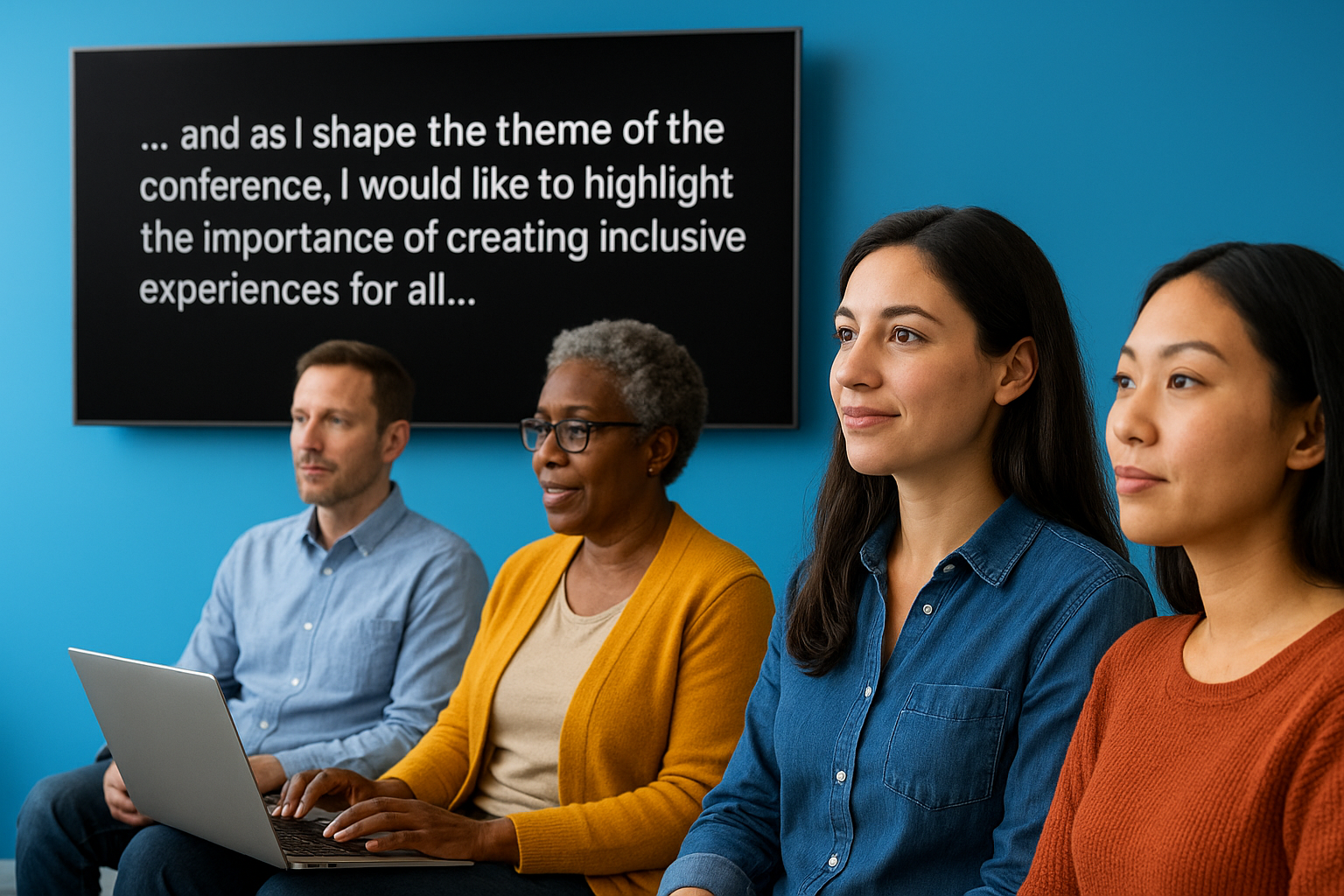
CART captioning benefits everyone in your audience, not just those who require it. Participants in noisy environments can follow along by reading the text. People who process information better visually gain an additional channel. Non-native speakers use captions to improve their comprehension of rapid speech or technical terms.
How to use CART captioning effectively
You get the best results from CART captioning when you plan ahead and communicate clearly with your provider. Success depends on preparation that happens before your event starts. Your captioner needs specific information to create accurate transcriptions that match your content. Think of this as setting up your captioner to deliver their best work rather than asking them to figure everything out on the fly.
Prepare your captioner before the event
Send your captioner speaker names, agendas, and any specialized terminology at least 48 hours in advance. This preparation time allows them to program their shorthand dictionary with the exact terms your speakers will use. You improve accuracy significantly when captioners know what to expect. Include presentation slides, technical vocabulary lists, and background materials about your topic. The more context you provide, the fewer corrections your captioner needs to make during live delivery.
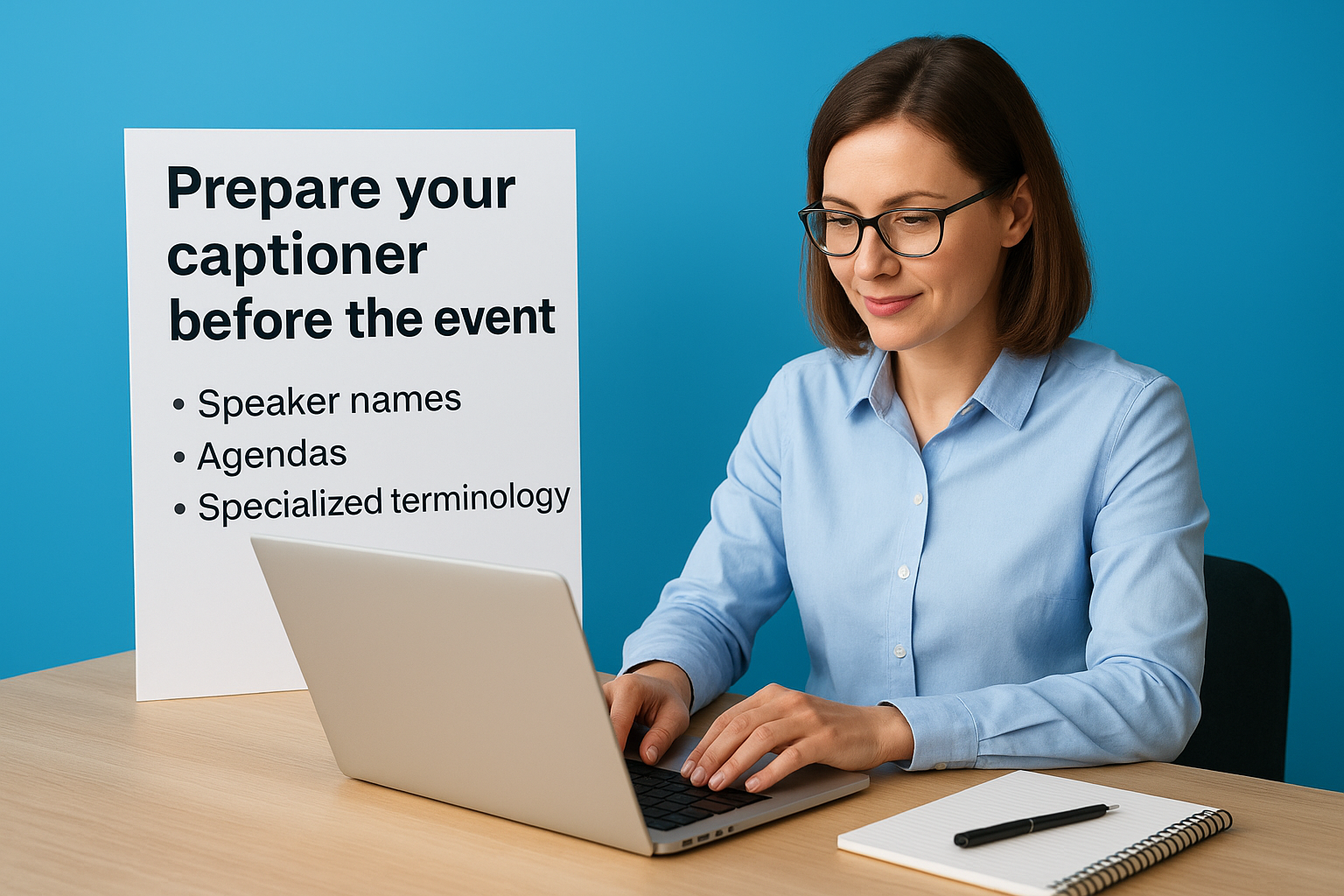
Advance preparation with your CART provider directly impacts the quality and accuracy of real-time transcription.
Set up the technical requirements
Your technical setup determines whether attendees can actually see the captions. For in-person events, you need a large display screen, reliable internet access, and audio equipment that connects directly to your captioner’s system. Test everything at least one hour before your event starts. For virtual meetings on platforms like Microsoft Teams, enable CART functionality in your meeting settings and send the connection link to your provider. Position your captioner near the front of the room for live events where they can hear speakers clearly. Strong audio quality produces better captions because your captioner catches every word without strain or guesswork.
Where CART captioning is used most often
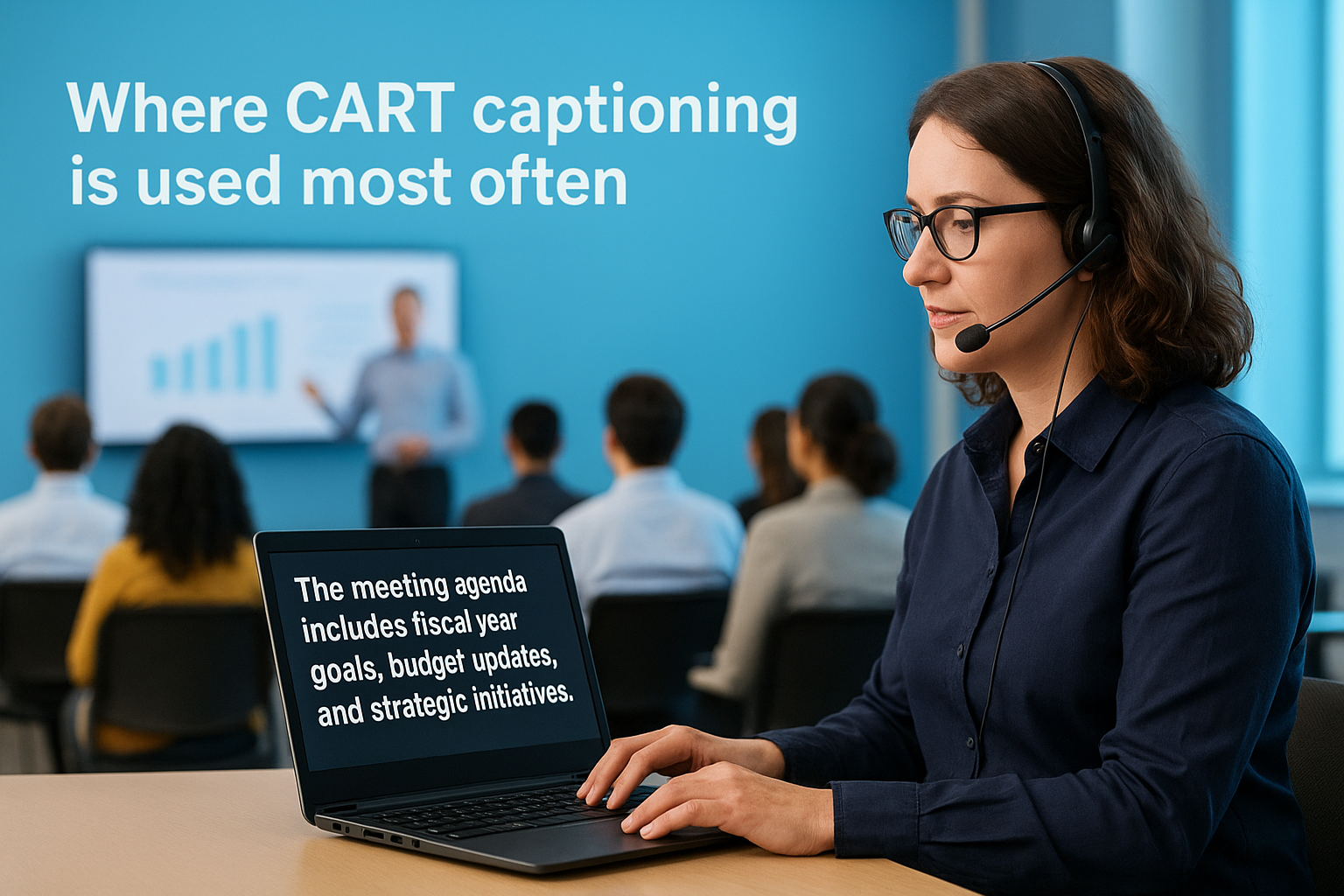
You find CART captioning services in settings where accurate communication matters for accessibility and legal compliance. Organizations use CART when they need professional-grade transcription that captures technical language, proper names, and specialized terminology. Understanding what is cart captioning and where it applies helps you determine if your situation calls for this service instead of basic automated options.
Professional and educational environments
Your organization likely needs CART for educational institutions where students with hearing impairments attend lectures, seminars, or training sessions. Universities and colleges rely on CART to provide equal access to classroom instruction. Legal proceedings represent another major use case because courtrooms require precise records of everything spoken during hearings, depositions, and trials. Medical facilities use CART during patient consultations, medical conferences, and staff training where accuracy affects patient care and safety.
CART services deliver the precision required in professional settings where miscommunication creates serious consequences.
Corporate environments deploy CART for large meetings, annual conferences, and board presentations where accessibility requirements apply. Government agencies use CART to comply with federal accessibility standards during public hearings, town halls, and official proceedings. You also see CART at live events like theatrical performances, religious services, and community gatherings where organizers prioritize inclusive participation.
CART captioning versus automatic captions
You face a choice between human-generated CART and automated captions when you need real-time text. Understanding what is cart captioning compared to automatic services helps you pick the right solution. The fundamental difference lies in who creates the text: trained professionals versus computer algorithms. This distinction affects accuracy, cost, and the situations where each option works best for your specific needs.
Accuracy differences
CART captioners deliver 90-95% accuracy while automatic systems typically achieve 70-80% in ideal conditions. You see this gap widen when speakers use technical vocabulary, have accents, or talk over each other. Automated captions struggle with proper names, specialized terminology, and contextual meaning. Your captioner corrects mistakes instantly and adjusts to speaking patterns throughout your event.
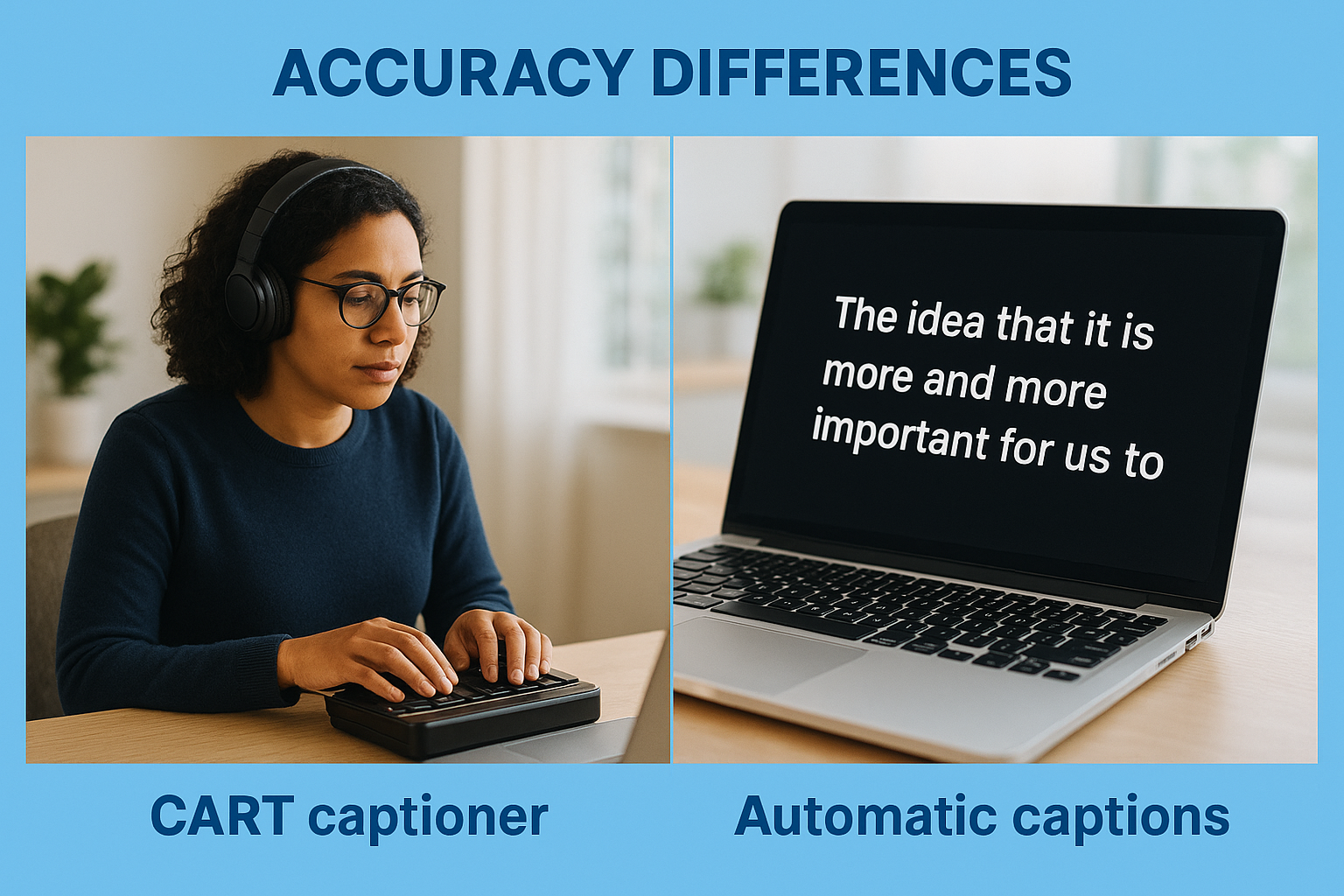
Human CART providers catch nuances and context that automated systems miss, making them essential for professional and legal settings.
Cost and setup considerations
Automated captions cost less and require minimal setup time. You activate them through platform settings in Microsoft Teams or Zoom with a single click. CART services require advance booking, coordination with your provider, and higher fees for professional stenographers. Budget constraints might push you toward automation for routine internal meetings, but accessibility requirements and content complexity often justify the investment in human captioning for critical events.
What to expect from a CART captioning provider
Your CART provider delivers professional coordination before your event and accurate transcription during it. You work with certified stenographers who understand what is cart captioning and bring years of specialized training. These professionals arrive prepared with their own equipment, including stenograph machines, computers, and backup systems. Expect clear communication about technical requirements, setup time, and any materials they need to review in advance.
Pre-event coordination and preparation
Your provider requests speaker information, agendas, and technical terminology at least 48 hours before your event. Professional captioners use this time to build custom shorthand dictionaries for your specific content. You receive clear instructions about audio setup, internet requirements, and display options. Providers typically request early access to test their connection, verify audio quality, and troubleshoot any technical issues before participants arrive.
Professional CART providers handle technical setup and coordination, allowing you to focus on running your event smoothly.
Service delivery standards
Captioners maintain typing speeds of 200-300 words per minute while preserving accuracy above 95%. You see text appear on screens with minimal delay, usually less than three seconds behind spoken words. Professional providers bring backup equipment and can quickly resolve technical problems without disrupting your event.
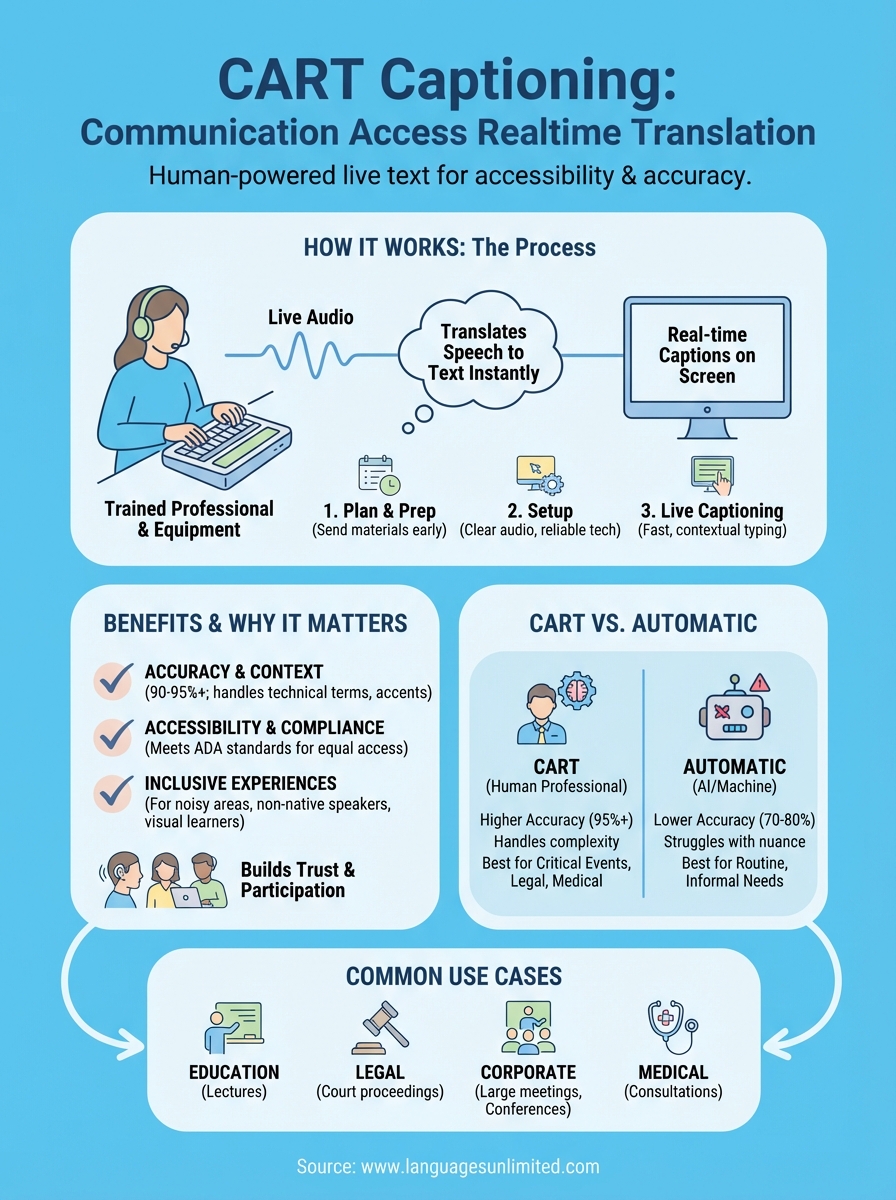
Key takeaways on CART captioning
Understanding what is cart captioning helps you choose the right accessibility solution for your organization. CART provides human-generated transcription that delivers 95% accuracy or higher, making it the professional standard for legal compliance, educational settings, and corporate events where precision matters. You get reliable results when you prepare your captioner with advance materials, ensure strong audio quality, and test your technical setup before your event starts.
Your decision between CART and automatic captions depends on accuracy requirements and budget constraints. Professional CART services cost more but deliver the precision needed for accessible communication in critical situations. Organizations that prioritize inclusive experiences invest in CART captioning because it demonstrates commitment to equal access while meeting ADA compliance standards.
Ready to provide professional captioning services for your next event? Contact our team to discuss your specific accessibility needs and receive a customized solution that ensures clear communication for all participants.