



If you’ve been asked to submit a certified translation vs notarized translation, you’re probably wondering what the difference actually is, and whether you need one, the other, or both. It’s a common point of confusion, especially when dealing with immigration filings, court proceedings, or official government requests where the wrong format can lead to rejected paperwork.
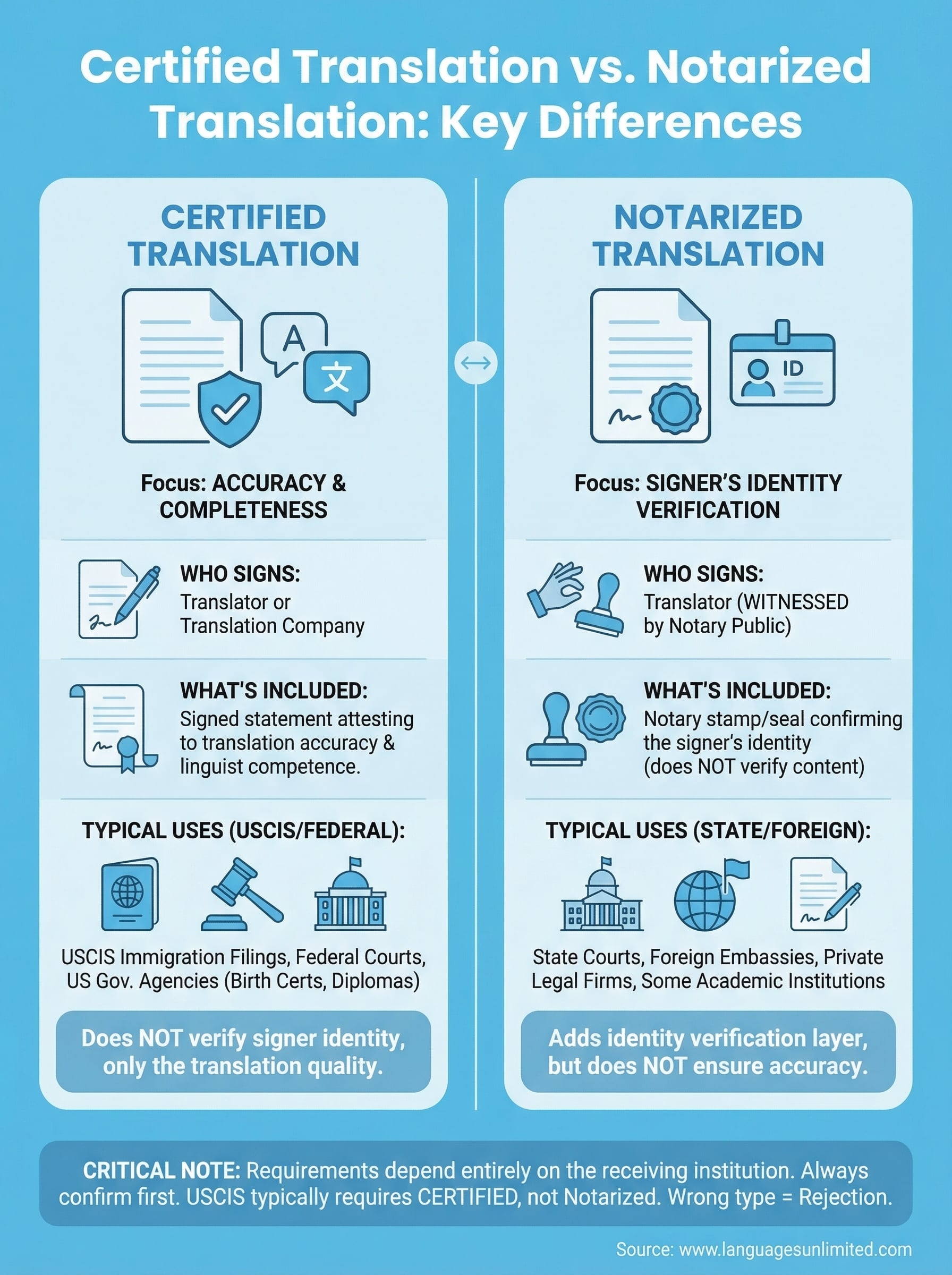
The short answer: they’re not the same thing. A certified translation comes with a signed statement from the translator (or translation company) attesting to accuracy. A notarized translation involves a notary public verifying a signature, but not the translation itself. The requirements depend entirely on who’s asking for the document and what they plan to do with it.
At Languages Unlimited, we’ve handled both types since 1994 for clients across legal, medical, immigration, and government sectors. As an ATA member and USCIS-approved translation provider, we deal with these distinctions daily. This article breaks down exactly what each type involves, when you need which, and how to avoid costly mistakes with your documents.
Key definitions and what each one certifies
When you’re working through the certified translation vs notarized translation distinction, the first step is understanding what each term actually certifies and who is making that certification. These two processes involve different parties with different roles, carry different legal weight, and serve different purposes depending on the institution requesting your documents.
What a certified translation is
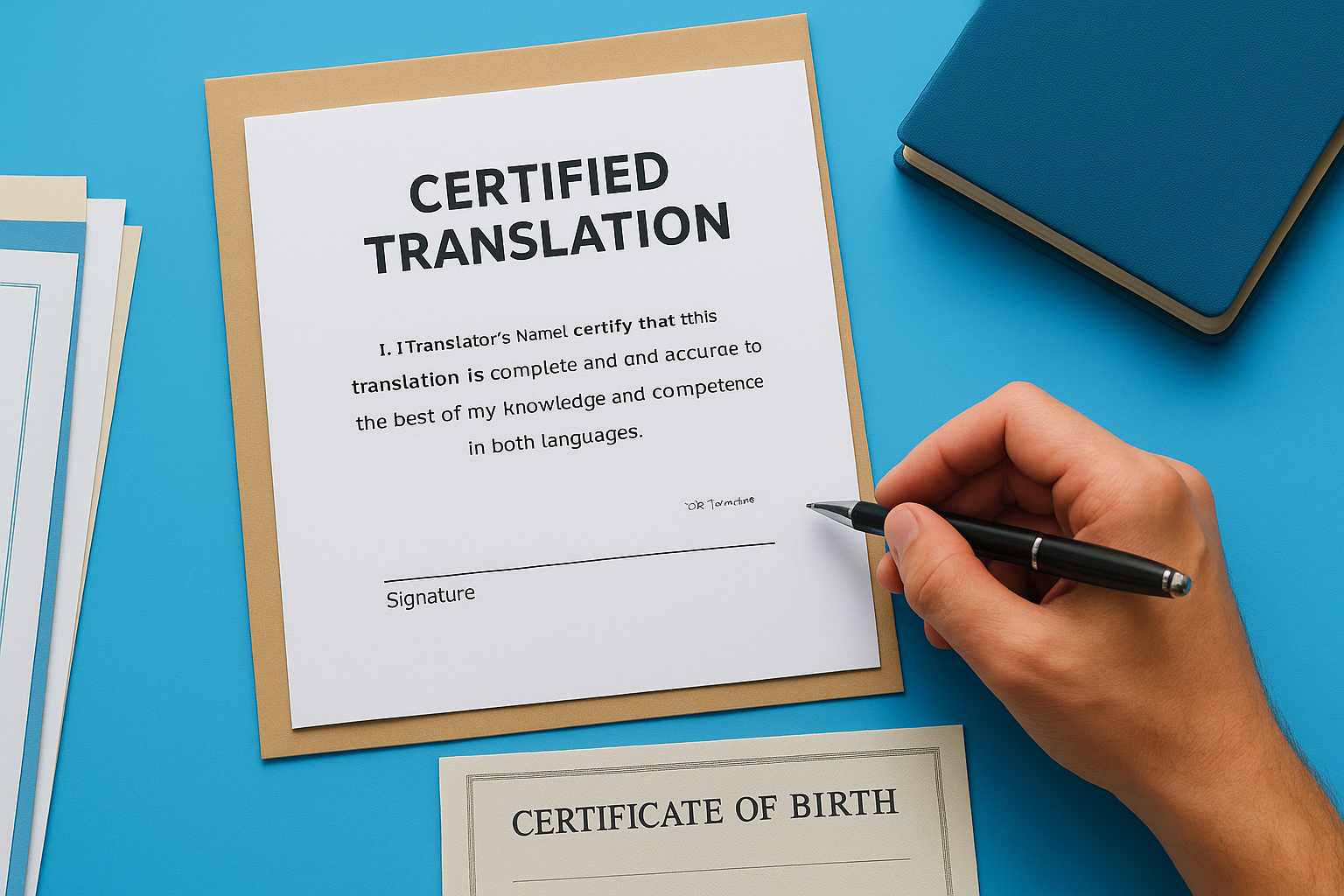
A certified translation is a complete, accurate translation accompanied by a signed statement from the translator or translation company. That statement confirms that the translation is accurate and complete to the best of the translator’s knowledge, and that the translator is competent in both the source and target languages. USCIS, federal courts, and most government agencies in the United States require certified translations for documents like birth certificates, marriage licenses, diplomas, and immigration petitions.
A certified translation certifies the quality and accuracy of the translation itself – not the identity of the person who signed it.
The certification statement is usually printed directly on the translated document or attached as a separate page. No official government license is required to provide a certified translation in the United States. The translator or translation company takes on full legal responsibility for accuracy by signing and submitting that statement.
What a notarized translation is
A notarized translation adds a notary public’s stamp and signature to the certification, but it’s important to understand what that actually covers. A notary does not verify the content or accuracy of the translation, nor do they assess the translator’s language skills. Instead, the notary verifies the identity of the signer and confirms that the signature on the certification statement is genuine.
This distinction matters significantly. Notarization does not make the translation more accurate – it only adds a [layer of identity verification](https://www.languagesunlimited.com/notarized-translations-significance-and-essential-characteristics/) on top of the signed certification. Some institutions, such as certain state agencies, private legal firms, or foreign embassies, specifically request notarized translations because their internal procedures require a witnessed signature on submitted legal documents.
How the two compare side by side
The table below lays out the key differences so you can quickly identify which type applies to your situation.
| Feature | Certified Translation | Notarized Translation |
|---|---|---|
| Who signs | Translator or translation company | Translator (witnessed by notary) |
| What it confirms | Accuracy of the translation | Identity of the signer |
| Typically required for USCIS | Yes | No |
| Notary public involved | No | Yes |
| Adds linguistic accuracy | Yes | No |
Why this difference affects acceptance and timelines
Submitting the wrong translation type is one of the most common reasons document packages get rejected or delayed. USCIS, courts, and government agencies each maintain specific submission standards, and understanding the certified translation vs notarized translation difference directly affects whether your documents move forward or get sent back.
When the wrong type causes a rejection
If you submit a notarized translation to USCIS when they require a certified translation, the agency will reject your filing. A notary’s stamp does not substitute for a translator’s accuracy statement because USCIS needs confirmation that the translation is complete and correct, not just that a signature was witnessed. The same applies in reverse: some foreign embassies or state-level agencies explicitly require notarization, and submitting only a certified translation without the notary’s stamp will leave your submission incomplete.
Submitting the wrong translation type can set your case back by weeks, especially in immigration filings where resubmission windows are limited.
Each rejection means resubmitting the document, which adds processing delays of anywhere from several days to multiple weeks depending on the agency’s workload and your deadline.
How turnaround time shifts between the two
A standard certified translation can often be completed within one to three business days depending on document length and language pair. Adding notarization extends that timeline because you need to schedule a notary appointment, either in person or through a remote online notary service. If your translation provider does not coordinate notarization internally, you add another logistical step that can extend your total turnaround by several days.
Certified translation requirements in the United States
In the United States, no government-issued license is required to provide a certified translation. This surprises many people, but the legal framework places the responsibility for accuracy directly on the translator or translation agency rather than on a licensing board. That means any qualified translator can certify a translation, provided they include the proper statement and meet the specific standards of the requesting institution.
What the certification statement must include
A valid certification statement must confirm that the translation is complete and accurate to the best of the translator’s knowledge, and that the translator is competent in both languages. It should include the translator’s full name, signature, date, and contact information. USCIS provides specific guidance on what it expects, and submitting a certification statement that omits key elements is enough to get your filing rejected.
When you’re comparing the certified translation vs notarized translation requirements, remember that USCIS explicitly requires a certified translation and does not require notarization for standard immigration filings.
Documents that typically require certified translations
Most official institutions request certified translations for documents that carry legal or biographical significance. Common examples include:
- Birth certificates and death certificates
- Marriage licenses and divorce decrees
- Academic diplomas and transcripts
- Court orders and legal judgments
- Medical records for insurance or legal proceedings
- Immigration petitions and visa applications
Your specific filing or institution will determine the exact format needed, so always confirm requirements directly with the requesting agency or attorney before ordering your translation. Getting this right upfront prevents delays and unnecessary resubmissions.
Notarized translation requirements and what notarizing does
Notarization requirements vary by institution and purpose, so it’s worth understanding exactly what you’re adding when a notary gets involved. When you navigate the certified translation vs notarized translation decision, knowing the notary’s actual role prevents you from assuming that their stamp adds something it doesn’t.
When notarization is specifically requested
Certain institutions require notarized translations as part of their internal procedures, regardless of what federal agencies accept. State courts, private legal firms, foreign embassies, and some academic institutions fall into this category. If you’re submitting a document to a foreign country’s consulate, for instance, that consulate may follow its home country’s legal standards, which often include a witnessed signature requirement.
Always confirm the exact requirements with the requesting institution before ordering, since requirements differ significantly between agencies and even between regional offices of the same agency.
You’ll typically see notarized translations requested for private legal contracts, adoption proceedings, and international document submissions where the receiving party wants an additional layer of identity verification on the submitted paperwork.
What a notary public actually does and does not do
A notary public verifies your identity and witnesses you signing a document. They confirm that you are who you say you are and that you signed voluntarily. What they do not do is read the translation, assess its accuracy, or evaluate the translator’s language qualifications.

This means a notarized translation is only as accurate as the underlying certified translation it’s attached to. The notary adds procedural validity for institutions that require it, but the translation’s quality still depends entirely on the translator’s competence.
How to choose and order the right translation
Choosing between a certified translation and a notarized translation comes down to one thing: what the receiving institution specifically requires. Before you order anything, contact the agency, court, or organization directly and ask for their exact document submission requirements. Different offices within the same agency can have different standards, so confirming the requirements in writing protects you if there’s ever a dispute about what was submitted.
When you’re working through the certified translation vs notarized translation decision, getting the requirements in writing from the requesting institution before you order saves you from paying for the wrong service twice.
Start by identifying your document type and destination
Your document type and where it’s going determine everything. USCIS filings, federal court submissions, and most immigration applications require certified translations and do not require notarization. If you’re submitting to a foreign embassy, a state court, or a private legal firm, check whether they require a notary’s stamp on top of the certification.
A useful starting point: ask the institution whether they follow federal USCIS guidelines or their own internal submission standards. That single question narrows down your requirements quickly and prevents a costly back-and-forth with the agency.
What to look for when ordering
Choose a translation provider with documented experience in your specific document type and a clear process for producing certification statements that match the requesting institution’s format. If you need notarization, confirm whether the provider coordinates that step internally or whether you’ll need to arrange it separately. Working with a provider who handles both services under one workflow reduces your turnaround time and eliminates coordination gaps between steps.
Next steps
Understanding the certified translation vs notarized translation distinction puts you in a much stronger position before you submit any official document. You now know that certified translations confirm accuracy, notarized translations verify the signer’s identity, and the requesting institution determines which one you need. Apply that directly: contact the agency or court before you order anything, ask for their exact requirements in writing, and confirm whether they follow federal guidelines or their own internal standards.
From there, choose a provider with documented experience in your document type and a clear certification process. If you need notarization, confirm upfront whether your provider handles that step internally. Getting these details right before you order prevents delays, rejected filings, and the cost of repeating the process.
Languages Unlimited has provided certified and notarized translations since 1994 for immigration, legal, and government clients across all 50 states. Contact our team to get started on your translation today.