



Launching an app in a single language means leaving money and users on the table. If you want to reach international markets, you need more than basic translation, you need cultural adaptation, linguistic precision, and technical integration that actually works. Finding the best app localization services can be the difference between an app that resonates globally and one that falls flat the moment it crosses a border.
But choosing the right provider isn’t straightforward. Some platforms focus on automated translation management, while others pair technology with human linguists who understand regional nuance. The right fit depends on your app type, target languages, budget, and how much control you need over the process. Getting this decision wrong costs time, money, and user trust.
At Languages Unlimited, we’ve spent over 30 years building a network of more than 10,000 language professionals covering hundreds of languages and dialects. That experience gives us a clear perspective on what separates good localization from great localization. In this guide, we break down 10 top app localization services for mobile and web apps, comparing their strengths, specialties, and ideal use cases so you can make an informed choice.
1. Languages Unlimited
Languages Unlimited has been delivering professional language services since 1994, with a network of more than 10,000 certified translators and interpreters across hundreds of languages and dialects. While the company is widely recognized for legal, medical, and government interpretation, its capabilities extend directly into app localization, making it one of the best app localization services for organizations that need both linguistic precision and regulatory compliance built into the process.
How Languages Unlimited handles app localization
Languages Unlimited takes a human-first approach to app localization, pairing certified linguists with subject matter expertise relevant to your app’s industry. Rather than relying purely on machine translation pipelines, the team assigns qualified professionals who understand context, terminology, and cultural nuance specific to your target audience. This means your UI strings, error messages, onboarding flows, and help content all get reviewed by people who actually know the domain.
This matters especially when a single mistranslated phrase in a medical or legal app can create compliance risk or user confusion that undermines the entire product.
Best fit scenarios
This service works best for organizations in regulated industries such as healthcare, legal, government, and education that need localization handled with the same care they apply to official documentation. If your app involves patient-facing content, legal disclaimers, or government compliance text, Languages Unlimited is built for that level of accountability. It also suits teams that need interpretation and translation services bundled together, for example, an organization that localizes a healthcare app and also needs on-site or telephonic interpreters for the clinical staff using it.
- Healthcare apps targeting multilingual patient populations
- Legal tech platforms requiring certified translation of in-app documents
- Government and public-sector apps subject to accessibility or compliance mandates
- Educational platforms serving immigrant or non-English-speaking communities
Notable capabilities for regulated and public-sector apps
Languages Unlimited holds GSA contract status, is an American Translators Association (ATA) member, and provides USCIS-approved translations, which are credentials that matter when your app handles sensitive personal or legal data. The company also offers Section 508 compliant services, CART, captioning, and subtitling, giving public-sector teams a single vendor for both localization and accessibility requirements. Few providers combine this breadth of certified services under one roof.

Pricing approach
Languages Unlimited uses a custom project-based pricing model rather than a fixed subscription tier. You work directly with the team to scope your project based on language pairs, content volume, subject matter complexity, and turnaround requirements. This approach suits organizations with non-standard needs better than flat-rate platforms designed for software startups. To get an accurate quote, you contact the team directly through the website.
2. Smartling
Smartling is a cloud-based translation management system built specifically for software and digital product teams. It combines automated workflows with a network of professional linguists, giving you a platform that handles both the technical and human sides of localization from a single dashboard.
How Smartling handles app localization
Smartling connects directly to your codebase, CMS, or design tools through integrations with platforms like GitHub, Figma, and Contentful. When you push new strings, the platform automatically queues them for translation, routes them through your preferred workflow (machine translation, human review, or both), and sends the localized content back without manual file handling. This continuous localization loop reduces the lag between releasing a feature and having it available in all your target languages.
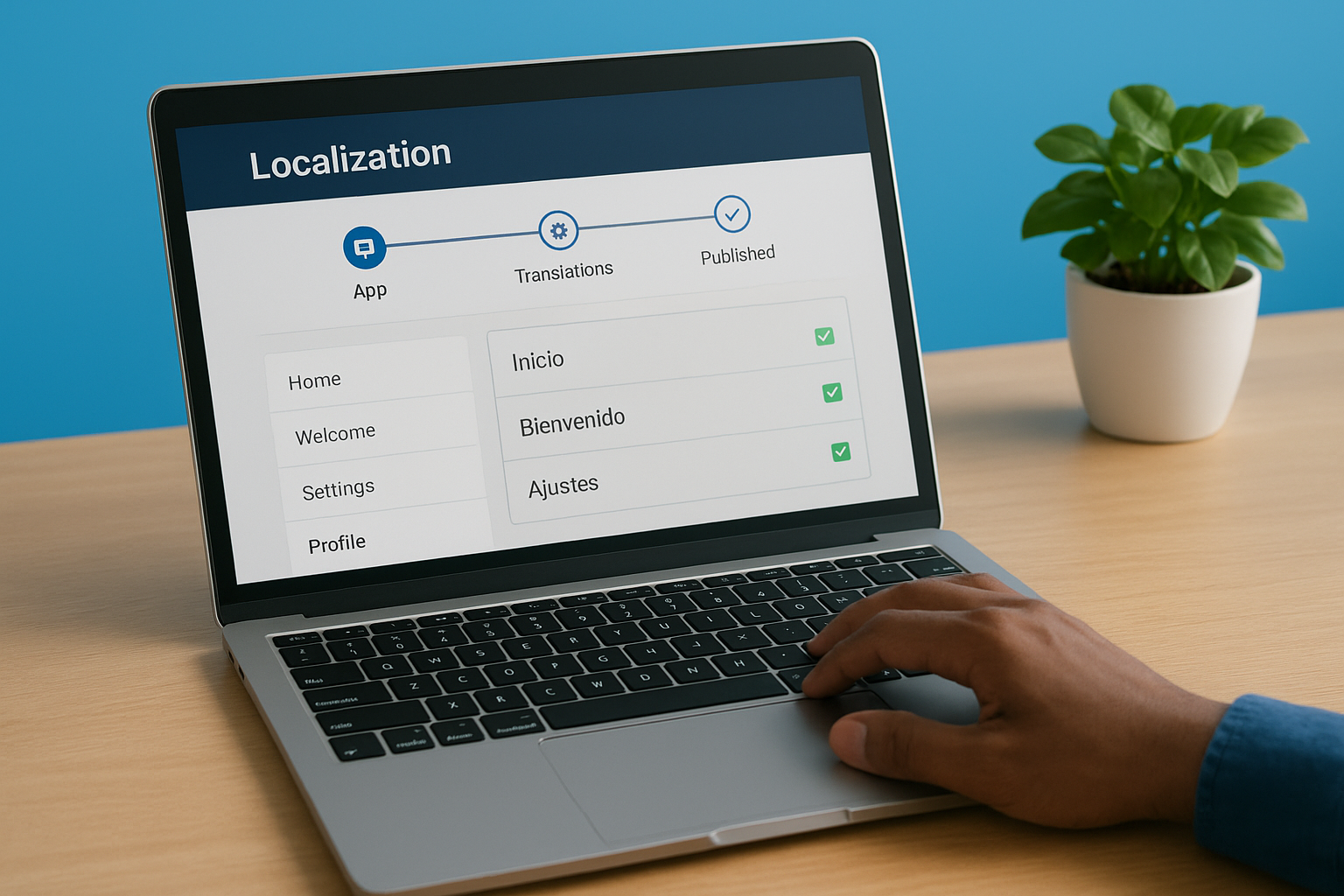
For product teams shipping updates frequently, this kind of automated string detection and routing removes one of the most time-consuming parts of managing multilingual releases.
Best fit scenarios
Smartling works best for mid-size to enterprise software companies that release updates often and need localization to keep pace with their development cycle. If your team already uses agile sprints and deploys regularly, Smartling’s integration-first design fits naturally into that environment. It is less suited for organizations that need certified translation for legally sensitive documents or regulated content where human accountability is the top priority.
Notable capabilities for automation and quality controls
Smartling includes translation memory, glossary management, and style guide enforcement built into the platform, which means your linguists work with consistent terminology across every release. The quality checks run in-platform before strings ship, catching issues like truncated text, missing variables, or tone inconsistencies without requiring a separate review cycle.
Pricing approach
Smartling offers tiered subscription plans based on the volume of words translated and the number of integrations you use. Enterprise pricing is available for larger teams with custom workflow requirements, and you can request a demo directly through their website.
3. Phrase
Phrase (formerly Phrase Strings, part of the Phrase Localization Suite) is a developer-centric translation management platform that has earned a strong reputation among product teams building mobile and web apps. It combines a robust TMS with a dedicated string management tool, making it one of the more versatile picks among the best app localization services available for teams that need structure without overhead.
How Phrase handles app localization
Your team gets a centralized workspace where developers, translators, and project managers collaborate on the same localization project without conflicting edits or version confusion. The platform supports a wide range of file formats including JSON, YAML, Android XML, iOS strings, and XLIFF, so you can import and export content without manual file conversion. Phrase also detects untranslated strings automatically as your codebase grows, keeping gaps visible before they reach production.
Best fit scenarios
This platform fits teams that ship apps on both iOS and Android simultaneously and need one system to manage localization across both tracks. It also works well for SaaS companies maintaining a web app alongside a mobile product, where consistent terminology across platforms matters. Teams without a dedicated localization manager will find Phrase’s workflow organization practical enough to run without one.
If your development team already works with version control and needs localization to behave like part of the codebase, Phrase’s CLI and API tools support that without heavy configuration.
Notable capabilities for developer workflows
Developers working with Phrase get access to a full command-line interface (CLI) and REST API, which lets them pull and push translations directly from their existing tools. The platform also supports in-context editing, so translators see exactly where a string appears in the UI before translating it, which cuts guesswork and reduces revision cycles significantly.
Pricing approach
Pricing follows a seat-based subscription model with separate tiers for the Strings and TMS products. Smaller teams can start on lower-tier plans, while larger organizations can negotiate custom enterprise pricing based on project volume and required integrations.
4. Lokalise
Lokalise is a translation management platform built with product and design teams in mind. It ranks among the best app localization services for companies that want tight integration between their localization workflow and the tools their designers and developers already use every day.
How Lokalise handles app localization
Lokalise gives your team a centralized translation hub where strings from mobile and web apps live alongside their visual context. The platform connects directly to Figma, GitHub, GitLab, and Bitbucket, so developers and designers can push and pull localized content without switching tools or exporting files manually. When new strings appear in your repository, Lokalise detects them automatically and routes them through your configured translation workflow.
Teams that use Figma for UI design will find Lokalise’s native Figma plugin especially useful for keeping localized mockups in sync with translation progress.
Best fit scenarios
This platform works well for product-led companies that ship updates regularly and have both design and development teams contributing to localization simultaneously. If your product relies heavily on visual UI components where string length and layout affect how the app looks, Lokalise’s design integrations help translators understand the full picture before they finalize their output.
- Mobile-first apps with frequent release cycles
- SaaS products with both web and native app surfaces
- Teams running design and development in parallel
Notable capabilities for product and design teams
Lokalise includes screenshot-based context tools that show translators the exact screen where a string appears, which cuts down on revision rounds caused by ambiguous UI text. The platform also supports over-the-air (OTA) translation updates for mobile apps, meaning you can push localization changes without submitting a new app store build, saving your team release time on smaller updates.
Pricing approach
Lokalise offers tiered subscription plans starting with accessible options for small teams and scaling up to enterprise-level plans with custom workflows, dedicated support, and higher usage limits. Pricing is based on seats and project volume, and you can begin with a free trial directly on their website.
5. Transifex
Transifex is a cloud-based localization platform that has built its reputation around continuous localization, making it a strong contender among the best app localization services for teams that ship frequently. The platform was designed from the ground up to keep pace with rapid development cycles rather than batch-processing translation at the end of a release sprint.
How Transifex handles app localization
Transifex connects to your codebase and content pipelines through integrations with GitHub, Bitbucket, and GitLab, pulling new strings automatically as your developers commit code. Translators and reviewers work inside the platform’s web-based editor, which keeps all parties working from the same source without emailing files back and forth or resolving version conflicts manually.
Best fit scenarios
This platform suits agile development teams that release app updates on short cycles and need localization to run in parallel with engineering work. It also works well for open-source projects that rely on community contributors to handle translation, since Transifex has built-in tools for managing volunteer translator networks alongside paid professionals.
If your team already runs two-week sprints and treats each release as a potential international launch, Transifex’s workflow is built to support exactly that cadence.
Notable capabilities for continuous localization
Transifex includes translation memory and glossary tools that carry consistent terminology across every update, which reduces the rework that accumulates when strings shift slightly between releases. The platform also offers a live preview feature that lets translators see strings in context before submitting, which cuts down revision cycles on ambiguous UI text and reduces back-and-forth between your localization team and developers.
Pricing approach
Transifex offers tiered subscription plans that scale based on hosted string volume and team size. Smaller teams can start on lower-cost entry plans, while enterprise customers can request custom pricing for higher volume and advanced workflow controls directly through the Transifex website.
6. Crowdin
Crowdin is a translation management platform that ranks among the best app localization services for development teams that prioritize automation, open-source contributions, and flexible collaboration structures. The platform serves enterprise clients and open-source communities alike, giving it a broader range of applicable use cases than many alternatives on this list.
How Crowdin handles app localization
The platform connects directly to your version control system and CI/CD pipeline through integrations with GitHub, GitLab, Bitbucket, and Azure DevOps. When your developers push new code, Crowdin automatically pulls updated strings, routes them through your configured translation workflow, and returns finished translations directly to your repository. Your team avoids manual file handling entirely, and localization runs in parallel with development rather than stacking up at the end of a release cycle.
Best fit scenarios
Teams running automated deployment pipelines will get the most value from Crowdin, since the platform integrates at the code level rather than requiring separate upload steps. It also suits organizations managing both commercial and open-source versions of the same product, because Crowdin supports community-based translation alongside professional linguist workflows without requiring separate accounts.
If your team already uses GitHub Actions or a similar CI tool, Crowdin’s native integrations keep localization synchronized without adding extra configuration overhead.
Notable capabilities for CI/CD and role-based collaboration
Crowdin includes granular role permissions that let you assign translators, proofreaders, and managers to specific language pairs or project sections without exposing the full project to every contributor. The platform also offers machine translation pre-fill options powered by major MT engines, which your reviewers can post-edit to increase throughput without sacrificing quality.
Pricing approach
Crowdin provides a free tier for open-source projects alongside paid plans for commercial teams. Enterprise pricing scales based on team size, project volume, and required integrations, and you can request a custom quote directly through their website.
7. LILT
LILT is an AI-powered translation platform that blends adaptive machine translation with professional linguist review. It positions itself among the best app localization services for teams that want machine translation output that actually improves over time based on how your linguists correct it.
How LILT handles app localization
The platform runs an adaptive MT engine that learns from every correction a human translator makes, so translation quality improves with each project cycle. You connect your content through API integrations or direct file uploads, and the platform routes strings through the AI engine first before sending them to reviewers for post-editing. This reduces the workload your linguists carry while keeping human judgment in the final output.
Best fit scenarios
This platform works best for organizations with high-volume, repetitive content where adaptive machine translation delivers the most efficiency gains over time. Enterprise teams with consistent terminology and established style guides will see quality improve faster because the engine has more correction signals to learn from.
If your app involves large volumes of UI strings that repeat across features, LILT’s adaptive engine builds translation memory more effectively than static MT systems.
Notable capabilities for AI-assisted workflows
LILT gives you a human-in-the-loop workflow where post-editors can accept, reject, or modify machine suggestions directly inside the platform’s editor. The system also includes translation memory and terminology management tools that work alongside the adaptive engine, giving your team consistent output even when different linguists handle the same project.
Pricing approach
LILT uses enterprise-focused pricing that scales based on word volume and workflow complexity. You contact their sales team directly to receive a custom quote, which makes this platform better suited for larger organizations with defined localization programs than for small teams testing localization for the first time.
8. BLEND
BLEND (formerly known as One Hour Translation) is a managed localization service provider that combines professional human translators with technology-enabled project management. It stands out among the best app localization services for teams that want a full-service vendor to handle the entire localization process rather than managing a platform themselves.
How BLEND handles app localization
BLEND assigns your project to a dedicated team of professional translators and project managers who handle everything from file preparation to final delivery. You submit your app content through their platform or via direct file transfer, and the BLEND team coordinates linguists, review cycles, and quality checks on your behalf. This model removes the operational burden from your internal team while still giving you visibility into project status at each stage.
If your team lacks an in-house localization manager, BLEND’s managed model fills that gap without requiring you to hire one.
Best fit scenarios
This service fits companies that prefer outsourcing localization entirely rather than managing translators and workflows internally. It also suits teams launching into new language markets for the first time, where the learning curve of running a TMS platform in-house would slow down the release timeline.
- Startups entering international markets without a localization team
- Mid-size companies handling a one-time app launch in multiple languages
- Organizations needing quick turnaround on high-volume content packages
Notable capabilities for managed localization services
BLEND covers more than 120 languages and provides specialized translators with domain expertise in tech, legal, medical, and marketing content. Their platform also includes translation memory and glossary management so consistent terminology carries across every project, even when different linguists contribute.
Pricing approach
BLEND operates on a per-word pricing model with rates that vary based on language pair, content type, and turnaround time. You can request a quote directly through their website based on your specific project requirements.
9. Lionbridge
Lionbridge is one of the largest language service providers in the world, with decades of experience delivering translation and localization at enterprise scale. Their reach across more than 350 languages puts them among the best app localization services for organizations operating in global markets with complex linguistic requirements.
How Lionbridge handles app localization
Lionbridge combines professional human translators with proprietary technology platforms to manage app localization projects from start to finish. You submit your content through their workflow tools, and their team handles linguistic adaptation, cultural review, and quality assurance across every target language. Their model supports both continuous localization for agile teams and large batch projects for organizations launching into new markets all at once.
Best fit scenarios
This provider works best for large enterprises and multinational organizations that need a single vendor capable of handling high volumes across dozens of languages simultaneously. If your app requires localization into less common or regional languages that smaller platforms struggle to cover, Lionbridge’s broad linguist network reduces the sourcing friction that typically slows those projects down.
Organizations that already have enterprise procurement processes in place will find Lionbridge easier to onboard than smaller vendors without established contract structures.
Notable capabilities for global scale and coverage
Lionbridge offers AI-assisted translation tools alongside human review, giving your team a path to faster turnaround without fully removing the quality checks that matter for user-facing content. Their platform also includes translation memory and terminology management that carries consistent language across long-running projects, which is particularly valuable for apps with frequent content updates.
Pricing approach
Lionbridge uses enterprise contract pricing rather than self-serve subscription tiers. You work with their sales team to define scope, language pairs, and volume before receiving a custom quote. This model suits organizations with established vendor management processes better than startups or small teams looking for immediate access.
10. RWS
RWS is a global language and content solutions provider with a long track record serving enterprise clients across regulated industries. Their combination of translation technology and professional services makes them one of the best app localization services for large organizations that need governance, compliance, and scale built into every project.
How RWS handles app localization
RWS delivers app localization through its Trados platform, which is one of the most widely used translation tools in the professional language industry. Your content moves through structured workflows that include human translators, quality reviewers, and technology-assisted checks at each stage, giving enterprise teams the oversight they need on projects spanning dozens of languages simultaneously.
For organizations with strict content review requirements, RWS builds those checkpoints directly into the localization workflow rather than treating them as optional add-ons.
Best fit scenarios
This provider works best for enterprise organizations with complex localization programs that require documented quality processes and consistent output across long-running projects. If your app operates in regulated sectors such as life sciences, legal tech, or financial services, RWS brings domain-specialized linguists who understand the terminology and compliance context those industries require.
Notable capabilities for enterprise governance
RWS maintains ISO certification and formal quality management systems that align with enterprise procurement and vendor audit requirements. Their platform also includes translation memory, terminology databases, and style guide enforcement that carry consistent language across every project cycle, which reduces costly rework when apps receive frequent content updates.
Pricing approach
RWS uses a custom enterprise pricing model based on project scope, language pairs, content volume, and required service levels. You work directly with their team to define the engagement structure, which makes this option more practical for organizations with established vendor contracts than for smaller teams looking for immediate self-serve access.
Next Steps
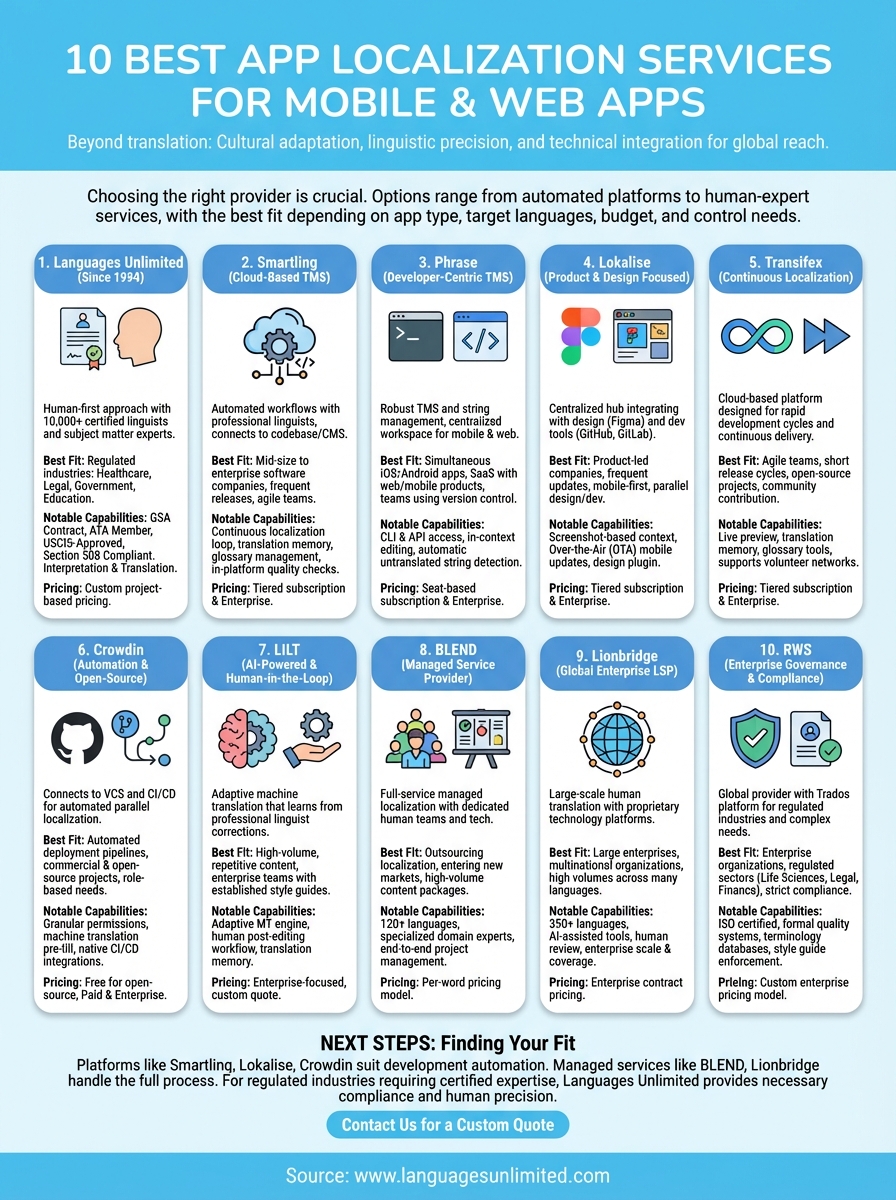
The best app localization services on this list each solve a different problem. Platforms like Smartling, Lokalise, and Crowdin work well for development teams that need automation and CI/CD integration, while managed service providers like BLEND and Lionbridge suit organizations that want a vendor to handle the full process. If your app operates in a regulated industry such as healthcare, legal, or government, the stakes are higher and the need for certified, accountable linguists becomes non-negotiable.
Your next move depends on what gaps you need to fill. If compliance, certification, and human expertise matter most for your project, Languages Unlimited has the credentials and the professional network to deliver. Our team works directly with you to scope your project based on language pairs, content volume, and subject matter requirements. Contact us today to get a custom quote and start building a localization plan that fits your app and your audience.