



Becoming a certified court interpreter in Washington State opens doors to meaningful work where language skills directly impact people’s access to justice. The Washington State Court Interpreter Program establishes the standards, testing requirements, and certification pathways that determine who can interpret in state courtrooms, and understanding this process is your first step toward a rewarding legal interpretation career.
At Languages Unlimited, we work with thousands of court interpreters nationwide and know firsthand what it takes to succeed in this field. Our experience partnering with legal professionals across the country has given us deep insight into certification requirements, exam preparation, and the realities of courtroom interpretation work.
This guide breaks down the complete certification process for Washington State, from initial eligibility requirements and exam registration to maintaining your credentials after certification. You’ll learn about the different interpreter tiers (certified vs. registered), which languages are currently tested, training resources available to candidates, and practical steps to move from application to active court interpreter status.
What the Washington program is and who it fits
The Washington State Court Interpreter Program manages all credentialing for interpreters who work in state courts, from certification testing to roster management. This program determines whether you can interpret in Superior Courts, Courts of Appeal, and District Courts throughout Washington, making it your gateway to legal interpretation work across the state. You’ll work directly with the Administrative Office of the Courts (AOC), which oversees the program and sets the professional standards that protect both interpreters and limited English proficient court participants.
Who qualifies for certification
You need native or near-native fluency in both English and your target language, plus a solid understanding of court procedures and legal terminology. The program doesn’t require a specific degree, but you must be at least 18 years old and able to demonstrate language proficiency through testing. Many successful candidates come from translation backgrounds, bilingual professional roles, or community interpretation work, though formal legal training helps you understand courtroom context faster.
Washington State certifies interpreters in multiple languages, but not all languages have the same certification path available.
Language tiers and designations
The program offers two distinct credential levels that depend on your language and test performance. Certified interpreters have passed both written and oral exams in languages where full testing exists (currently Spanish, Vietnamese, Russian, Korean, and a few others), while registered interpreters have passed a proficiency interview for languages without complete exam infrastructure. Both credentials allow you to work in Washington courts, but certified status typically opens more opportunities and carries higher professional recognition in the legal community.
Step 1. Confirm eligibility and pass the written exam
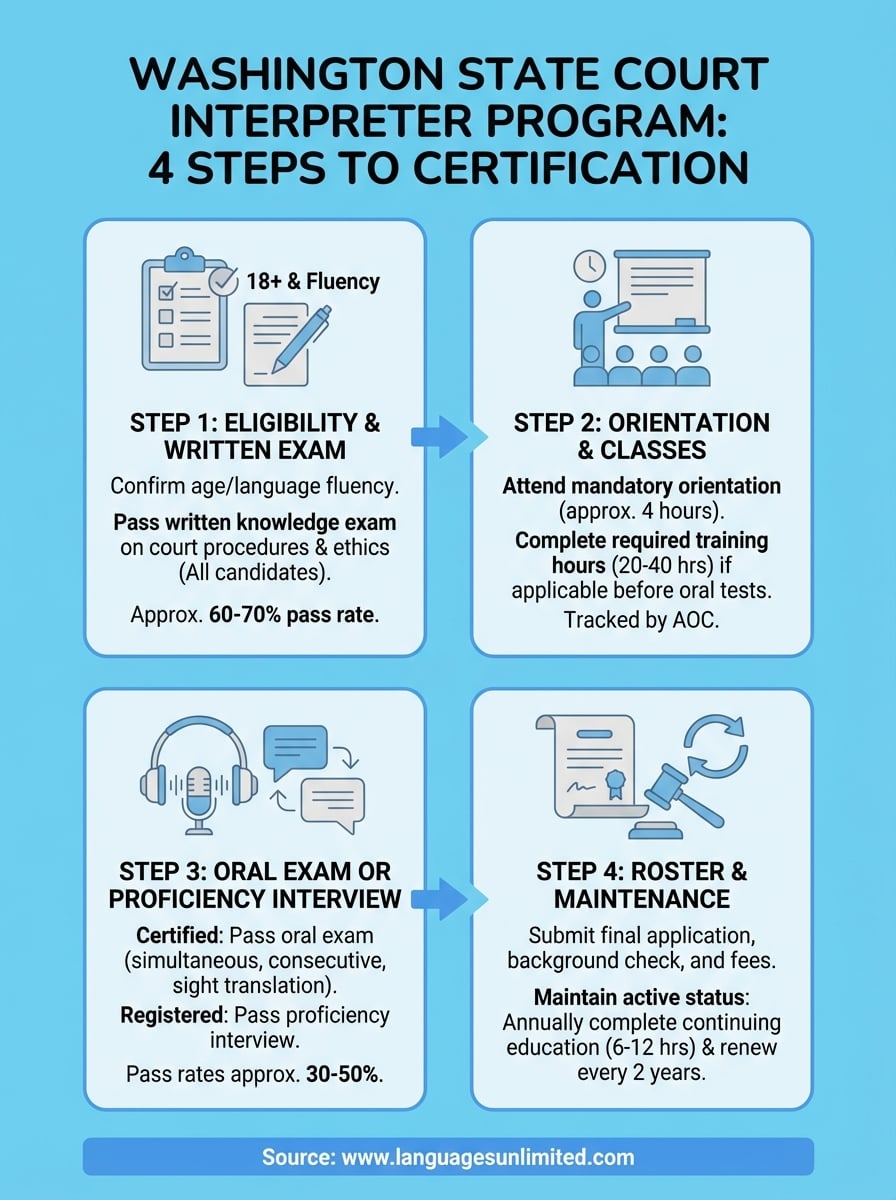
Your first move toward certification involves verifying basic qualifications and passing a written knowledge exam that tests your understanding of court procedures, ethical standards, and interpreter protocols. The Washington State Court Interpreter Program requires you to complete this written component before moving forward with language-specific testing, and this exam applies to all candidates regardless of your target language.
Check your basic requirements
You must be at least 18 years old and possess fluency in both English and your target language to apply for certification. The program doesn’t mandate formal education credentials, but you need to demonstrate professional maturity and ethical judgment that comes with courtroom work. Check the AOC website for any additional requirements that might apply to your specific language pair, as some languages have preliminary proficiency screenings before you can access the full certification path.
Register and prepare for the written test
The written exam covers interpreter ethics, court procedures, and professional standards through multiple-choice questions that assess your readiness for legal settings. You register through the AOC’s online portal, pay the examination fee (typically around $50-75), and schedule your test date at an approved testing center. Plan to study the court interpreter handbook, practice ethics scenarios, and familiarize yourself with Washington’s court system structure before test day.
The written exam pass rate hovers around 60-70%, so dedicated preparation makes a measurable difference in your success.
Step 2. Complete orientation and required classes
After passing the written exam, you must complete an orientation session and fulfill training requirements before the Washington State Court Interpreter Program allows you to take language-specific tests. This step ensures you understand courtroom protocols, interpreter conduct standards, and the practical realities of legal interpretation work. The AOC schedules orientation sessions throughout the year at different locations across Washington, and you need to attend one session in person or virtually depending on current program offerings.
Attend the mandatory orientation session
The orientation session runs approximately four hours and covers courtroom procedures, interpreter ethics, role boundaries, and technical aspects of court interpretation. You’ll learn about sight translation, consecutive interpretation modes, and how to handle challenging courtroom situations like witness breakdowns or attorney objections. Program administrators walk you through exam formats and expectations, explain certification maintenance requirements, and answer specific questions about your language pair and career path.
Orientation attendance is tracked by the AOC and becomes part of your official interpreter record.
Complete prerequisite training hours
Some language tiers require you to complete specific training hours before taking oral exams, typically ranging from 20 to 40 hours of approved coursework. You can fulfill these hours through community college programs, online interpreter training courses, or workshops approved by the Washington State Court Interpreter Program. Keep documentation of all completed training, including certificates, attendance records, and course descriptions, as you’ll submit these materials during your exam application process.
Step 3. Pass the oral exam or proficiency interview
The language-specific testing phase determines your certification level and proves your ability to interpret accurately in real courtroom situations. You’ll take either a comprehensive oral exam (for certified status) or a proficiency interview (for registered status) depending on which languages the Washington State Court Interpreter Program currently tests. This step represents the most challenging part of certification, as you must demonstrate simultaneous interpretation, consecutive interpretation, and sight translation skills under timed conditions that mirror actual court proceedings.
Take the language-specific oral exam
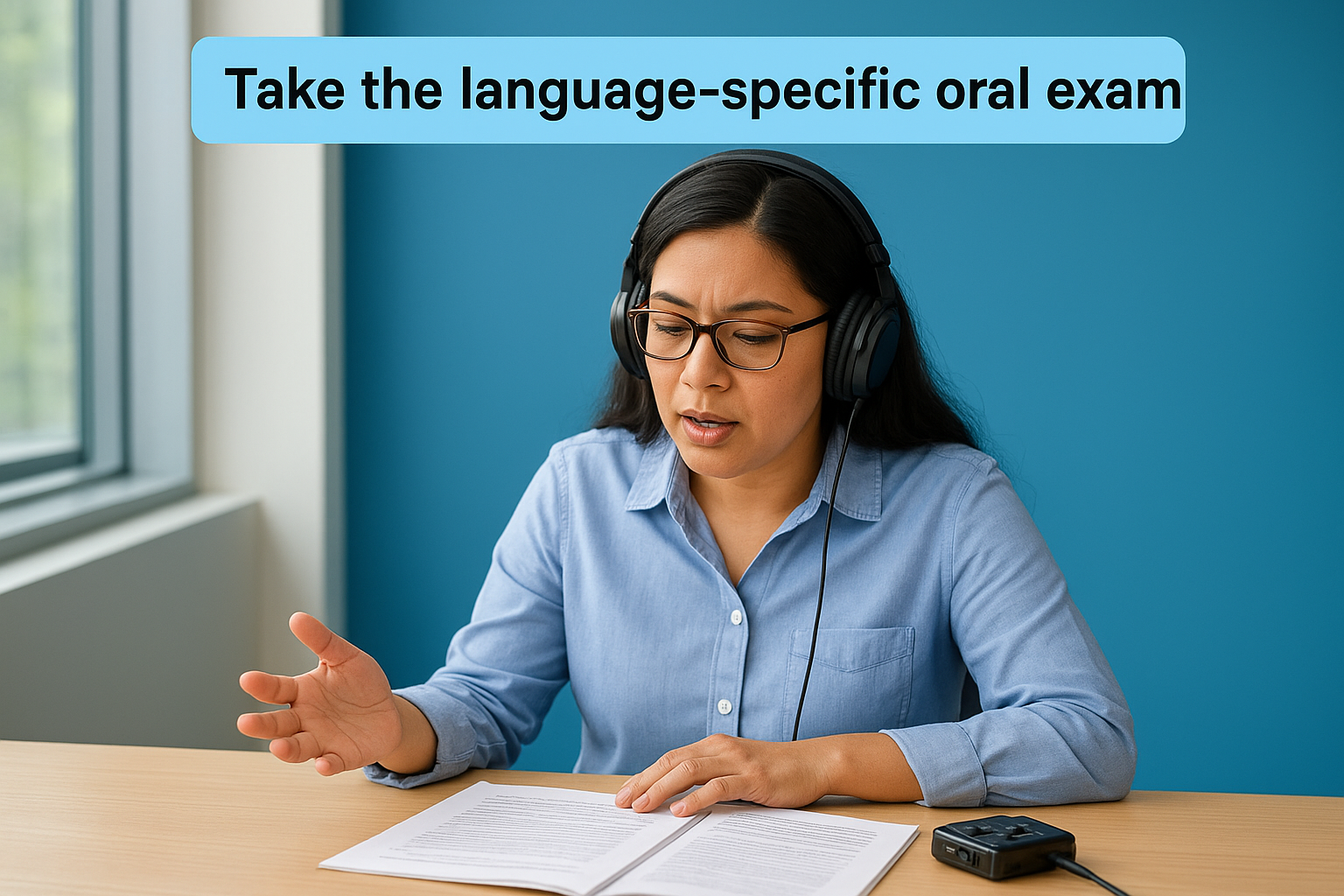
The oral exam runs approximately three hours and includes recordings of courtroom proceedings that you interpret in real time. You listen to witness testimony, attorney arguments, and judicial instructions through headphones, then provide interpretations that examiners evaluate for accuracy, completeness, and professional delivery. The exam includes consecutive interpretation (where you interpret after the speaker finishes), simultaneous interpretation (interpreting while someone speaks), and sight translation of legal documents from English into your target language and vice versa.
Pass rates for oral exams typically range from 30-50%, making thorough preparation absolutely critical.
Complete the proficiency interview
Languages without full oral exams require you to pass a proficiency interview that assesses your bilingual fluency and courtroom readiness through structured conversation and role-playing exercises. Examiners evaluate your vocabulary range, grammatical accuracy, and ability to handle legal terminology during this interview format, which usually lasts 45-90 minutes depending on the language and your performance.
Step 4. Get approved and stay active on the roster
Once you pass your oral exam or proficiency interview, you must complete final paperwork and meet ongoing requirements to maintain active status with the Washington State Court Interpreter Program. The AOC reviews your complete application package, verifies your exam results, and adds you to the official roster that courts use when scheduling interpreters. This final step transforms your test performance into working credentials that let you accept court assignments across the state.
Submit your final application materials
You need to submit a complete application packet that includes your background check authorization, proof of orientation attendance, training certificates, and exam results. The AOC conducts a criminal background screening on all interpreter candidates, and any felony convictions or certain misdemeanors may disqualify you from certification. Gather copies of all required documents, complete the application forms accurately, and pay the final certification fee (typically $100-150) to finalize your roster placement.
Maintain your certification status
The Washington State Court Interpreter Program requires you to complete continuing education hours annually to stay on the active roster, usually 6-12 hours depending on your certification level. You must also renew your certification every two years by submitting renewal applications, paying renewal fees, and demonstrating ongoing court interpretation activity.
Active interpreters who miss continuing education deadlines move to inactive status and cannot accept court assignments until they fulfill requirements.
Wrap-up and where to get help
The washington state court interpreter program offers a clear path from initial application to certified interpreter status, though the journey requires dedication and thorough preparation. You’ll move through written exams, orientation sessions, oral testing, and final approval steps that build your credentials and courtroom readiness. Each phase serves a specific purpose in ensuring you meet the professional standards that Washington courts demand from interpreters.
Success in this certification process depends on understanding requirements early, preparing systematically for each exam component, and maintaining your credentials once you achieve roster placement. The AOC website provides detailed guides, exam schedules, and application materials that keep you informed throughout your certification journey.
If you need professional language services or want to explore court interpretation opportunities, contact our team at Languages Unlimited for guidance on building your interpretation career and connecting with legal organizations that value certified court interpreters.