



Subtitling is the process of displaying written text on screen that translates or transcribes spoken dialogue in video content. These text lines appear at the bottom of your screen, synced precisely with the audio timing, so viewers can read what speakers or characters are saying in real time. You encounter subtitles constantly—streaming movies, TV shows, YouTube videos, corporate training materials, online courses, social media clips, and webinars.
This guide breaks down everything you need to understand about subtitling. You’ll learn how the subtitling process works, why quality subtitles matter for reaching broader audiences, what elements separate good subtitles from poor ones, and how subtitling differs from related services like captioning and dubbing. We’ll also help you decide when to create subtitles yourself versus when professional subtitling services make more sense.
Why subtitling matters
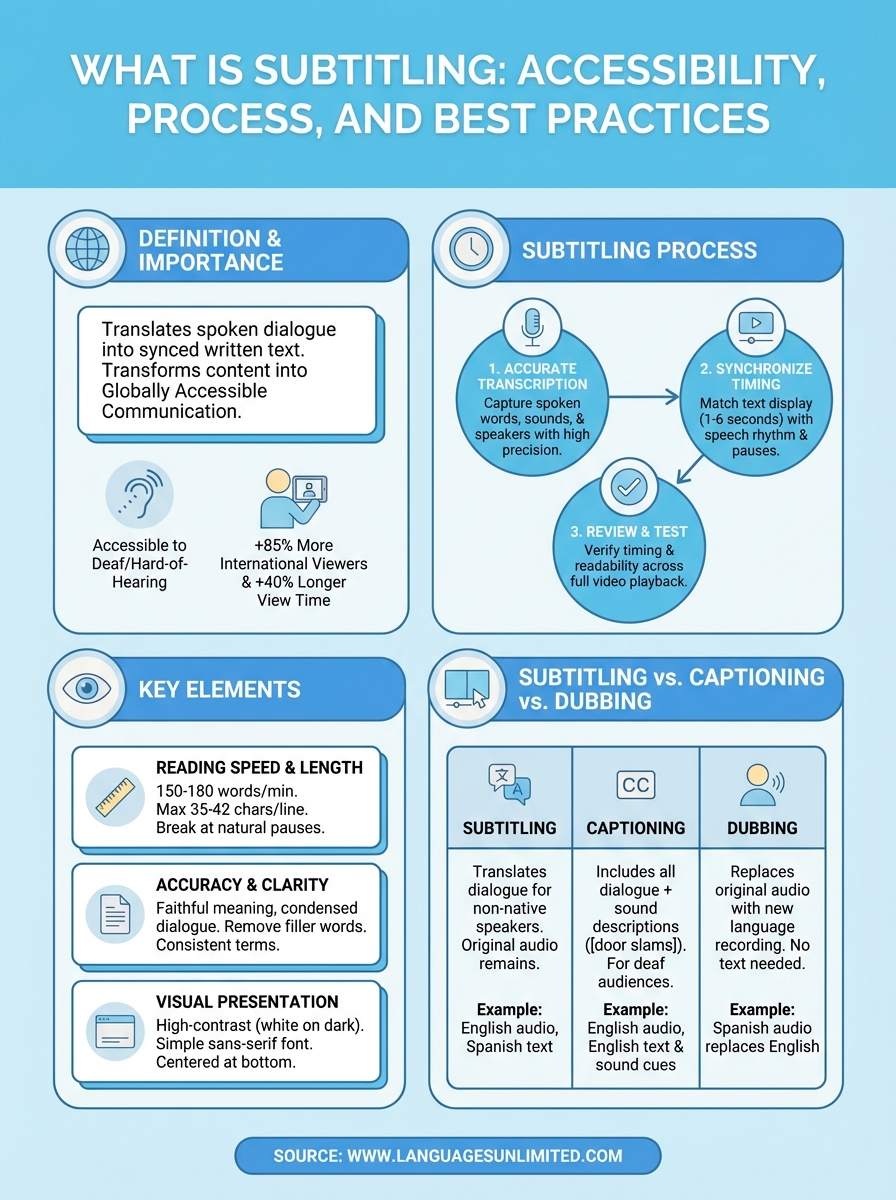
Subtitles transform your video content from single-language material into globally accessible communication. When you add subtitles, you immediately make your content viewable by deaf and hard-of-hearing audiences, non-native speakers, and viewers in sound-sensitive environments like offices or public transportation. Understanding what is subtitling means recognizing its power to multiply your content’s impact without creating entirely new versions.
Expanding Your Audience Reach
Your video reaches 85% more viewers internationally when you include subtitles in multiple languages. People watching content in their non-native language retain information better when they can read along with spoken dialogue. Subtitles also help search engines index your video content more effectively, improving your discoverability across platforms like YouTube and social media.
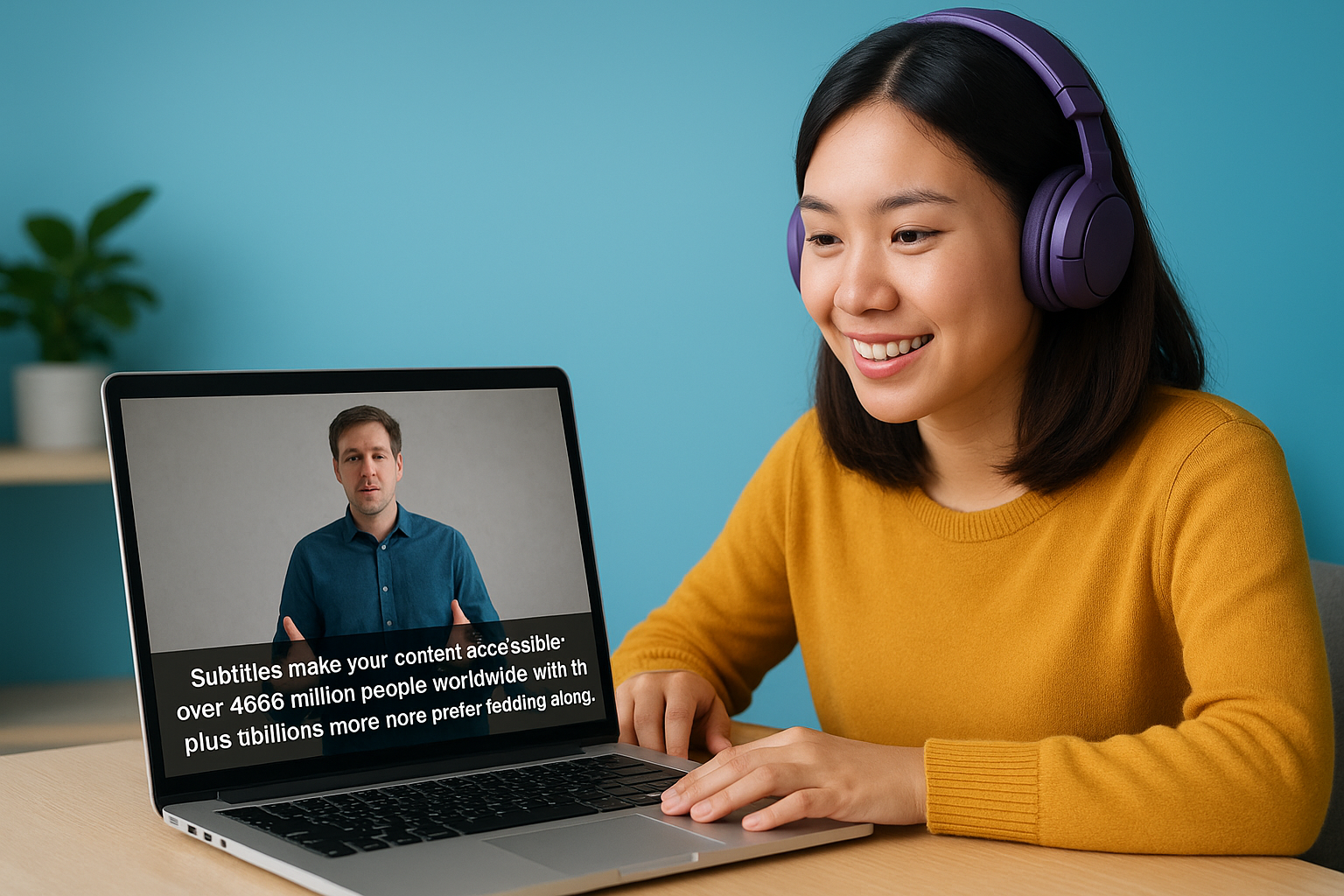
Subtitles make your content accessible to over 466 million people worldwide with hearing loss, plus billions more who prefer reading along.
Improving Viewer Engagement
Viewers watch subtitled videos 40% longer than videos without text support. Your audience can follow complex terminology, catch names and locations they might miss through audio alone, and rewatch specific sections more easily. Subtitles keep viewers engaged even when they’re in noise-restricted spaces or when audio quality drops during streaming.
How to create effective subtitles
Creating effective subtitles requires strategic planning and attention to timing before you write a single word. The process starts with understanding what is subtitling in practical terms: translating spoken content into text that viewers can read comfortably without missing visual information. You need to balance readability, accuracy, and synchronization throughout your entire video.
Start with accurate transcription
Your subtitle foundation begins with precise transcription of all spoken dialogue, including important sound effects and speaker identification when multiple people talk. Listen to your source audio multiple times to catch every word, pause, and inflection that affects meaning. Accuracy matters more than speed during this phase because errors compound when you move to timing and translation steps.
Professional transcribers typically achieve 98% accuracy or higher, which becomes your baseline standard. You’ll need to account for accents, background noise, overlapping speech, and technical terminology specific to your content. Specialized software helps, but human verification catches context-dependent errors that automated tools miss.
Synchronize text with speech timing
Your subtitles must appear exactly when speakers begin talking and disappear when they finish, matching the natural rhythm of conversation. Each subtitle line should display for 1 to 6 seconds depending on text length, giving viewers enough time to read without lingering after the speaker stops.

Break longer sentences into multiple subtitle frames rather than cramming excessive text into single displays. Standard practice limits each line to 35-42 characters so viewers can read comfortably while watching visual content. Position your line breaks at natural pauses or grammatical divisions, never splitting related words across frames.
Quality subtitles sync so smoothly with audio that viewers forget they’re reading and feel like they’re hearing the content in their own language.
Test your completed subtitles by watching the full video to verify timing accuracy and readability.
Key elements of high quality subtitles
Understanding what is subtitling means recognizing that excellent subtitles require more than just accurate translation. You need to master timing precision, readability standards, and visual formatting that work together to create seamless viewing experiences. Each element affects how easily your audience absorbs information while watching your video content.
Reading speed and text length
Your subtitles must match average human reading speeds of 150-180 words per minute for comfortable comprehension. Display each subtitle line for minimum 1 second and maximum 6 seconds, adjusting based on text complexity and speaker pacing. Viewers need enough time to read without feeling rushed or waiting through unnecessary pauses.
Keep individual lines to 35-42 characters maximum so text fits standard screen widths without wrapping awkwardly. Break longer statements into multiple subtitle frames at natural speech pauses, never splitting phrases mid-thought or separating closely related words. Your line breaks should follow grammatical logic that helps rather than hinders understanding.
Accuracy and clarity
Your subtitle text must faithfully represent spoken content while adapting for readability constraints. Condense wordy dialogue when necessary, but preserve the speaker’s meaning, tone, and intent. Remove filler words like "um" and "uh" that distract in written form without changing the message substance.
High quality subtitles capture 100% of the meaning using 75-80% of the spoken words.
Maintain consistent terminology throughout your video, especially for technical terms, proper names, and brand references that viewers need to recognize across scenes.
Visual presentation
Position your subtitle text in clear, high-contrast colors that stand out against varying background scenes throughout your video. Standard white text with black borders provides optimal readability across diverse visual contexts. Choose simple, sans-serif fonts at sizes large enough for mobile viewing without dominating the screen.

Center your text at the bottom of the frame, leaving space above for any on-screen graphics or lower-thirds graphics that appear during your video.
Subtitling vs captioning vs dubbing
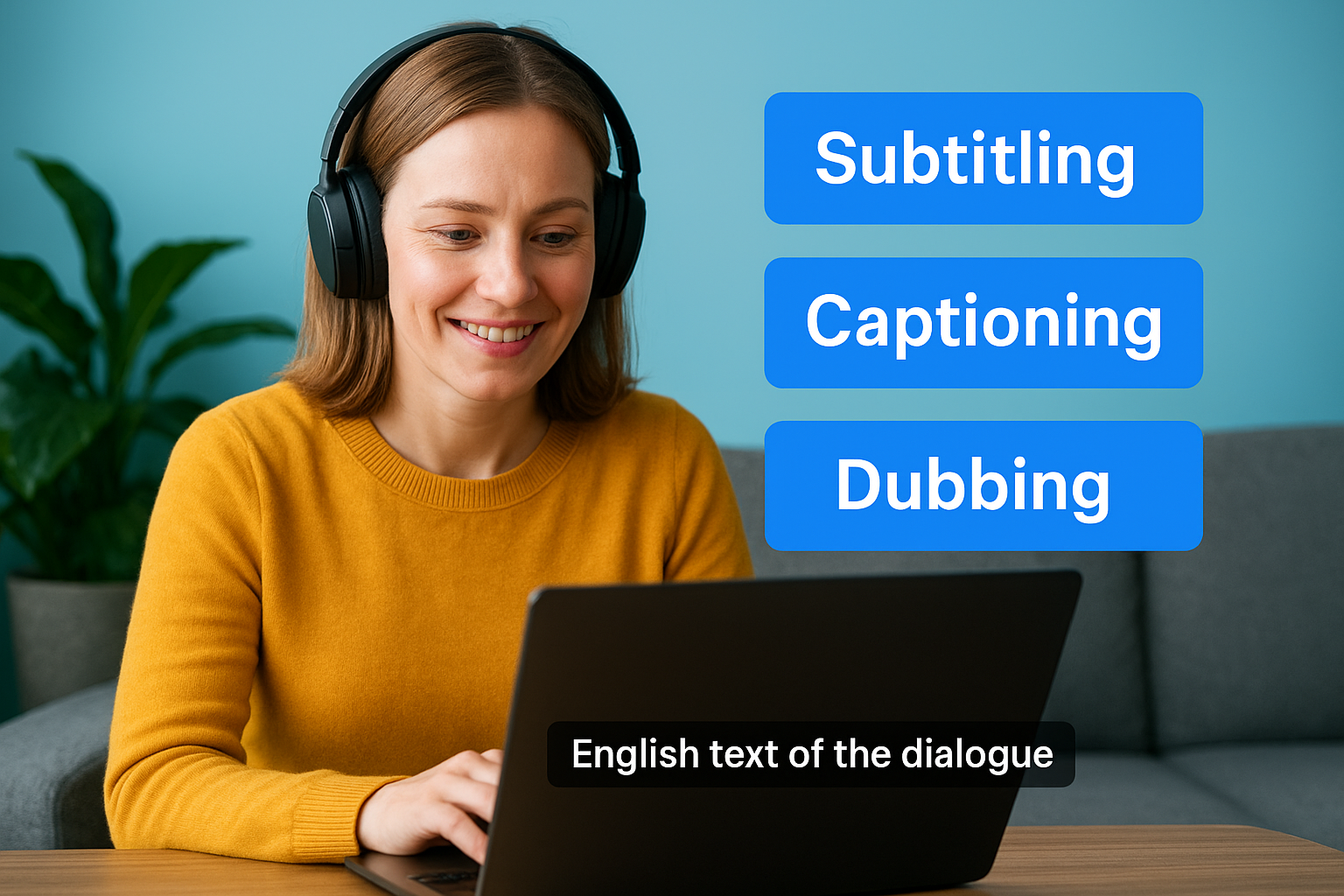
People often confuse these three video accessibility methods, but each serves distinct purposes and follows different technical standards. Understanding what is subtitling compared to captioning and dubbing helps you choose the right approach for your specific video content needs and target audiences.
How each method works
Subtitles translate spoken dialogue from one language into another language, focusing exclusively on what speakers say. Your viewers see translated text in their preferred language while hearing the original audio track unchanged. Captions include all dialogue plus sound descriptions like "[door slams]" or "[music playing]", designed primarily for deaf and hard-of-hearing audiences who cannot hear any audio elements.
Dubbing replaces your original audio track entirely with recorded voices speaking in your target language. Viewers hear speakers talking directly in their native language without reading any text, though this process costs significantly more than subtitling or captioning and requires skilled voice actors.
Subtitles translate language, captions describe all sound, and dubbing replaces audio completely.
Each method suits specific situations: subtitles work best for multilingual distribution across global markets, captions ensure accessibility compliance with regulations like the ADA, and dubbing creates immersive experiences for audiences who strongly prefer listening over reading text.
When to use a professional subtitling service
You should hire professional subtitlers when your video content requires certified accuracy, serves high-stakes purposes, or targets multiple international markets simultaneously. Professional services become essential for legal proceedings, medical training materials, corporate compliance videos, and any content where mistranslation creates liability risks or damages your brand reputation.
Complex and specialized content
Your technical, medical, or legal videos demand subject matter expertise beyond general translation skills. Professional subtitlers understand industry terminology and regulatory requirements that affect how you present information to audiences. They maintain consistency across your video series and prevent errors that undermine your credibility or create compliance violations.
Consider professional services when you need subtitles in three or more languages, face tight production deadlines, or produce high-volume content regularly. Professionals deliver faster turnaround times while maintaining quality standards that DIY approaches cannot match consistently. They also handle formatting requirements for different platforms, accessibility compliance like Section 508, and technical specifications that vary across distribution channels.
Professional subtitlers combine linguistic expertise with technical knowledge of timing, formatting, and platform-specific requirements that take years to master.
Your investment in professional subtitling services protects your content quality and expands your reach effectively.
Final thoughts
You now understand what is subtitling represents in video communication: written text synchronized with spoken dialogue that expands your content’s accessibility and reach. Quality subtitles require precise timing, accurate translation, readable formatting, and careful attention to your audience’s comprehension needs. These elements separate professional subtitles that enhance viewer experiences from poorly executed text that distracts or confuses your audience.
Your choice between DIY subtitling and professional services depends on your content complexity, accuracy requirements, and target markets. When your videos serve business-critical purposes or require certified translations for multiple languages, professional expertise protects your investment. Contact our subtitling specialists to discuss your specific video accessibility needs and explore how quality subtitles can multiply your content’s impact.