


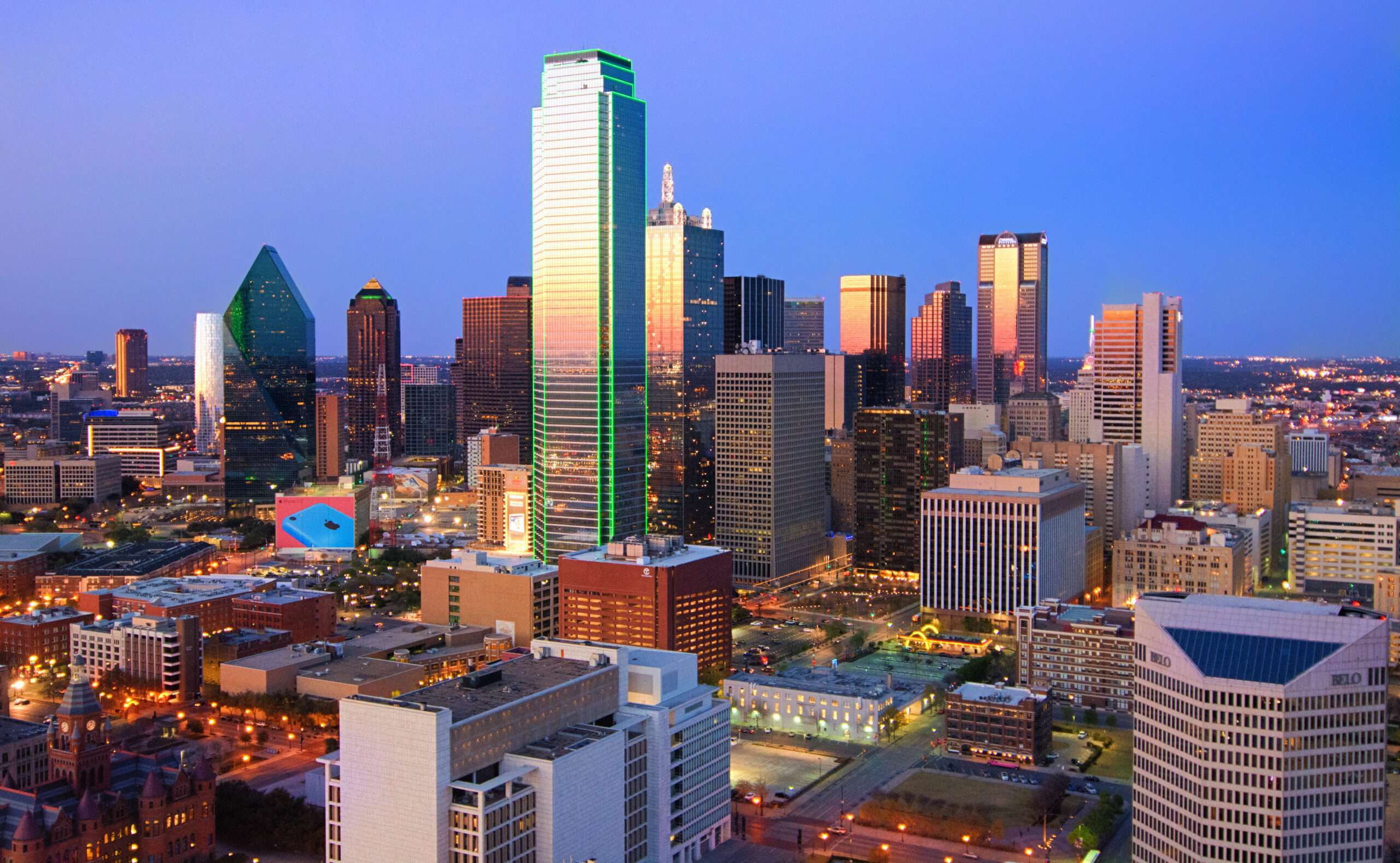
Dallas–Fort Worth is one of the most diverse metro areas in the United States, and Arabic is part of that mix. You’ll hear it in Richardson, Irving, Plano and Garland, from families with roots in Lebanon, Syria, Palestine, Jordan, Iraq, Egypt and Yemen. This guide covers the community, the numbers people most often ask about, and where to get help when Arabic and English need to meet on paper or in person.
How many Muslims live in Dallas?
Community estimates generally put the Dallas–Fort Worth Muslim population at roughly 110,000 to 130,000 people, or about 1% of the metro’s adults. The U.S. Census does not ask about religion, so every figure is an estimate, and different sources count in different ways.
The area has become a national center for Muslim organizations. Many are based in Richardson, and some community leaders have nicknamed the region the “Medina of America.”
How many mosques are in Dallas and Texas?
Dallas–Fort Worth has about 67 mosques, of which 62 are Sunni and 5 are Shia, according to community directories. Texas as a whole had 224 mosques in the 2020 U.S. Mosque Survey, up from 166 in 2010.
How many Muslims are in Texas, and which city has the most?
Estimates for Texas range from about 313,000, based on the 2020 U.S. Religion Census, to about 500,000, the figure cited in a 2025 Texas House resolution. Either way, Muslims make up roughly 1% of the state’s population. Houston has the largest Muslim community in Texas and in the southern United States, with Dallas–Fort Worth second in the state.
Arab Americans and Muslims are not the same group
The two communities overlap but differ. Many Muslims in Dallas–Fort Worth have South Asian roots, while many Arab Americans in Texas are Christian, particularly families of Lebanese and Syrian descent who arrived generations ago. Census counts of Arab Americans also come from an optional ancestry question that is widely considered to undercount the community. Population figures for one group can’t be used for the other.
How do you write “Dallas” in Arabic?
Dallas is written دالاس in Arabic and pronounced much as in English. Place names like this are transliterated by sound, which is why official documents need care. A name spelled one way on a birth certificate and another on a passport can hold up an immigration case.
The Arabic you’ll hear in North Texas
Arabic isn’t one spoken language but a family of dialects that share a written standard. In Dallas you’re likely to meet:
- Levantine Arabic, from Lebanon, Syria, Palestine and Jordan
- Egyptian Arabic, widely understood thanks to Egyptian film and television
- Iraqi and Gulf Arabic
- Yemeni Arabic
Written documents normally use Modern Standard Arabic. Spoken conversations, from a deposition to a doctor’s visit, happen in dialect. A good Arabic interpreter is matched to the speaker’s dialect, not just to the language. Our article on what makes a superb Arabic translator covers this in more depth.
Arabic translation and interpreting in Dallas
Languages Unlimited has provided Arabic translators and interpreters since 1994, for individuals, law firms, hospitals, schools and businesses across North Texas.
- Legal and court interpreting. Courtroom proceedings, depositions, recorded statements and immigration interviews. See what court interpreting involves and our legal translation services.
- Document translation. Certified translations of birth certificates, marriage certificates, divorce decrees, contracts, immigration papers and résumés. See our document translation services.
- Video remote interpreting. An Arabic interpreter on screen when you can’t wait for someone to arrive, so tone and body language aren’t lost. See video remote interpreting.
For everything we offer in Arabic, visit our Arabic translation and interpretation services page. For other languages in the area, see Dallas translation services.
Get a free quote
Tell us the language pair, the dialect if you know it, and what you need. We’ll come back with a quote. Request a free quote.